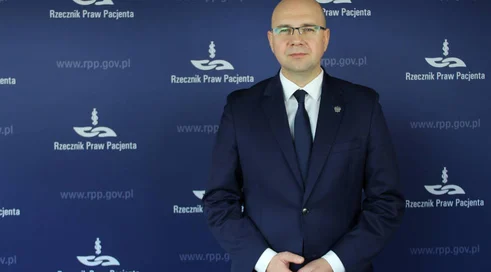
How to develop optimal pathways for patients with cardio-renal-metabolic syndrome (CRM) in the Polish health care system? We discuss this with Dr. Magdalena Wladysiuk, vice president of HTA Consulting and president of CEESTAHC.
CRM: Expansion of primary health care needed

Published Nov. 19, 2024 19:00

Medexpress: In 2023, the American Society of Cardiology defined cardio-renal-metabolic syndrome, and we now have the first national study. What recommendations come from this report?
Dr. Magdalena Wladysiuk: The recommendations in the report are about thinking about the system as a whole. We have an aging population, civilization diseases dominate as the main cause of burden on health care systems and also as the main cause of death. This presents us with three challenges. First - how to deal with the fact that we are a population with a high burden of cardio-metabolic-renal diseases, which share common pathophysiological mechanisms and basically develop from childhood to old age. CRM syndrome can start with mild stages, that is, overweight first, then obesity, then lipid disorders, but sometimes it can start with renal dysfunction and progress to other diseases. In advanced stages, we usually have to treat several diseases at the same time, so there is the problem of multi-drug therapy, numerous hospitalizations. From the point of view of the Polish health care system, this is one of the key aspects - how to arrange the pathway to include the whole process from prevention to rehabilitation for patients in advanced stages.
Medexpress: How then do we lay out the patient pathway? What are the challenges here and what can we do?
Dr. Magdalena Wladysiuk: In the report, we make such a proposal to think about a system very much focused on prevention. This is mainly a task for POZ, but of course also for local governments, because it's about the broader issue of approaching prevention. The second aspect is to lay a pathway at the level of the transition between outpatient and inpatient treatment. It would be good if inpatient treatment primarily served patients who require acute interventions, rather than those who go there for diagnostics. This means that diagnostic care should be shifted more to the outpatient clinic, and the treatment of chronic diseases should be in collaboration between specialists in the outpatient clinic and primary care physicians. Three solutions are being proposed around the world. The first addresses the needs of patients in advanced stages, where it is no longer just one disease, but sometimes several. The second is the so-called chronic management model, which applies to the entire population and aims to create appropriate pathways. Here three elements are key. Coordination (understood as continuity of services, continuity of communication). The third is case management, which already deals with specific diseases that pose greater challenges to the system.
Medexpress: And for us, which solution would be best?
Dr. Magdalena Wladysiuk: The best thing would be to expand primary care, so that as many patients as possible would go there, and only those who really require it would go to specialists (for consultation or rapid diagnostics) and return to primary care if the phase of treatment is stable. That is, strong primary health care with fast-response care integrated with inpatient and outpatient treatment.