In Poland, patients still die from Covid-19, whose vaccines are not able to protect them. They could still be alive if they were given prophylactically prepared antibodies to fight the coronavirus. They are patients suffering from blood cancers, dialysis patients and those undergoing transplantation.
For immunocompromised patients, the coronavirus is still a deadly threat

Published April 28, 2022 08:15
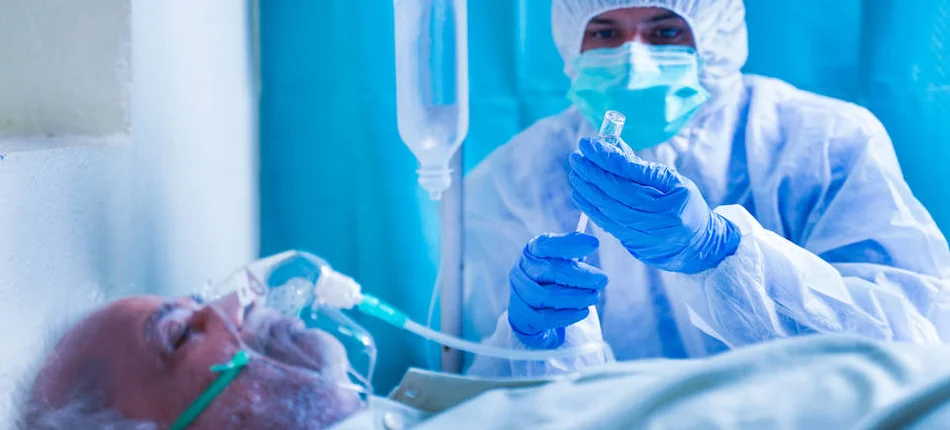
Fot. Getty Images/iStockphoto
- We spend a lot of money on modern treatment of blood cancers, and not using Covid-19 pre-exposure therapy, we risk that an immunosuppressed patient will die of infection - says prof. Iwona Hus, deputy head of the Hematology Clinic of the Institute of Hematology and Transfusion Medicine in Warsaw, president of the Polish Society of Hematology and Transfusion Medicine.
Covid-19 mortality in this group reaches 30%
For immunocompromised patients, the coronavirus is still a lethal threat. Their bodies are unable to make antibodies after being vaccinated against Covid-19, and the disease is much more dramatic. The rescue for these patients is the administration of ready-made antibodies that protect against the development of coronavirus infection and the symptomatic course of COVID-19. Unfortunately, such prophylaxis is not available with us.
The COVID-19 mortality among patients with chronic lymphocytic leukemia and myeloma during previous waves of the pandemic was as high as 30 percent. Currently, despite the fact that the epidemic in the country has improved, blood cancer patients are still dying after contracting the coronavirus. - We still say goodbye to the sick who were not killed by cancer but infection - says Katarzyna Lisowska, leader of the Hematooncology Association.
No response to the vaccine in 40% of patients
Katarzyna Lisowska tells about the study conducted in Poland, "Assessment of post-vaccination response and factors influencing the effectiveness of vaccination against Sars-Cov 2 in patients with lymphoid and hematopoietic malignancies", which showed that many of these people do not respond to vaccination. - My husband, who is a hematology patient, had no antibodies at all after vaccination. That is why such prophylaxis is very important - she emphasizes.
Prof. Iwona Hus admits that research has confirmed that patients with lymphoid and hematopoietic cancers respond less to COVID-19 vaccination. This is especially true of chronic lymphocytic leukemia and multiple myeloma. The response may be around 60% on average. - This is the result of the disease itself, which depletes the body's immune cells, and of anti-cancer treatments that cause long-term immunosuppression. Of course, vaccination is encouraged in the hope that the immune response may increase in at least some patients. But the use of pre-exposure prophylaxis, i.e. the administration of ready-made monoclonal antibodies, would certainly improve the chance of defeating the SARS-CoV-2 virus in this group of patients - points out Prof. Iwona Hus.
The disease progresses more dramatically with many complications
Coronavirus infection in haematooncology patients takes much longer, and Covid -19 is much more severe. There are also those who obtain a positive test result even after two months. In addition, people suffering from cancers of the hematopoietic system are exposed to a number of other serious complications after contact with the coronavirus. - Patients after Covid had cardiological and neurological problems. It happened that they stopped talking and walking - says Katarzyna Lisowska. He adds that today an additional risk factor for haemat-oncological patients is the arrival to Poland of many refugees from Ukraine who did not have the opportunity to be vaccinated against Covid -19. - They pose a threat to people with neoplasms of the haematopoietic system. Therefore, we must do everything possible to protect these patients, she appeals. He adds that the therapy costs only a few thousand zlotys and can save a life.
The guidelines are clear
The new guidelines of the Polish Society of Epidemiologists and Doctors of Infectious Diseases speak of pre-exposure prophylaxis as one of the possibilities of protecting patients from risk groups against SARS-CoV-2 infection and the severe course of COVID-19. The need to administer monoclonal antibodies, i.e. tixagevimab and cilgavimab, applies to people in whom we know that the chances of responding to vaccination are low or we predict that they will be weak and will not protect them from becoming seriously ill with Covid-19.
These are patients who have immunodeficiency due to oncological disease and treatment, especially people with hematopoietic malignancies.