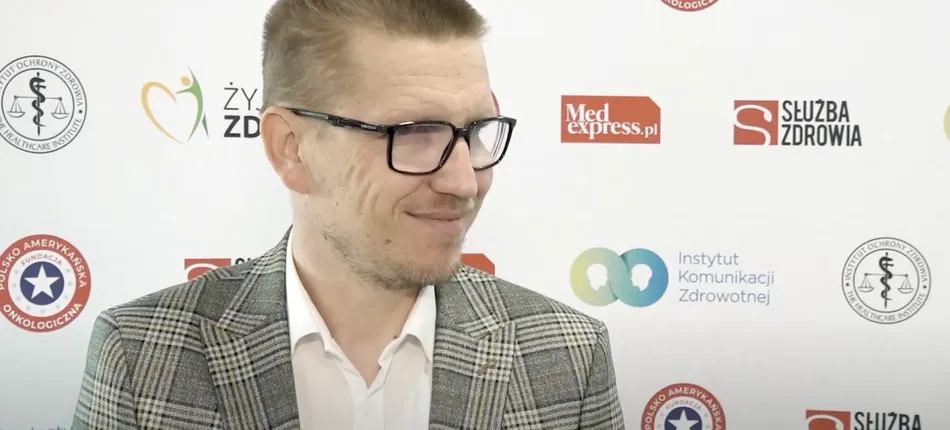
Dr. Michal Seweryn, president of EconMed Europe, talks about what a burden hemophilia is from the perspective of patients and society and the system as a whole.
Hemophilia: A broader discussion and outlook is missing

Published June 24, 2025 12:12
Doctor, how do you assess the readiness of the Polish health care system for wider implementation of subcutaneous therapies in hemophilia as a therapeutic option complementary to the current standard of intravenous treatment?
It seems to me that there is readiness as much as possible both on the part of patients and on the part of medical institutions, and there is nothing to prevent this from happening. On the other hand, of course, we always pay attention to budget issues. I suspect that this is today the biggest brake on the fact that these therapies are not coming in as widely as patients and the medical community would expect. On the other hand, it is a pity that in this discussion we only talk about the direct costs to the payer, which the payer would have to bear. On the other hand, we talk far too little about social costs, and all diseases have social costs. There is little conversation about what a burden a disease like hemophilia is from the perspective of patients and from the perspective of society as a whole. And a little bit little in this discussion is a look at the system, where we are dealing with increasing overburdening of hospital facilities, with shortages of certain specialists including hematologists, because it is said directly about more than 300 missing hematologists in the system, and that these easier new forms are relieving the burden on the system, and not only additional quality for patients, but above all also a far-sighted vision that we need to relieve the burden on our hospital system.
From what you say, this is a tremendous value for the system, but also such subcutaneous therapies bring not only clinical innovation, but it has a huge benefit for patients. Please tell us a little more about the benefits for patients.
Yes, we are in the process of creating a report in which we survey patients. Unfortunately, we don't have the results of these surveys yet, but I can definitely say, based on other studies that we have already done in the area of just these additional forms, that from the patients' point of view, this is a very important issue. That is, subcutaneous forms make it possible for patients to function normally in society. Work, and so we reduce the amount of sickness absences. Let's remember that hemophilia is also a disease of children, so then we have to deal with sickness absences of parents, with reduced productivity. People have to give up work, reduce work due to the fact that the disease affects them or their loved ones. All of this affects the economy, because productivity, it's definitely something that we need, and the workforce is one of the biggest economic challenges today, which we write down in all government strategy documents, that we need to build more and more capital, that we need people to function in the labor market for as long as possible. And that's what's sorely lacking: a much broader view than just that we're going to have to spend a little more at a time. What's more, when we talk about the payer's expenses, we also don't look at other Social Security expenses, social welfare expenses, many different ones, we only look at one compartment of the National Health Fund. It seems that in this debate and in this discussion we should look much more broadly.