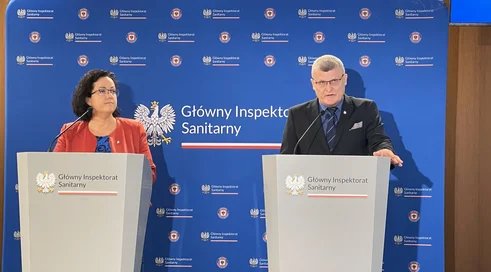
From mid-May to the end of August 2024, the State Sanitary Inspectorate conducted an "investigation" of fruit and vegetable wholesalers. The purpose of the operation was to detect irregularities related to the quality and safety of the products sold, mainly on imported fruits and vegetables. What was found?
GIS inspectors on the trail: vegetables and fruits under the magnifying glass

Published Oct. 3, 2024 11:25

Fot. Thinkstock/Getty Images
- 1513 sanitary inspections of fruit and vegetable wholesalers
- 567 samples taken for laboratory testing, mainly for pesticides and harmful metals
- 1.4% of vegetable and fruit samples were disqualified due to exceeding standards
Summary of the activities of the State Sanitary Inspectorate
During the period from May 16 to August 31, 2024, at the peak of fresh fruit and vegetable marketing, the State Sanitary Inspectorate, in cooperation with the Ministry of Agriculture and the Inspectorate for Commercial Quality of Agricultural and Food Products, undertook inspection activities to ensure safe products for consumers.
What were the inspections about?
Inspectors focused on traceability, product labeling and supporting documentation, and took samples for laboratory testing for pesticide residues and harmful substances. They inspected 1,492 wholesale outlets, including 974 wholesalers and warehouses.
The results were mixed, with 137 facilities finding violations, 10 of which involved incorrect or missing country-of-origin labeling for products sold in bulk. Moreover, there were cases of missing documentation identifying suppliers and improper hygienic conditions in warehouses.
Key anomalies:
- rak of ongoing cleanliness and order,
- inadequate sanitary and technical condition of premises, facilities and equipment,
- Improper storage of foodstuffs,
- Lack of adherence to procedures and instructions developed under GHP and GMP and on the basis of the HACCP system,
- Lack of medical certificates for sanitary-epidemiological purposes of people working in contact with food,
- conducting activities without approval or entry in the registers of establishments subject to official inspection by the authorities of the State Sanitary Inspectorate.
If the above irregularities were found, action was taken to enforce the elimination of violations, including inspection staff issuing post-inspection orders, imposing fines or initiating administrative proceedings to issue a decision ordering the taking of measures necessary to ensure compliance with food law or imposing a fine.
Source: GIS