At the Mother and Child Institute in Warsaw, clinical research plays a key role in the search for new, more effective treatments for pediatric cancer. The story of Nataniel, a young man who had cancer for several years, is one of many examples of how innovative therapies can make a real difference in the recovery of young cancer patients.
Pediatric oncology: Nataniel is healthy thanks to participation in clinical trials

Published May 29, 2024 08:15
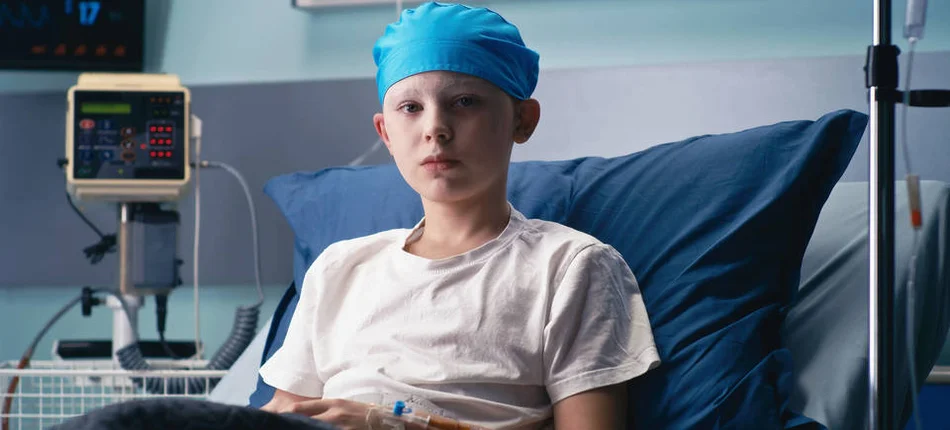
Fot. Getty Images/iStockphoto
Pediatric cancer treatment outcomes have improved significantly in recent decades, reaching up to 80% success rate in patients with localized forms of the disease. Such progress has been made possible by cutting-edge therapies that are being developed in intensive clinical trials. These projects, funded by both the public and private sectors, are also often a chance for recovery for patients in whom conventional treatments have failed. This was the case for Nataniel, who is now an adult, and thanks to the possibility of receiving modern therapy as part of the clinical trials being conducted at the Mother and Child Institute, he can enjoy life to the fullest and pursue his dreams.
Difficult beginnings
Bone sarcoma was diagnosed in Nataniel when he was 16 years old. The initial symptoms were not linked to the cancer by his primary care physician. The pain in the boy's leg was thought to be the result of intense sports training, or simply growing pains. Only when the teenager's leg swelled up did the doctor order an ultrasound. The diagnosis - osteosarcoma of the right femur with metastasis to the lungs - came just after the distribution of certificates. Instead of enjoying the vacations, the boy had to start a series of intensive therapies. Chemotherapy, dubbed "domestos" by Nataniel and his mother, was only the beginning of a long treatment process that also included numerous surgeries and intensive rehabilitation.
- Osteosarcoma, which Nataniel suffered from, is an aggressive primary bone tumor, always requiring an intensive therapeutic approach. Unfortunately, the initial symptoms are often mistaken for other diseases or typical complaints of adolescence. Traditional treatment includes chemotherapy and surgery. Some of the young patients do not respond to these treatments or experience recurrence or metastasis. The chance for these children to recover is through clinical trials. Currently, the Department of Oncology and Oncologic Surgery at the Mother and Child Institute has 6 different types of non-commercial projects underway, which give children the opportunity to benefit from state-of-the-art therapies, among other things, when standard treatment fails, explains Professor Anna Raciborska, head of the Department of Oncology and Oncologic Surgery for Children and Adolescents at the Mother and Child Institute.
New treatment methods
This was also the case with Nataniel. The prescribed therapy brought improvement, but not for long. Less than a year after the end of treatment, the boy developed a recurrence. He was again diagnosed with lung lesions. Another round of chemotherapy and lung thoracotomy procedures (surgical opening of the chest to resect the tumor or remove lesions) were necessary. After six months of treatment, the results came in positive. The disease was cured for the second time.
- After the end of my treatment, I returned to school and got busy pursuing my dreams - I did a driver's license, a firefighter course, and a qualified first aid course. Unfortunately, in April 2022, during an examination, doctors found two nodules in the soft tissue in my right thigh. A biopsy confirmed that the cancer had returned for a third time. So I had to undergo intensive treatment again. I took a very task-oriented approach, treatment - chemo, surgery and back to normal. After all, I had to finish school, I wanted to take a course in emergency vehicle driving (to be able to drive an ambulance), get to college to help sick people in the future. First, however, I had to recover," recalls Nataniel.
This time, specialists at IMiD's Department of Oncology and Oncologic Surgery have included treatment within the framework of a non-commercial clinical trial, in addition to standard therapy. Thanks to such research projects, patients have access to state-of-the-art drugs and procedures that are undergoing trials. Participation in the clinical trial gave Nataniel the opportunity to benefit from new treatment options and the chance to recover.
- Clinical trials are primarily designed to optimize treatment and improve outcomes. They provide an opportunity to compare new regimens with and/or incorporate additional drugs, their dosage ordiagnostic and therapeutic procedures. They enable more precise and often less invasive treatment. Thanks to their development, doctors can create new standards of management, personalize treatment, and increase cure rates. This was also the case for Nataniel. When the existing therapy did not bring the expected results, we offered the boy to take advantage of a new treatment method within the framework of ongoing research. Thanks to it, today the boy is healthy and realizing his dreams. He visits the ward to confirm that everything is fine," Professor Raciborska concludes.
Clinical trials hope for young patients
The main goal of clinical trials is to determine to what extent a new treatment is effective. Participation in research projects often benefits patients in whom standard treatment has failed. However, there is a growing shift away from treating clinical trials as a treatment of last resort - rather, they are seen as one option that patients can take advantage of.
- Research involving children follows specially designed protocols that take into account their unique health, developmental and psychological needs. These regulations ensure that research is appropriate for children's age, maturity and health status. Parents or legal guardians must give informed consent for their child to participate in the study, and in the case of adolescent, more mature patients, consent is also required from them, explains Prof. Anna Raciborska.
Clinical trials are also very positively received by Poles. In December 2023. ABR SESTA, commissioned by IMiD's Department of Oncology and Oncologic Surgery for Children and Adolescents, conducted a public opinion survey on pediatric cancer. It shows that as many as 77% of respondents consider clinical research on modern treatments for pediatric cancers as an opportunity for many severe cases.
Research development
According to a report published by Research and Markets[3], the number of registered clinical trials worldwide increased from 399,499 in 2022 to 437,533 in 2023 - a jump of nearly 10%. Studies involving children, on the other hand, account for more than 21% of all projects registered in the database. Their number will continue to grow thanks to a growing understanding of the genetic and molecular basis of diseases and the development of biomedical technologies. Advances in genomics and bioinformatics are opening up new opportunities for personalized therapies that will be tailored to individual patient needs.
The story of Nataniel, who is one of 152 children treated in non-commercial clinical trials at IMiD, confirms that advanced therapies and modern approaches can make a significant difference in treatment success.
- Currently, I am healthy and full of strength. Despite adversity, I passed my high school diploma and am studying the first year of nursing at the University of Health Sciences in Gdansk. I became a firefighter for the Volunteer Fire Department, as well as a lifeguard in the Adiutare Rescue Association. I go to the gym, eat healthy, fulfill my dreams, am happy and live life to the fullest," Nataniel concludes.
Clinical trials make it possible not only to better understand the mechanisms that lead to the development of cancer, but also to develop and test innovative therapies that increase the likelihood of a cure for young cancer patients every day. Thanks to them, young people like Nataniel get a chance at health and the opportunity to return to a full life and pursue their passions and dreams.
Department of Oncology and Oncologic Surgery of Children and Adolescents Institute of Mother and Child (IMiD)
Poland's oldest highly specialized Oncology Clinic for children and adolescents located in Warsaw. The Clinic's interdisciplinary, experienced team provides full diagnostics and comprehensive treatment of cancers in children from the fetal period to the age of 25 from all over the country. It specializes in the treatment of solid tumors outside the central nervous system and histiocytoses. The clinic is a reference center for sparing treatment, allowing the limb of a sick child to be saved. By 2024, more than 1,000 endoprosthesis implantations had been performed, including those that are mechanically lengthened or by electromagnetic field. The youngest patient to undergo such a procedure was 8 months old. The Clinic's team also conducts scientific activities - including non-commercial clinical trials on the treatment of solid tumors in children.
Source: press mat.