- It happened that patients with severe edema could only be helped by amputating a limb. Oncological rehabilitation changed everything," recalls Prof. Andrzej Kulakowski, doyen of Polish oncology. Over the past four decades, oncology rehabilitation in Poland has undergone a significant transformation, transforming from a marginal practice to an integral part of comprehensive cancer patient care. Today, physiotherapy is available at various stages of cancer treatment - from the preoperative phase, through the period of intensive therapy, to the remission phase or palliative care. The inclusion of physiotherapists in the multidisciplinary oncology team allows for a more comprehensive and holistic view of the patient's needs.
Once amputations were the lifesaver, today physiotherapy. Four decades of oncology rehabilitation

Published Nov. 4, 2024 08:39
fot. Piotr Wójcik
The birth of oncology rehabilitation in Poland
Forty years ago, the situation for cancer patients was very different from today. There was a lack of knowledge about oncology rehabilitation, and people who had undergone mastectomies, surgeries in the head and neck region, or other surgical procedures, were often left to fend for themselves. Many of them suffered from severe lymphedema, mobility problems, and had to deal with pain and mental strain. Sometimes, breast surgery patients who experienced severe lymphedema had to undergo further complicated surgeries and even limb amputations because
systemic rehabilitation solutions were lacking.
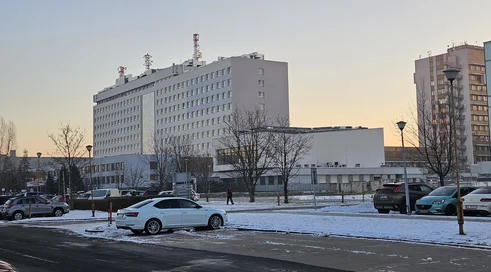
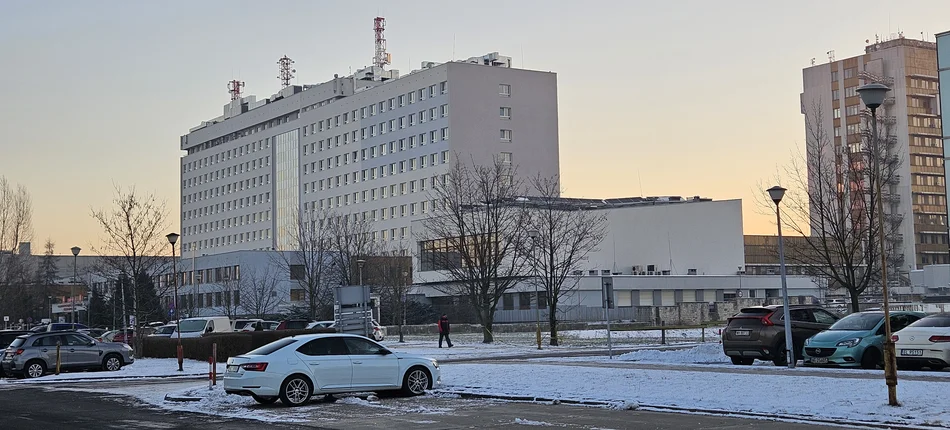
Specialists at the then Oncology Center, now the Maria Sklodowska-Curie National Institute of Oncology -
National Research Institute (NIO-PIB), decided to tackle this challenge by establishing the Rehabilitation Department in 1984. It was the first oncological rehabilitation facility in Poland and one of the first units of the Institute to be opened in its new premises in Ursynów - a very modern one, one of the largest in Europe, designed as an integral part of comprehensive oncological care under the coprehensive cancer center model. The driving force behind these activities and also the first Head of the Department was Dr. Krystyna Mika - a person of extraordinary energy, diligence, commitment and organizational talent.
It is worth mentioning here that the outline of the concept of comprehensive support for women after mastectomy had already reached Poland from the United States somewhat earlier. In 1965, Dr. Andrzej Kulakowski - now a respected professor, widely regarded as the doyen of Polish oncology - traveled to Rosswell Park Memorial Institute, where he had the opportunity to look not only at modern surgical methods, but also, completely unknown in Poland at the time, at standards of oncological care. He became particularly interested in an American Cancer Society program called "Reach to Recovery" centered around the rehabilitation of breast cancer patients. This program later became the benchmark for the first such efforts in Poland. The implementation of rehabilitation, as an essential component of modern treatment of breast cancer patients, was carried out under a Polish-American agreement.
Prof. Andrzej Kulakowski recalls - before Krystyna Mica came to the Department of Oncological Surgery, massages to prevent lymphedema were given to mastectomy patients by nurses in their spare time, but this was dramatically insufficient. Sometimes patients with severe edema could only be helped by amputating a limb. Patients' quality of life after radical treatment was very unsatisfactory. No one had even heard of psychological support. The first official rehabilitation cell established in 1972 was just the first step in introducing rehabilitation into comprehensive care. In the early years, there wasn't even a separate space where people could exercise and talk - rehabilitation took place in the corridor or patient rooms, and later only a small room was organized.
Development of the NIO-PIB Rehabilitation Department - achievements and challenges
Since 1984, the Department of Rehabilitation has come a long way, becoming a modern facility offering comprehensive rehabilitation to patients with cancers of various locations. Today, the Facility employs a highly qualified team of specialists, including 31 physiotherapists, a speech therapist, an occupational therapist and two medical rehabilitation physicians. In 2021, the Facility received nearly 9,000 patients, performing more than 225,000 treatments. It offers a wide range of rehabilitation services, including lymphatic drainage, manual therapy, medical training, as well as modern biofeedback and kinesiotaping techniques. Thanks to state-of-the-art solutions, patients struggling with various types of cancer have access to the highest level of care.
Through years of continuous development, it has managed to develop a model of oncological rehabilitation that serves as a model for other centers in Poland. Today, the Rehabilitation Department is one of the six leading lymphedema treatment centers in Poland. Its activities include not only physical rehabilitation, but also psychological support, thanks to cooperation with the Department of Psychooncology. Patients of the Department can also benefit from hydrotherapy, or aquatic rehabilitation, which is rarely seen at other facilities in Warsaw.
One of the key achievements of the Department is the introduction of a program for the comprehensive treatment of lymphedema and rehabilitation of patients after
operations in the head and neck region, as well as after gynecological and proctological surgeries. The Department has also developed programs for the rehabilitation of patients with
stoma and after pelvic surgeries, where modern biofeedback techniques are used," mentions Dr. Hanna Tchórzewska-Korba, who has headed the Department with great commitment since 1999. The Rehabilitation Department not only treats, but also educates - the staff conducts numerous trainings for doctors, nurses, physiotherapists and psychologists. This all adds up to comprehensive care that enables patients to return to full life
after the difficult experience of cancer treatment.