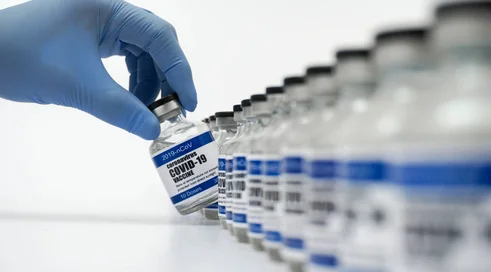
Access to vaccines and drugs for COVID-19, and the words of some of the world's health experts make you think we have started to tame the virus. Does this mean that the pre-pandemic reality will return?
Pandemic: Is This The End?

Published Feb. 18, 2022 11:50

Fot. Getty Images/iStockphoto
The White House's chief medical advisor, Dr. Anthony Fauci, said it was time for the United States to slowly start returning to normal, despite the still apparent risks of COVID-19. As the incidence of Omicron infections is declining, US health officials are already drafting new guidelines for public restrictions related to the pandemic. In several areas of the United States - New Jersey, New York, California, Connecticut, Delaware, and Oregon - face masks will no longer be mandatory in schools and other public places.
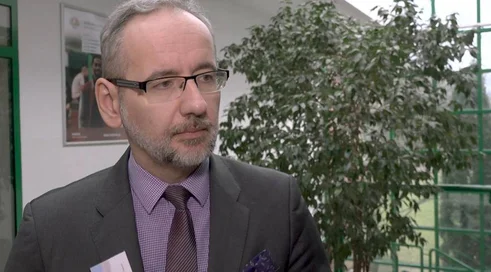
Similar hopes regarding the improvement of the situation in the country are raised by Minister Adam Niedzielski, who informed about the "beginning of the end of the pandemic". At the same time, he emphasized that the pandemic surprised us more than once. Today, however, we are at such a stage - in terms of the tools to fight the virus - that we can lean towards thinking more calmly about the future. Suffice it to recall that in 2020 no one was taking COVID-19 medications.
Now the situation has changed significantly. How is it, for example, in Great Britain? At the Royal Victoria Infirmary in Newcastle, the intensive care unit looks quite different than at the start of the pandemic. First, medical staff are no longer clothed head to toe in a protective suit, and most wards are a COVID-19 free zone. At its peak a year ago, this hospital had 90 critically ill patients on ventilators. Today there are only three people. Today, respirator use is the exception rather than the norm. Hospital stays are much shorter and the survival rate of coronavirus patients has improved significantly.
"Two years ago we had nothing," says Dr. Matthias Schmid, the manager of infectious diseases, who treated the first COVID-19 patient in the UK in late January 2020. "We now have a range of treatments available to reduce the severity of the disease and we can prevent huge numbers of patients from dying."
The drugs he talks about include the widespread anti-inflammatory dexamethasone - the first drug to save the lives of severely ill COVID-19 patients whose effectiveness has been confirmed in an NHS study. Undoubtedly, the greatest medical advancement has been the introduction of highly effective vaccines. And although they are less effective in preventing infection with the newest variant of SARS-CoV-2, Omicron, they provide very strong protection against severe disease.
Another drug that works for treating COVID-19 is sotrovimab, a monoclonal antibody that prevents the infection from developing. In studies conducted in a group of immunocompromised patients, the preparation gave a good result: the risk of hospitalization and death was reduced by 79%. There are other drugs waiting for patients on hospital shelves: the antiviral Paxlovid, which reduces the number of hospital admissions by 88%. It is sent to high-risk patients across the UK who tested positive. Emily Goldfischer, a 51-year-old patient from London, is one of the first people in the UK to take the drug. Goldfischer is immunosuppressed and has received four doses of the vaccine. She contacted her doctor when she tested positive. The prescription was sent to her home on the same day from Chelsea and Westminster Hospital. In addition, the UK government has also sourced a supply of molnupiravir, another antiviral molecule that is effective in reducing the consequences of COVID-19.
There are still over 12,000 COVID-19 patients in UK hospitals. The only thing missing in a British hospital is people visiting patients. But that is also about to change soon.
Source: Reuters/BBC