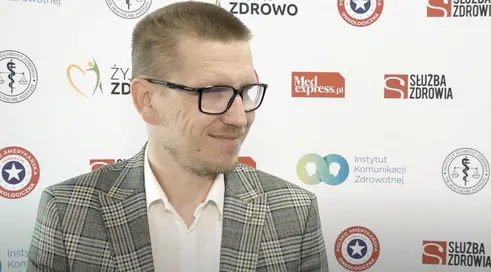
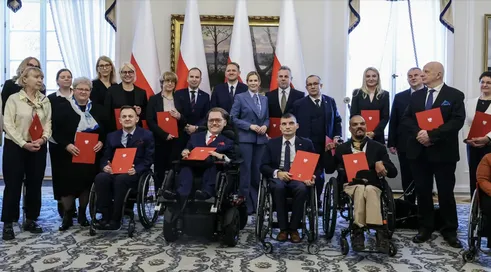
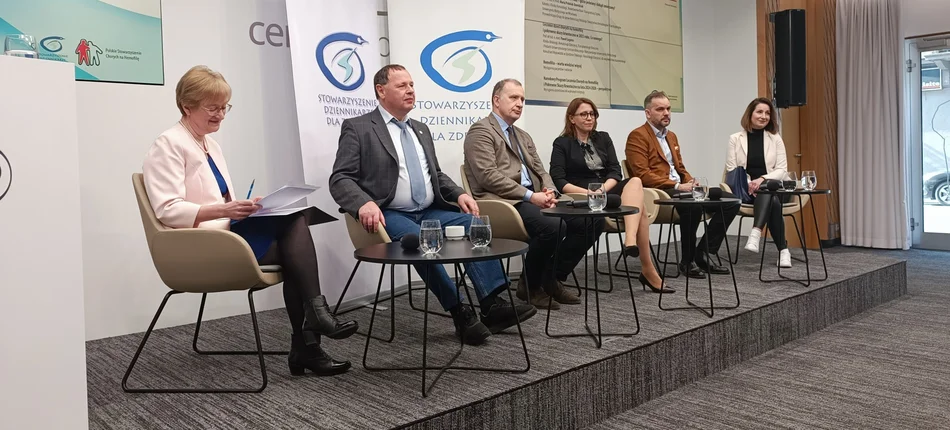
- We call for the adoption of the new edition of the National Program for the Treatment of Patients with Hemophilia and Related Hemorrhagic Diathesis as soon as possible. Access to necessary amounts of clotting factor concentrates is a chance for patients to live a normal life," said Bogdan Gajewski, president of the Polish Association of Hemophilia Patients, during a conference preceding the World Day of Hemophilia Patients, which falls on April 17. Patients and doctors are also waiting for the implementation of the e-hemophilia database and application, which will allow for a comprehensive system for the supply of home clotting factors.
Hemophilia patients are waiting for the adoption of a new edition of the National Treatment Program. The current one ends this year

Published April 13, 2023 19:11
fot. Piotr Wójcik
Hemophilia is a genetic blood disorder classified as a hemorrhagic diathesis. It primarily affects deficiency of either clotting factor VIII (hemophilia A) or IX (hemophilia B). As recalled by Prof. Maria Podolak-Dawidziak of the Department of Hematology, Blood Tumors and Bone Marrow Transplantation at the Wroclaw Medical University, back in 1920 the average life expectancy of a hemophilia patient was 12 years. Now, thanks to significant advances in medicine, it is close to that of the general population.
Continuation of the National Treatment Program is essential
The disease is associated with the risk of hemorrhages in the muscles, joints or intracranially, and thus the risk of death or permanent disability. Treatment of patients with hemophilia involves giving them preparations of the appropriate clotting factor. Thanks to the National Program for the Treatment of Patients with Hemophilia and Related Hemorrhagic Diathesis, the current edition of which will last until the end of the year, patients have access to these preparations at any health care facility, 365 days a year and at any time of the day or night. This makes it possible to treat sudden and spontaneous bleeding with a difficult-to-predict course and means a chance for a normal life, without complications leading to permanent disability. The current program ends this year. The new one, due to take effect next year, is currently undergoing an opinion from the Agency for Health Technology Assessment and Tarification. The opinion is expected to be ready by the end of April.
- A tremendous achievement of the current program is the establishment of hemophilia treatment centers, which aim to provide comprehensive, coordinated, multispecialty patient care. In such an organized system, the patient is equipped with the necessary documents, a doctor is provided for consultation. Primary prophylaxis has also been provided for children since 2008, and for adults since 2012. The continuation of the National Hemophilia Treatment Program is crucial, as it guarantees the further development of these centers," noted Prof. Maria Podolak-Dawidziak.
- In doing so, one cannot afford to act spontaneously. Drugs and concentrates must be secured for both prophylaxis and emergencies or the need for surgery. Actions must be coordinated and resources precisely planned," added Prof. Podolak-Dawidziak.
Well-treated patients can function normally
Professor Pawel Laguna, head of the Clinical Department of Oncology, Pediatric Hematology, Clinical Transplantation and Pediatrics, University Clinical Center of Warsaw Medical University, stressed that the operation of the National Program for the Treatment of Patients with Hemophilia and Related Hemorrhagic Diathesis has resulted, among other things, in the fact that in the group of pediatric patients there are practically no more patients with serious joint lesions leading to disability.
- This was due in part to the availability of prophylaxis in 2008. The various phases of the new programs increased treatment options for patients through home delivery of the agent, appropriate rehabilitation and the creation of 15 pediatric centers across Poland. When I started work, treatment was available on demand. A patient would only get the factor when he had a stroke," he said.
As Prof. Pawel Laguna added, most of his patients successfully pursue their ambitions for college or career after entering adulthood. In the new edition of the National Program for the Treatment of Hemophilia and Related Hemorrhagic Diathesis Patients, the model for patient transition from pediatric care to an adult center is to be streamlined.
- The idea is that a boy doesn't have to have three or four strokes to be put back on preventive care. The new program indicates what the transfer of a pediatric patient should look like. We are fighting for adult centers to take care of our patients comprehensively as well," the professor pointed out.
The new program will be a continuation of the activities undertaken
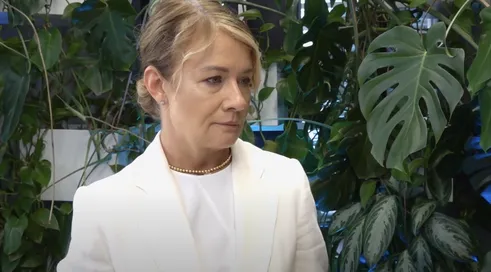
The entity that is the axis of activities related to the implementation of the hemophilia care program is the National Blood Center. Among other things, it is responsible for ensuring that there is an adequate supply of clotting factors in all regional blood donation and blood collection centers. As Dr. Malgorzata Lorek, director of the NCK, stressed, a very important element of the upcoming changes is to be the e-hemophilia database, which on the one hand will give doctors access to information about how patients are treated and what they need, and on the other hand, will contribute to increasing the availability of home supplies of clotting factor.
- The new edition of the program is actually a continuation of the work already started, especially in the field of e-hemophilia, which will be crucial in the development of home delivery, currently carried out on a limited basis. Mutual communication between patients and treatment centers will guarantee safety on both sides. We hope that before the vacations the program will be approved so that we can plan to work from January next year. We can't afford no follow-up or limited availability of drugs in the first quarter," Margaret Lorek.
Awareness still too low
The National Program for the Treatment of Patients with Hemophilia and Related Hemorrhagic Diathesis first and foremost provides a sense of security for patients and their caregivers. Unfortunately, awareness of how to deal with the patient is still insufficient, including in health care facilities. As Ms. Anna, mother of a hemophilia-suffering 12-year-old, says, she has experienced this herself several times.
- There were times when hospitals refused to give my child clotting factor. I believe that this is an area for improvement, so that in any place, whether in the ED or in the PCP, you can come with your factor and have the factor administered. Unfortunately, there are still situations where, despite the fact that you can call a specialized center, despite the fact that there is a hemophilia patient management chart, help is not given as it should be," says Ms. Anna.
Mr. Martin, the son of a 6.5-year-old hemophilia patient, has similar feelings. As he says, there were times when, in an emergency, he did not go with his son to the nearest hospital, but to one where doctors will know how to deal with a hemophilia patient. Low public awareness of the disease also made its presence known at the stage of enrolling a child in kindergarten and school.
Meanwhile, the basic principle that should be followed by health care professionals dealing with a hemophilia patient is to administer the clotting factor first, and only then proceed with further diagnostics. Reversing the order and delaying the administration of the factor can have tragic consequences.