According to a survey commissioned by the Department of Oncology and Oncologic Surgery for Children and Adolescents at the Institute of Mother and Child in Warsaw, 59% of adult Poles say they do not have enough knowledge about childhood cancer. In turn, 20% of those surveyed are unable to name any symptom of oncological disease in children. That's why the (P)show your heart campaign is being launched, which aims not only to raise awareness, but also to start a public discussion about the need for prompt diagnosis and treatment of cancer among the youngest patients.
Poles don't have enough knowledge about childhood cancer

Published Feb. 23, 2024 09:59
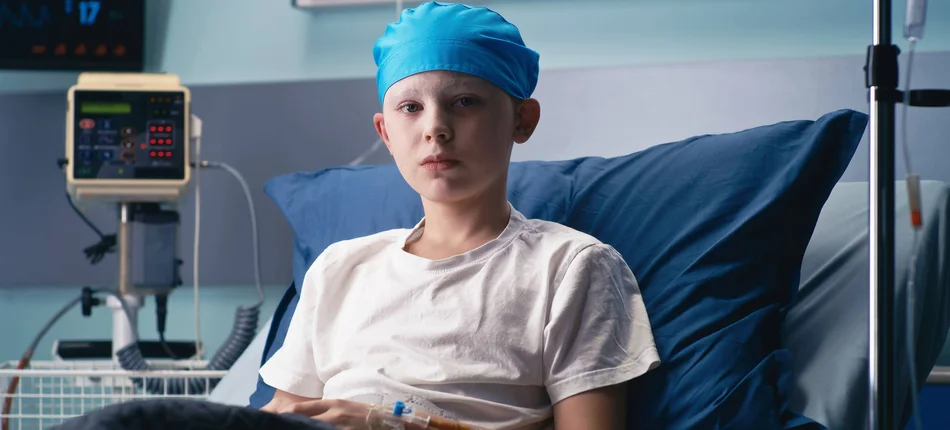
Fot. Getty Images/iStockphoto
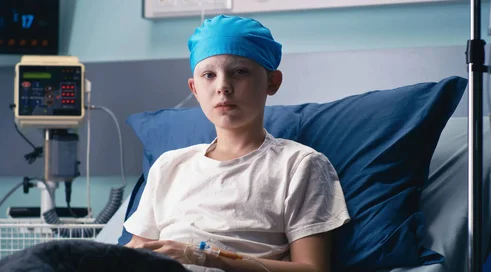
Cancer in children is still a topic that is little known to most of the public. Up to 1,200 new cases are diagnosed each year, meaning that one in 600 children will receive a diagnosis of an oncological disease. They give completely different symptoms than those diagnosed in adults, and they also develop much faster. As explained by Professor Anna Raciborska, Head of the Department of Oncology and Oncologic Surgery of Children and Adolescents at the Mother and Child Institute - depending on the type of cancer, the rate of its development may vary, but usually in children the disease cells multiply much faster than in adults. Consequently, at the time of diagnosis, it often turns out that the disease is already at an advanced stage. That is why it is so important to recognize its symptoms quickly.
What should you pay attention to?
Early diagnosis of cancer in children can be difficult, as clinical symptoms are highly variable and depend mainly on the type, location, stage and growth rate of the cancer. The onset of the disease is sometimes uncharacteristic or very discrete, moreover, its symptoms are often confused with other, more mundane childhood ailments. In addition, a survey conducted by ABR SESTA and SYNO Poland, commissioned by the Department of Oncology and Oncologic Surgery of Children and Adolescents at the Institute of Mother and Child, shows that as many as 20% of adult Poles are unable to name any symptom that could indicate oncologic disease in children, and as many as 59% declare that they do not have sufficient knowledge about childhood cancer, with as many as 13% of respondents admitting to a complete lack of information in this regard.
What symptoms should draw the attention of children's caregivers and GPs?
- There are symptoms that are worth consulting a doctor, especially if they persist for a long time. These include unreasonable weight loss, prolonged fever for no apparent reason, or pain that does not subside after rest, intensifies at night and causes difficulty in carrying out daily activities. Other symptoms that should arouse our vigilance are various types of swelling, especially around the abdomen or limbs, which may indicate the presence of a tumor, problems with urination or bowel movements, or unremitting symptoms of infection, such as ear leakage or persistent coughing, explains Professor Anna Raciborska, Head of the Department of Oncology and Oncologic Surgery of Children and Adolescents at the Mother and Child Institute.
Poles want to know more about cancer in children
The most common oncological diseases in children are leukemias, hematopoietic cancers or brain tumors. Solid tumors, such as neuroblastomas and sarcomas, among others, also rank high on the incidence scale among children, but in the social survey, when asked about their frequency, these types of cancer were indicated by only 9% and 10% of respondents, respectively. This indicates insufficient public awareness of these types of diseases.
Significantly, in the same survey, as many as 65% of respondents said they would like to know more about pediatric cancer, including 23% who explicitly say they would like to deepen their knowledge. It is noteworthy that the respondents who have any information on the subject are also more likely to explore their knowledge than those who have virtually no knowledge of the topic.
Social campaign (P)show your heart
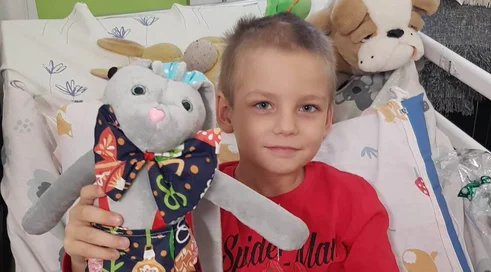
Considering the public's still low knowledge of pediatric cancer, as well as the Poles' interest in this issue, the Department of Oncology and Oncologic Surgery for Children and Adolescents at the Mother and Child Institute has prepared the second edition of the socio-educational (P)show your heart campaign. Its goal is to increase public awareness of oncological diseases in children and the importance of their early detection, as well as to show support for children and adolescents with cancer. The campaign is promoted by a spot showing the topic from the perspective of children with experience of cancer, in whom it initially instilled fear. The video can be seen online and on social media. A website has also been created, www.pokazserce.pl, where anyone interested can find reliable and up-to-date information on childhood cancer, support for children and their loved ones during this difficult time, or addresses of treatment centers. In addition, activities related to the campaign will be carried out on social media, and anyone interested can join the campaign. How to do it? Just add a photo of hands folded into a heart symbol to your profile, include the hashtags #pokazserce #onkoimid and invite at least one person to join the campaign.
- Illness always comes at an inopportune time, turning the world of both the child and all those closest to him upside down. Parents do not always know where to start, how to support their child in this difficult moment or where to look for help. That's why we are launching the second edition of the (P)show your heart campaign, which aims to build public awareness of oncological diseases in children, the importance of their early detection and support for patients and their families. We hope that this year's campaign will draw the attention of recipients to this problem and motivate them to explore the topic. We encourage everyone to join the action, one simple gesture can affect the health of many children. Don't be indifferent, show your heart," says Joanna Pruban, psycho-oncologist at the Mother and Child Institute.
All information about the campaign, as well as educational materials, can be found at www.pokazserce.pl
Source: press mat.