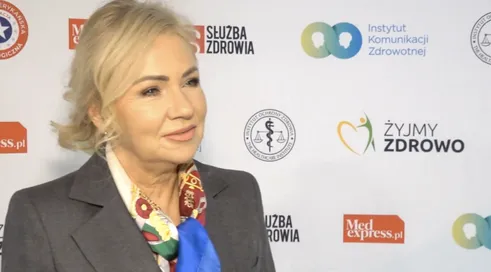
Conversation with dr hab. Ernest Kuchar, head of the Pediatrics Clinic with the Observation Department of the Medical University of Warsaw, president of the Polish Society of Vaccinology.
The Covid-19 pandemic is a great lesson in vaccinology

Published Nov. 16, 2022 20:09
How has our knowledge of vaccinology changed over the past two years?
Pandemics come once in a hundred years, and the Covid-19 pandemic came exactly one hundred years after the Spanish flu. It was a great lesson in vaccinology. First of all, we have learned that only thanks to vaccination we are able to control such a pandemic. This is because most infections have come from people who are asymptomatic. Techniques such as taking temperature were a sieve with holes. If most of the infected were asymptomatic, then they could not be caught by such methods. Another lesson is that you should not bet everything on one card. Dozens of vaccines have been developed, and only a few of them have gained worldwide popularity due to their effectiveness. We have also seen that investing in basic research pays off. We learned the structure of the coronavirus very quickly, because there was a MERS virus before, almost 20 years ago SARS-CoV-1, and at the same time progress made it possible to develop vaccine platforms, i.e. mRNA and vector vaccines. These platforms were originally developed for the production of individual cancer vaccines. They were useful in the fight against the pandemic, because the platform is universal, the only question is what antigens we will put in it. Another thing is that the vaccine is one thing, and its administration is quite another. It turned out that even when there was a vaccine, there were problems with its distribution, and that we are dealing with a lack of conviction among many people that they need vaccinations.
And what are the current recommendations for vaccination of children?
Recommendations are clear. Virtually all children from 6 months of age should be vaccinated. Two vaccines are approved for these children. Physically, they do not exist in Poland yet, but in the United States, vaccination started a few months ago and the experience is very encouraging. Covid-19 now affects people who have not had contact with the coronavirus yet, and these are small children.
Thank you for the interview.