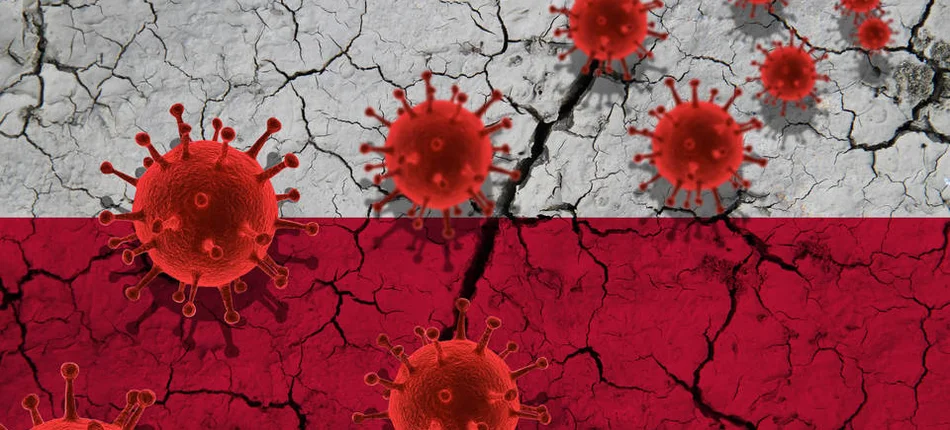
From May 16, the state of epidemic threat will apply in Poland. The Minister of Health announced the decision to end the pandemic, because - in his opinion - the pandemic situation is improving not only in Poland, but also in neighboring countries.
The state of epidemic threat from May 16. Until when?

Published May 9, 2022 08:21
Fot. Getty Images/iStockphoto
- This is not lifting the epidemic, but switching the red light in the signaling device, which has been on for two years, to the orange light, which shows that there is a risk and a threat, but the situation is going in the right direction and the assessment of the situation is much better - he explained head of the health ministry. Adam Niedzielski cited statistics showing that the daily number of infections in Poland is decreasing week by week, the number of patients hospitalized with COVID-19 is also decreasing, in addition, according to the minister, the doctors report that these patients go to hospitals in much better condition and the COVID-19 mileage is not as heavy as that of the Delta variant.
There is, however, what the minister did not mention, a problem with the reliability of the data - at least in terms of the number of infections. In Poland, we perform very few tests - about 0.3 a day per 1,000 inhabitants. This is from several to several dozen times less than in the vast majority of European countries. Where significantly more tests are performed - for example in Germany, Italy or France - the number of infections, although actually lower than a few weeks ago, is still high. In Germany, Dr. Paweł Grzesiowski said on Friday during the webinar devoted to the covid situation, about 590,000 cases of SARS-CoV-2 infection were recorded in the last seven days. Statistics a week earlier showed 100,000 more cases. The decline is clear, but it is still more than 80,000 cases a day.
Minister of health and director of NIZIP-PZH prof. Grzegorz Juszczyk emphasized that Poland is constantly monitoring the epidemic situation, and the state of epidemic threat will last at least until September , because in autumn we can expect an increase in infections. - The key is whether it will be caused by a new variant and to what extent the infections will be disturbing - said Prof. Juszczyk.
Niedzielski also reminded that currently COVID patients are treated on the same principles as other patients. So there are no separate covid units. Patients requiring hospitalization go to internal medicine or infectious diseases wards. However, if a new mutation emerges - for example, combining the high infectivity of the Omikron variant with a higher virulence, appropriate decisions are made - then it will be possible for individuals specializing in COVID-19 treatment to return. - The probability, however, is low - he stressed.