National consultants, clinicians and experts are calling for the introduction of an assessment of the presence of signals that may indicate autism spectrum disorders into a two-year-old's health balance sheet, since only early initiation of therapy can bring the expected results. There is also a need for guidelines for health and educational institutions on how they should cooperate, organize and standardize the diagnostic pathway.
World Autism Awareness Day - expert group's position on early diagnosis of autism spectrum disorders in children

Published April 2, 2025 12:17
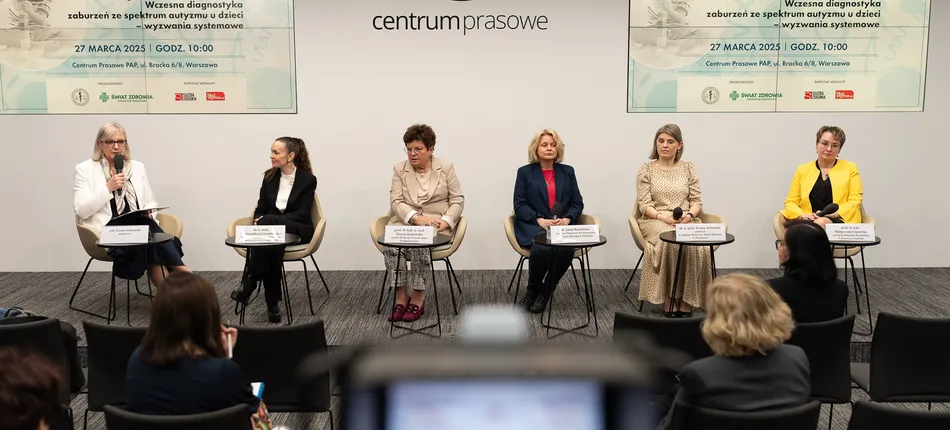
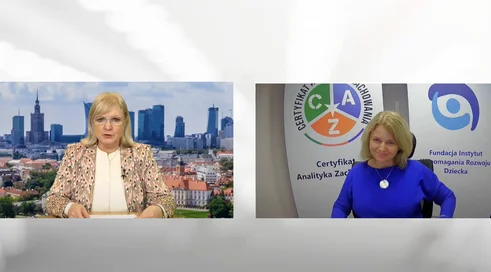
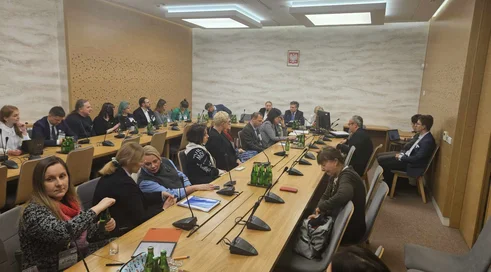
The situation of children with autism spectrum disorders in the context of the need to ensure access to early diagnosis and the possibility of prompt therapy was presented in a position paper by the Institute for Health Protection, which was discussed at a conference in Warsaw on March 28.
Starting therapy at school age too late
- When I began my work, school-age children over the age of seven were coming to therapy. Despite the efforts of the entire team, we were not able to help them in the way we wanted. We were not able to effectively teach them the simplest activities, such as dressing or washing," said Dr. Anna Budzinska, director of the Institute for Child Development Assistance in Gdansk, who has been involved in the diagnosis and early therapy of autism spectrum disorders in children since the 1990s. - Thanks to research work, exchange of experience with specialized foreign centers, we have determined that in order to help people on the autism spectrum, it is necessary to start therapy as early as possible, she noted. - Currently, we start it at the age of two and a half years and we see that the results are really very good. This is also confirmed by scientific studies published by me and my colleagues at the Institute for Assisted Child Development on the effectiveness of the therapeutic interventions carried out, she added.
Meanwhile, in Poland, about 70% of children with suspected autism spectrum disorders receive a diagnosis after the age of three, which negatively affects the effectiveness of therapy, the development of the child's cognitive, speech and adaptive skills, and the quality of life of the child, parents and caregivers.
Expanding the balance sheet of a two-year-old
Prof. Teresa Jackowska, president of the Polish Pediatric Society, spoke about the need to expand the balance sheet of a child at the age of two to include the evaluation of signals that could indicate the presence of autism spectrum disorders. - European data show that we are the first country with the highest number of suicide attempts in children, so it is necessary to detect any disorders that could lead to this as early as possible, she alarmed. In her opinion, the frequency of balance sheets should be higher. - Balance sheets in the first six months of life are conducted quite regularly, because they are related to vaccinations, then there is a visit in the ninth month, then between the first and second years of life 2-3 times related to vaccinations and a balance sheet of a two-year-old. However, the next one is only in the fourth year of life, which means nothing happens for two years, and this needs to be changed," she recommended. She added that the Section on Medicine and Child Development of the Polish Academy of Sciences has also set a goal to change child health balances.
Dr. Iwona Artemiuk, a pediatrician at the World Health Medical Center in Warsaw, reported that the World Health medical operator at its centers has implemented screening children for autism spectrum disorders as part of primary care during the two-year-old's balance sheet as part of the nationwide World Health for All project. - This is a screening that takes about 15 minutes. And so far, including the pilot, we have conducted more than 400 such examinations. In 11 children, or 4.6%, we diagnosed autism spectrum disorders and referred them for further psychological and pedagogical diagnosis," she said. She added that the screening showed that it is worthwhile to implement personalized, proactive medical care for young patients in the PCP.
Validated tools
Prof. Teresa Jackowska noted the lack of standardized questionnaires for the balance sheet in clinics. She pointed out that pediatricians should get a concise questionnaire, developed by psychologists and educators, so that screening is possible. - Because as early as age four it may be too late, she warned.
She mentioned that work on such a questionnaire was already underway and that she would forward the recommendations of the Health Institute to the Polish Pediatric Society.
She pointed out that when it comes to the physical examination, adequate time is needed in the outpatient clinic at the PCP, especially for a child who has a disorder. - It is then worthwhile to use videos that parents record at home, because children behave differently in the doctor's office, she pointed out.
Prof. Ewa Pisula from the Faculty of Psychology at the University of Warsaw, author of the leading Polish scientific research on autism spectrum disorders, talked about the work being carried out very intensively in many laboratories around the world using also artificial intelligence on the causes and course of atypical developmental trajectories. - There are many tasks ahead of science related to diagnostic algorithms, strategies for carrying out the diagnostic process, she noted. She added that in Poland, many research teams have undertaken efforts to validate various screening tools, and the knowledge exists, but these works always end with a conclusion: further research is needed to obtain a tool that will have good psychometric properties. According to her, the difficulty is that these are studies that did not use a longitudinal design and did not check how the child's development and situation is afterwards. And this is essential to assess the value of a screening tool.
- Thus, the priority is to develop a good tool proven in the Polish population," she concluded. She pointed out the gender disparity in the diagnosis of autism spectrum disorders in girls. - I think that better diagnostic tools will be developed soon for this group, she noted.
Arranging the diagnostic pathway
According to Dr. Aleksandra Lewandowska, national consultant in child and adolescent psychiatry, it is necessary in Poland to organize the diagnostic pathway for all mental disorders in children and adolescents. In order for the diagnosis to be carried out in a reliable manner, it is important to cooperate in interdisciplinary teams consisting of a child psychiatrist, psychologist, pedagogue, speech therapist, physiotherapist.
- And because there is no developed pathway of care for children and adolescents, part of the diagnostic process takes place in the educational system, for example, in psychological-educational counseling centers, and the doctor has no knowledge of what has already happened to the patient. Within the framework of community care, we have therapists who are also very helpful in the diagnostic process, because they can go to the patient's environment, to the home, to the school to observe how that child functions, but there is a lack of regulations that, for example, allow a community therapist to enter a kindergarten to observe a child in a group," she enumerated.
Prof. Bernadetta Izydorczyk, national consultant in clinical psychology, also stressed the lack of a structured set of tools that are used explicitly to measure children's autism spectrum. - Thus, there is a need for standards that apply to all those who work with children with autism, from psychologists to psychiatrists and educators, she pointed out.
She informed that psychological diagnosis is the beginning to conduct a process of monitoring the child's development, which can show at different stages diverse dysfunctions, disharmonies, up to and including disorders. She added that the diagnosis of the autism spectrum in children, especially young children, is extremely difficult, and in order to deal with the psychological description of the figure and the indication of symptoms, it is necessary to analyze and assess the overall development differentiating what is associated with neurodevelopmental disorders and what is the result of other disorders on psychosocial grounds. Data show that more than 70% of children on the autism spectrum have at least one comorbid mental health disorder.
Prof. Agnieszka Slopien, national consultant in the field of psychotherapy for children and adolescents, listed the most common ones: ADHD affects about 40% of patients, depressive disorders, the prevalence of which increases with age, in the population of adolescents and adults accounts for 30-40%, aggression and self-aggression often occur in children with intellectual disabilities, intellectual normals are 9 times more likely to have suicide attempts - compared to the general population. Depending on the population studied, the prevalence of schizophrenia is between 1% and 20%, although most researchers agree indicates 4%.
Staff training
Prof. Malgorzata Lipowska, director of the Institute of Psychology at the University of Gdansk, spoke about the necessary educational activities aimed at medics, psychologists, psychotherapists, teachers. - A child's first contact is most often a pediatrician, and then preschool teachers. So education should focus on the first symptoms, the so-called red flags," she pointed out.
Dr. Anna Budzinska added that by being able to train almost all pediatricians in Gdansk for extended observation, the situation has improved significantly.
- Also, subjects related to developmental disorders, including those on the autism spectrum, should be introduced at the stage of pedagogical, psychological, but also medical studies. Specialists should expand their knowledge through a system of training for pediatricians, and in the case of psychologists and pedagogues through postgraduate studies. I think that the development of such a model of postgraduate studies educating in terms of therapy for children on the autism spectrum is extremely important," she pointed out.
She noted that certification is also important. - A person who works with children on the autism spectrum should be certified to allow parents and schools, institutions to recognize a specialist among other people who have psychological, pedagogical training. She added that such certification should be created at the European level. She stresses that Poland has a great track record in diagnosing and treating autism spectrum disorders. - Families from different countries come to us to get diagnosis and therapy. Compared to Europe, we really stand out in a positive way," she informed.
Blue Games
Dr. Anna Budzinska talked about the Blue Games, organized by the Institute for Assisted Child Development every year in April - the month of autism awareness. One can apply to participate through the website blueigrzyska.pl. - The participant receives a set of materials to conduct a workshop that teaches children the topic of diversity, not to call autism by its name, but to show that children are different from each other and that is beautiful. The workshops teach how to accept diversity, how to deal with it, how to help a peer who has trouble with something, can't do something, and how to respond to successes and failures," she mentioned. - On the other hand, of course, we encourage playing together, because the Blue Games in its very name sounds very sporty. It is a joint game in which both neurotypical children, children on the autism spectrum, but also children with other disabilities participate," she added.
A thousand children and 29 educational institutions, foundations, associations took part in the first Games 3 years ago. This year, and registration is still ongoing, there are already 450 thousand children and more than 2 thousand establishments. Polish institutions from all over Europe are also joining. In many cities, the Blue Games have already taken the form of a city-wide or district-wide event.
- I encourage you to learn more about the idea of the Blue Games, but especially about the idea of our institute, the so-called positive current of applied behavior analysis, to educate yourself, to develop and not to experiment on the child. And believe me, neither pediatricians, psychologists nor educators have the knowledge of what methods are scientifically documented. They are often unable to recommend those most effective methods of influence. This means that the decision on the form of help must be made by the parent. And this is based on what he or she finds on the Internet," she said.
The role of parents
Iwona Ruta-Sominka, M.A., deputy director of the Institute for Child Development Assistance in Gdansk, pointed out that a parent is lost in the process of diagnosis. Most often, he or she goes to the pediatrician first, and if the pediatrician does not direct him or her to the right place, he or she will not know where to look for help. - That's why we have prepared a guide so that the parent knows where to go, what documents to get, and that if he or she goes to the psychological-educational counseling centers, he or she can get a certificate on the need for special education," she explained. The free guide "Diagnosis of Autism Practical Guide" is on the available website of the Institute iwrd.pl. It will be distributed to psychological and pedagogical clinics.
- The most important thing is for the child to receive the first rulings, which will already give him or her quick access to therapy, she added. She stressed that a parent who goes through the entire pathway must also be able to care. - Parents of children on the spectrum are the group most at risk of parental burnout and parenting stress. That's why it's important to equip them right away with knowledge that reduces stress, she explained.
She stressed that the parent should be a co-participant in the therapeutic process. Children on the spectrum have difficulty transferring skills incorporated in one environment to another, and what they learn in kindergarten does not necessarily benefit them at home. - If the parent does not carry this further, the effectiveness of therapy will be limited," she warned. She added that a home-based program is in place at the Child Development Institute and the family is cared for.
Coalition of experts
In the opinion of experts, including Prof. Bernadetta Izydorczyk, national consultant in clinical psychology, Prof. Teresa Jackowska, president of the Polish Pediatric Society, Dr. Aleksandra Lewandowska, national consultant in child and adolescent psychiatry, Prof. Agnieszka Słopień, national consultant in child and adolescent psychiatry, and Prof. Agnieszka Sopień, national consultant in child and adolescent psychotherapy. Agnieszka Słopień, national consultant in the field of psychotherapy of children and adolescents, the currently functioning diagnosis of autism spectrum disorders in children is carried out within the framework of the health and education system in the absence of defined rules of cooperation and guidelines for the exchange of information and documentation in the diagnostic process.
Dr. Aleksandra Lewandowska stressed the need to organize the diagnostic pathway and introduce validated tools that have proven diagnostic effectiveness.
Experts also point out that the level of knowledge about these disorders among medical and educational personnel is insufficient, and that pre-graduate and post-graduate education programs do not provide enough information. There is also a lack of nationwide solutions to provide parents and caregivers of children with comprehensive information on the further path of treatment, places to get help, therapeutic methods and programs with scientifically documented effectiveness, and the health care, education and social benefits available.
Dr. Anna Budzinska summarized that she was pleased to see the community's willingness to implement extended observation in children during the two-year-old's balance sheet.
Dr. Iwona Artemiuk added that early detection of autism spectrum disorders increases the quality and effectiveness of therapy, speech development and adaptability, and thus increases the comfort and quality of life for the child and his parents.
"Health Institute's Position Statement on Early Diagnosis of Autism Spectrum Disorders in Children" is available on the Health Institute's website: TU