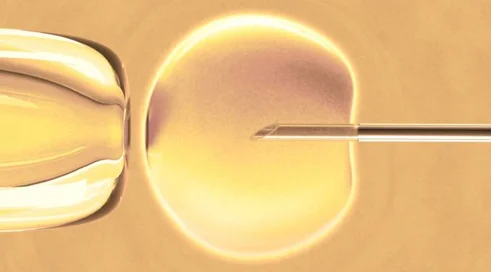
An important goal for modern medicine is to be able to store and preserve biological preparations for a long and safe time, especially those for cell therapies that use stem cells.
How non-cancer proteins affect human metabolism. The latest U.S. research

Published April 8, 2024 11:00

In the journal Protein Science, researchers from the US University of Wyoming have announced their findings on the effects of non-spore proteins on human cells. The findings open up new opportunities to develop technologies focused on inducing biostasis in cells. This is a state in which all chemical reactions stop. In this way, it is possible to slow down the body's aging processes and prolong the storage of biological preparations, even without a refrigerator, as well as ensure cellular stability under various conditions.
Sporrels are common invertebrates of the group of primates. Microscopic creatures capable of surviving in almost all, even extreme conditions. The kind in which humans are incapable of surviving. They inhabit watery and humid places, but neither exceeding normal heat nor frost can destroy them. They are capable of surviving in a vacuum, can withstand pressures 6 times greater than in the Mariana Trench and are capable of living in space. They have been confirmed to have endured a stay on the Moon perfectly. Radiation and vacuum do not threaten their lives. Scientists say that non-corporals have survived all mass extinctions on Earth and will only become extinct in 5 billion years, along with our planet. A process called cryptobiosis (a reversible metabolic state) is the secret to their staying power. Under extreme conditions, the invertebrate releases almost all the water from its body, turns into a ball called a "barrel cyst," and in this form remains dormant for up to several decades in a place that does not allow metabolism.
Biological, ecological and medical diversity has long been a concern for many scientists around the world. Invertebrates live in symbiosis with plants, animals and humans. Laboratories around the world using the latest technologies and research methods are working on sequencing the genomes of these invertebrates, microscopic imaging or bioinformatics analyses. This small and completely beauty-free organism is being analyzed in detail and studied from all angles, in the hope of learning the secret of its resilience. Professor Thomas Boothby, who led the Wyoming study, points out that these animals use proteins for their survival process, which form gels inside the cells that slow down life processes. During the study, it turned out that these proteins introduced into human cells also gel and slow down metabolism, just like in non-corchids. The researchers found that human cells with non-cancer proteins put into a state of biostasis become more resistant to stress. But most importantly, once the stress is gone, the non-cancer gels dissolve and the human cells return to normal metabolism.
The findings are crucial in stabilizing, among other things, anti-hemophilic factor A, which is used to treat hemophilia, but cannot be stored in the refrigerator. In addition, they provide an opportunity to create further technologies to improve cellular stability, storing organs for transplantation. The discovery made at the University of Wyoming could become the key to inhibiting the aging process in the human body, although at this point there are not enough studies to confirm these speculations. Further scientific work and research are still needed.