Multiple crippling surgeries, complications such as optic nerve damage, meningitis or brain abscess, painful erosions, difficulty breathing and endless infections, as well as sinus-shattering pain, loss of smell and taste - these are just some of the problems that patients with the most severe form of chronic sinusitis with nasal polyps live with. - For the most seriously ill patients, who have exhausted all therapeutic options and even their doctors are spreading their hands out of helplessness, biological treatment is needed as soon as possible.
This disease takes away the will to live

Published Feb. 12, 2024 10:30
Fot. Getty Images/iStockphoto
Only in this way will their lives full of pain and suffering be able to return to normal. They will finally be able to live and function normally both professionally and socially, without generating the unnecessary costs of the multiple surgical treatments used so far, which are burdening the system," appeals Hubert Godziątkowski, president of the Polish Atopic Diseases Association (PTCA), initiator of the "Do you have it in your nose?" campaign. - I believe that - as in the case of atopic patients - patients with chronic sinusitis with nasal polyps will also be able to count on positive decisions from the Ministry of Health, and their daily drama with the April announcement of the reimbursement list will finally end.
The most severe form of chronic sinusitis with nasal polyps is an ongoing drama for affected patients and a never-ending battle.
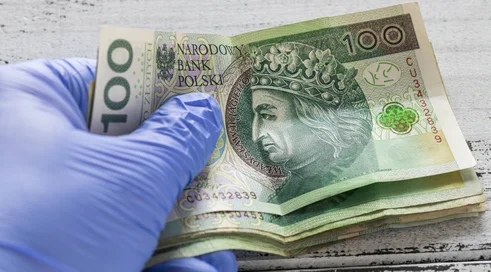
- I have been suffering from chronic sinusitis with nasal polyps for 26 years and I don't know what to do anymore. I've already had 17 treatments. I remove the polyps, and they still grow back, remove again, grow back again. And that's the worst thing with me: that these polyps grow back so much. I can't breathe through them, a tragedy. Sometimes, when I start to choke and can't breathe, and the date of the scheduled treatment at the National Health Service due to queues is far away, then I go privately to a doctor who helps me on an outpatient basis - he trims them with a shaver - but always says that this doesn't take care of the problem, that the polyps are not removed completely. Each such visit is 2,000 zlotys. This is a huge cost for me," says the 46-year-old patient. As a result of these surgeries and the medications used, I have numerous erosions in my nose, which not only look terrible, but also hurt. There is secretion running down the back wall of my throat all the time, causing me to feel like I have one big noodle in my throat. It's a tragedy when polyps come out of this nose at work. I have to push them into my nose with my finger. I then walk around wearing a mask over my face so that it can't be seen," she adds sadly.
What is the PZZPN?
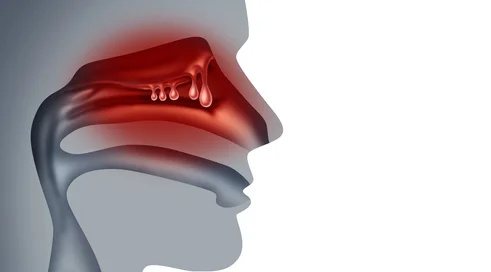
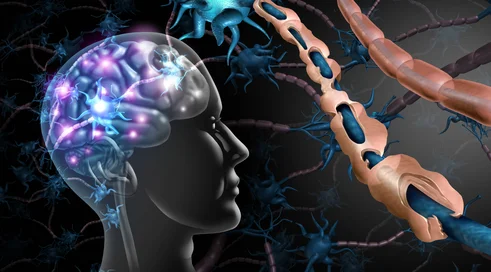
At the root of chronic sinusitis with nasal polyps is the so-called type 2 inflammation. Under this term are processes of the immune system caused by a number of potential damaging factors (such as viruses, bacteria, allergens or environmental pollution), leading to the influx of inflammatory cells into the airways, damage to the surrounding tissues, their remodeling and the formation of polyps, which - despite surgical removal - are characterized by a tendency to regrow. They most often develop in people with bilateral inflammatory lesions, initially forming in the paranasal sinuses. Later, polyps can grow into the nasal passage, causing numerous and annoying symptoms. It is a disease that is chronic and recurrent, accompanied by constant pain and a feeling of splitting headaches. Chronic sinusitis with nasal polyps (CPS) means endless infections and a feeling of a blocked nose, problems with proper breathing, sleep disturbances and, finally, loss of smell. The above symptoms result in a quality of life comparable to or worse than diseases such as Parkinson's disease or coronary heart disease.
Hubert Godziątkowski, president of the Polish Society for Atopic Diseases, concludes: Chronic sinusitis not only negatively affects patients' quality of life - it literally takes away the will to live - but also generates huge socioeconomic costs. The recurrence of the condition and the need for reoperation significantly limit the working activity of patients, whose average age is 49. AS generates more sick leave and absenteeism than diseases such as psoriasis, malignant thyroid cancer or prostate cancer, for example. This is confirmed by Social Security data on sickness absence.
Can the sick be helped?
Treatment of chronic sinusitis with nasal polyps begins as standard with pharmacotherapy involving intranasal administration of steroid drugs to reduce mucosal inflammation. In cases where there is no response to conservative treatment, patients undergo multiple surgeries, which involve removing the constantly growing polyps and opening and unblocking the outlets of all the paranasal sinuses.
- During the procedure, removing polyps also removes healthy mucosal tissue, scar tissue forms, and there is a risk of complications. including damage to the optic nerve, olfactory nerve or meningitis. Although these are now primarily endoscopic procedures, these and other complications can occur at any time in any center, even a reputable one. - admits Prof. Dariusz Jurkiewicz, MD, head of the Department of Otolaryngology and Laryngological Oncology with the Clinical Department of Craniofacial Surgery at the Military Medical Institute in Warsaw and chairman of the General Board of the Polish Society of Otorhinolaryngologists Head and Neck Surgeons, and adds: - Any such surgery is performed under full anesthesia, and after all, patients are getting older and have other medical conditions as well, so the use of anesthesia becomes more problematic. . Every patient must be aware of the risks involved in any procedure.
A 46-year-old patient with regrowing polyps who has already had 17 such procedures tells us: - After each procedure, I feel like I have a big hole in my nose. When they remove the tamponade from my nose on the second day, the sensation is intensified. It is a terrible feeling. After the procedure, you have a headache, of course you have to take medication, rinse your nose often, because you have a lot of scabs inside , and unfortunately it takes a long time to clean it out. After the last procedure I was on sick leave for as long as three weeks. Every procedure is done under general anesthesia. You have to have horse health for so much anesthesia.
Biological treatment an opportunity
Although surgery is an effective treatment, in the case of patients with recurrent AS, unfortunately, it is not sustainable, because the doctor can act on the symptoms and not on the underlying cause of this disease, that is, the immune system reaction caused by type 2 inflammation. ENT specialists know that in the case of such patients, the only chance to avoid numerous unnecessary surgeries would be biological treatment, and it is not reimbursed in Poland.
Prof. Dariusz Jurkiewicz confirms: Although surgery is an effective treatment, unfortunately, in the case of patients with recurrent chronic sinusitis with nasal polyps, it is not permanent, because we act on the symptom and not on the underlying cause of the disease. Numerous surgeries lead to numerous complications and generate additional unnecessary costs for the system, but especially for the patient. For patients with severe forms of AS, a chance to avoid them is biological therapy. Urgent reimbursement of biologic therapy targeting the cause of PMS, i.e. type 2 inflammation, will avoid further treatments and thus potential health complications.
Patients with chronic sinusitis with nasal polyps hope that soon their therapeutic needs will finally be met, especially since the biological treatment dupilumab already received a positive recommendation from the President of the Agency for Health Technology Assessment last year.
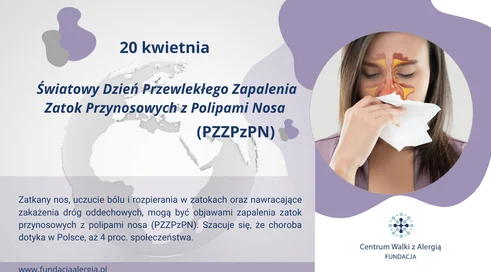
- During the Forum of Patient Organizations on the occasion of World Sick Day, Minister Miłkowski, in response to a question I asked about making biological therapy available to the most needy PAPD patients, replied that there was a chance to do so in April. That is what we are hoping for! This would be a fantastic gift from the Ministry of Health to hundreds of patients on the occasion of World ASF Day, which we celebrate on April 20. Patients have waited long enough," Hubert Godziątkowski concluded.
Source: press mat.