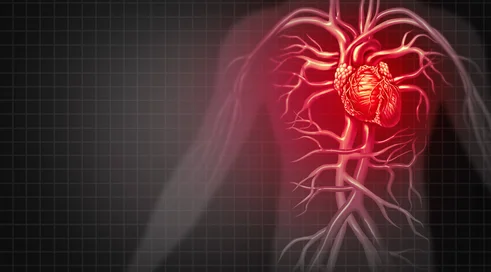
The human voice is not only a communication tool - it is also a rich source of health information. In recent years, researchers have begun using artificial intelligence (AI) to analyze acoustic features of speech to detect cardiovascular diseases. This is creating a new class of digital biomarkers: so-called voice biomarkers.
Can artificial intelligence "hear" heart disease?

Published Feb. 27, 2026 11:31
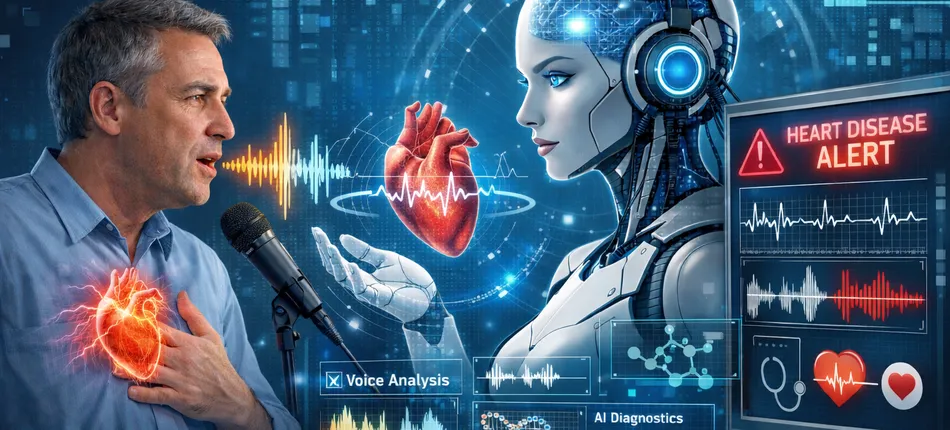
A voice biomarker is a set of measurable acoustic characteristics, such as pitch, voice tremor, rate of speech, number of pauses or timbre, which can reflect physiological and pathological processes in the body. Using machine learning algorithms, it is possible to detect subtle changes that are not detectable to the human ear.
Studies indicate that the voice can reflect hemodynamic and respiratory changes, neurohormonal stress and tissue swelling - all of which accompany heart disease. The strongest evidence relates to heart failure. Voice changes may result from fluid accumulation in the vocal folds and impaired respiratory mechanics, among other things.
Equally promising results have been obtained in coronary artery disease, where specific voice patterns may correlate with inflammation and psychosocial stress. Studies have shown that acoustic features of speech can predict cardiovascular events independently of classical risk scales.
The voice analysis process involves recording the speech, cleaning the signal from noise, and extracting acoustic parameters (such as MFCC coefficients). AI algorithms then identify patterns associated with disease. Importantly, the technology can operate from smartphones, enabling remote monitoring of patients.
As stressed by Prof. Tomasz Jadczyk, who heads the Department of Non-Invasive Cardiovascular Diagnostics and the Digital Biomarkers Laboratory in the 3rd Department of Cardiology at the Silesian Medical University in Katowice, as well as the Space Medicine Program at AGH.
Voice biomarkers have the potential to become a non-invasive, scalable and cost-effective diagnostic tool, although they require standardization and validation in large multi-center studies. In parallel, European initiatives such as eVoiceNet are being developed to standardize methods and integrate voice technologies in medicine.
The biggest challenges include the privacy of the biometric data, the interpretability of the algorithms, and the influence of factors such as language, emotion and comorbidities. Nevertheless, voice analytics may in the future enable early detection of heart failure exacerbations, remote monitoring of patients, and more personalized care.
In Poland, research on vocal biomarkers is developing exceptionally rapidly. The cooperating consortium includes, among others, the Silesian Medical University in Katowice (cardiology: prof. Tomasz Jadczyk, prof. Wojciech Wojakowski, Slawomir Pawlowski, Pawel Kurzelowski, Monika Kalicka; diabetology and nephrology: prof. Agata Stanek; pulmonology: prof. Szymon Skoczyński, Dr. Gabriela Bylica-Klara; laryngology: prof. Maciej Misiołek, Dr. Maciej Zieliński), the AGH University of Science and Technology in Krakow (Dr. Daria Hemmerling, Justyna Krzywdziak, Miłosz Dudek) and the Karol Marcinkowski Medical University in Poznań (cardiology: prof. Ewa Straburzyńska-Migaj, Magdalena Dudek). Within the Artificial Intelligence and Digital Solutions Section of the Polish Society of Cardiology, a thematic team "Digital Biomarkers" was established, coordinated by Prof. Tomasz Jadczyk, who also serves as Poland's representative in the European eVoiceNet consortium.
Perhaps in the near future a doctor will be able to assess the condition of a patient's heart... by listening to his voice.
Source: Silesian Medical University