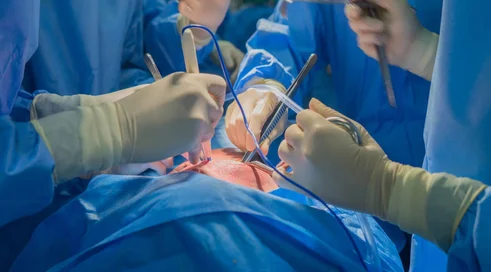
Actually, it's not transplants but transplants (that's what the procedure is called), and a transplant is just what is transplanted. Well, up to June 2011, 462 autologous i.e. own hematopoietic cell transplants performed to treat multiple sclerosis were reported to the European Society for Blood and Marrow Transplantation (EBMT) registry.
Prof. Wieslaw W. Jedrzejczak
Transplants in sclerosis

Published Jan. 10, 2025 07:32
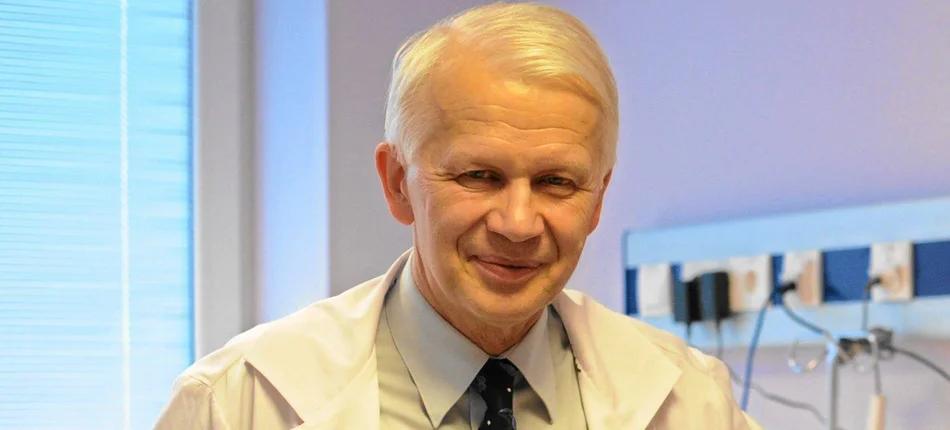
FOT. ADAM STEPIEN / AGENCJA GAZETA
Since then, can treatments for this indication be referred to as "experimental"? And in addition, in 2012, the aforementioned Society (the main and only organization overseeing the performance of hematopoietic cell transplantation procedures in Europe) granted this indication a "Clinical Option" category, i.e. equivalent to other treatments.
Things have changed a bit since then. A meta-analysis involving 4831 multiple sclerosis patients treated with this method and the first phase III study comparing its effectiveness with so-called disease-modifying therapies have been published. The results indicated quite clearly the advantage of transplantation. In the latter study, the disease progressed in 3 of 50 patients treated with transplantation and 34 of 50 treated with disease-modifying therapies. And in the most recent comparative study, transplantation proved more effective of fingolimod, natalizumab and equivalent to ocrelizumab.
Of course, the devil is somewhat in the details. Transplantation is offered (internationally) to patients who have proved refractory to other treatments and are relatively young, and it has been found that the best outcomes are in those patients whose disease is accompanied by a significant inflammatory response (Eur. J. Neurol. 2025:32:e16565). In the most recent EBMT 2022 recommendations, transplantation was considered the "standard of care" in patients with relapsing-remitting multiple sclerosis refractory to disease-modifying drugs. This "standard of care" is not available to Polish patients.
Wieslaw Wiktor Jedrzejczak