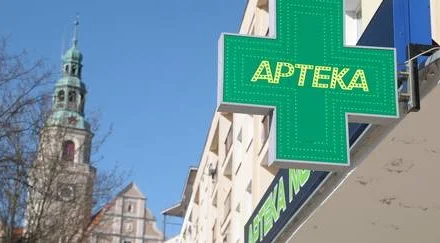
After the publication of an article reminding the public that the August 15, 2024 deadline for implementing the Standards for the Protection of Minors was looming, a discussion broke out regarding the responsibilities of pharmacies.
Michael Modro
Do pharmacies have to have Standards for the Protection of Minors?

Published Aug. 9, 2024 08:07

As part of this discussion, the position of people from the Supreme Pharmacy Chamber was that, the people indicated believe that pharmacies are not required to implement the Standards for the Protection of Minors. I will admit that I have not personally spoken with people from the Supreme Pharmacy Chamber, and I only obtained a report on this subject from another person.
Article 22b of the Law of May 13, 2016 on Countering the Threat of Sexual Crime
I will remind you in accordance with Article 22b of the Law of May 13, 2016 on Countering the Threat of Sexual Crime, the obligation to introduce standards for the protection of minors, is incumbent on any organizer of educational, care, upbringing, re-socialization, religious, artistic, medical, recreational, sports or activities related to the development of interests by minors.
"Medical activities", meaning what?
What is medical activity? The problem is that there is no definition of medical activity, and in the justification of parliamentary print 3309 - the bill, it is not specified what the legislator means by medical activity.
Medical activity should be understood much more broadly than just "therapeutic activity" within the meaning of the Law on Medical Activity, or the provision of "health services" within the meaning of the Law on Patients' Rights and Patients' Ombudsman.
A patient, in the broadest sense of the word, is a person on whose body some medical intervention is performed (medical intervention is a technical term - the use of medical techniques for any purpose), even if not therapeutic in nature[1].
Law on Certain Health Professions.
According to the explanatory memorandum to the draft law on certain medical professions, "The proposed regulations do not apply to medical professions regulated by law, such as the professions of doctor, dentist, laboratory diagnostician, nurse, midwife, paramedic, pharmacist and physiotherapist."
It is clear from the cited rationale that the profession of pharmacist is a medical profession, so the performance of a pharmacist is the performance of a medical profession, even if it does not involve the provision of health services or the performance of therapeutic activities.
Exercising the profession of pharmacist.
According to Article 4 . of the Law on the Pharmaceutical Profession, 1. The practice of the profession of pharmacist is aimed at protecting the health of the patient and protecting public health, and consists in: 1) providing pharmaceutical care, as referred to in paragraph 2; 2) providing pharmaceutical services, as referred to in paragraph 3; 3) performing professional tasks, as referred to in paragraph 4; 4) performing activities, as referred to in paragraph 5.
The starting point for analyzing the scope of the pharmacy profession in question is the constatation that the profession is a "medical profession", which incorporates pharmacists into the health care system in Poland, including by giving them the authority to provide health care services[2].
The health care system is defined in doctrine as a set of people and institutions to provide health care to the population, or as an organized and coordinated set of activities aimed at preventive, curative and rehabilitative services and benefits, safeguarding and improving the health of the individual and society[3].
Since the practice of the profession of pharmacist is aimed at "to protect the health of the patient and to protect public health", then, in my opinion, there can be no doubt that the practice of this profession is a manifestation of the "medical activity", although it may not consist (or at least will not always consist) of "provision of health services" within the meaning of the Law on Medical Activity and within the meaning of the Law on Patients' Rights and Patients' Ombudsman.
The manifestation of the provision of health services will be the performance of pharmaceutical care. Pharmaceutical care is a health service within the meaning of Article 5 item 40 of the Act of August 27, 2004 on health care services financed from public funds (Journal of Laws of 2024, item 146), provided by a pharmacist and constituting a documented process in which the pharmacist, cooperating with the patient and the patient's treating physician and, if necessary, with representatives of other medical professions, supervises the proper course of individual pharmacotherapy.
Health benefits, as a rule, will not be pharmaceutical services. Pharmaceutical services include, among other things, the dispensing from a pharmacy or pharmacy point of medicinal products within the meaning of Article 2(32 )of the Pharmaceutical Law and medical devices and foodstuffs for special nutritional purposes within the meaning of Article 3(3)(43)of theFood and Nutrition Safety Act of August 25, 2006 (Journal of Laws 2023, item 1448), combined with the provision of information and advice on the operation and use and storage of these products, agents or medical devices. Although even here one may have doubts, since the issuance of medicinal products is combined with the provision of information and advice on the operation and use and storage of these products. The mere provision of information and advice may already be considered the provision of health services.
Thus, in connection with the practice of the profession of pharmacy, including community pharmacy, there is a need to implement the Standards for the Protection of Minors.
[1] 1) Krajewski R. The patient's consent to treatment. Gazeta Lekarska 1998,12. 2) Liszewska A. The problem of patient consent as an axiological dilemma. Prawo i Medycyna 1999 1: 85-9. 3) Boratyńska M, Konieczniak P. Patient rights. Warsaw: Wyd. Difin, 2001
[2] S. Radowicki (ed.), M. Wierzbowski (ed.), The Law on the Profession of Pharmacist. Commentary
Published: JPC 2023 https://sip.lex.pl/#/commentary/587940820/738260/radowicki-stanislaw-red-wierzbowski-marek-red-ustawa-o-zawodzie-farmaceuty-komentarz?pit=2024-08-06&cm=URELATIONS
[3] Radowicki S. (ed.), Wierzbowski M. (ed.), Law on the profession ... description cit. after E. Nojszewska, System of health care in Poland, Warsaw 2011, p. 24).