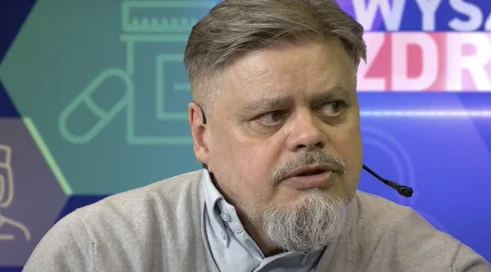
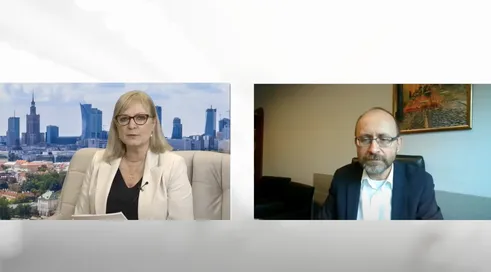
Prof. Jaroslaw Slawek, head of the neurology and stroke unit at St. Adalbert Hospital in Gdansk, talks about deep brain stimulation in Parkinson's disease.
Deep brain stimulation: In Poland as in the Wild West

Published April 2, 2024 08:29
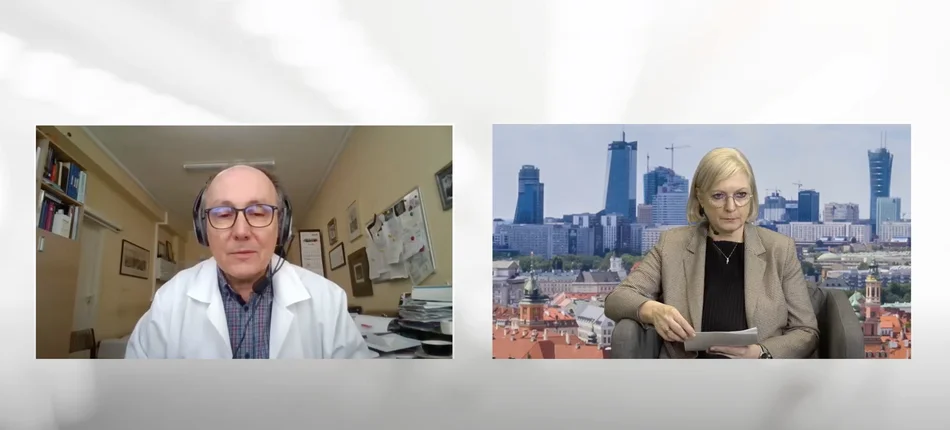
Professor, let's talk about patients with Parkinson's disease who are being treated with one of the treatments namely DBS, or deep brain stimulation. What are the obstacles currently faced by a patient who qualifies for DBS, but also by the neurologist who treats the patient?
The problem has been the same for many years. We do not have a clear system for qualifying and managing patients after these procedures. Despite the fact that I and the entire community have been revisiting this problem for years, we cannot get out of this vicious circle of impotence to reorganize the system of care. The system and the patient pathway are very important. For the procedure of deep brain stimulation, a patient with Parkinson's disease, also with other indications, must undergo a good qualification according to accepted standards in the neurology department. Today, this procedure as a guaranteed benefit does not formally require this pathway, with the result that patients are operated on without neurological consultation, without considering all the pros and cons, and without the basic prerequisite for implementing this therapy, i.e. using optimized drug therapy. What's more, after the surgery they are often left on their own and no one guides them. And such a stimulator, first of all, has to be turned on, and secondly, it has to be programmed. And this programming is time-consuming, requiring a lot of knowledge and precision of the expert who will do it. We have a group of trained people in Poland (perhaps a small one, but still) who can take care of this. But we also don't have much desire among young neurologists to deal with it, precisely because this work of theirs is unnamed, unpaid and does not fit into any organizational structures for this procedure. And the procedure is not cheap, which is why we thought that from the payer's (National Health Fund or Ministry of Health) point of view it was important to use it in people who actually require it. And today we often encounter implantations in people who don't require it, or who have contraindications, or who have just been implanted but have no follow-up care. What's more, we have submitted this program and it is lying in the Ministry of Health. There is a detailed description of the patient's pathway, what would happen step by step, in order to do it in a way that is optimally good for the patient and for the doctors who manage them, and also for the system, which will spend this money rationally. We know that this is unfortunately stuck once again in a drawer.
It may be worth telling our audience that right now it is a matter of implanting the DBS pacemaker. Then it is a matter of programming. It happens that several months a patient has to wait from the time the implantation took place to the time of programming, and then there still has to be often a correction. And that too is a visit to a neurologist. What is the question of financing and the implantation procedure, and the measures that are then taken for the patient?
Here is probably the problem, because reimbursement is only for the procedure of implanting a pacemaker, that is, in the department or clinic of neurosurgery. On the other hand, the qualifying procedure has neither its ICD9 number (that's a catalog of medical procedures), meaning we can't bill for it in any reasonable way, and it involves a two- to three-day stay of the patient in the ward and a number of tests. Similarly, there is also no procedure for guiding the patient. Because as the Editor said, it's not just turning on and programming once. In fact, such adjustment of the stimulation parameters to the patient's needs can take place for six months after the procedure at subsequent visits. And in the first year these visits are every three months. Later, they may be less frequent. Nevertheless, this should be regulated somehow. Cardiologists have pacemaker clinics, where checking a pacemaker has its own pricing, takes much less time and is less complicated than the procedure for programming a Parkinsonian pacemaker. Especially since modern pacemakers with very many so-called directional electrodes have appeared. This requires checking each electrode separately. And it can really take an hour, two or three even, depending on the problems with a particular patient. Today this is done by a neurologist in an outpatient clinic, that is, for the normal amount that is billed for a neurology visit. That is, it simply can't be done in a meaningful way, for the reason that we per patient don't have that much time in the outpatient clinic that we would be seen by our employers as an attractive employee if the doctor were to spend the entire outpatient clinic stay with three or four patients. This needs to be a separate procedure, separately billed, a separate consultation, the duration of which will be calculated for a longer patient stay in the outpatient clinic and better billed, at least at the level of this cardiology programming. I think it should be calculated higher. This is the main problem. Because patients are indeed wandering. Sometimes patients come to us from Poland who have had a pacemaker implanted and ask us to set it up. But we neither qualified this patient before, nor do we know him, we don't know if the qualification took place. This is not the way it should be. Someone who implants the pacemaker should take responsibility. And it should be the neurological-neurosurgical team that handles such a procedure. We think this is quite easy to implement. However, it is not succeeding.
Say further, Professor, to what extent does this coordination of care for a Parkinson's disease patient eligible for DBS therapy affect the quality of life of that patient and the family caring for him or her?
This has a direct bearing, because the deep stimulation procedure itself is, within the framework of these so-called advanced procedures for the treatment of Parkinson's disease, the method that is most effective, so that it gives the patient considerable independence, if it is done correctly, in the correct patient with the correct symptom profile, with the appropriate adjustment of pharmacotherapy as well. Because pharmacotherapy doesn't stop after the procedure, it just needs to be adjusted accordingly. But through this you can indeed achieve independence. This is the kind of treatment we offer to patients who are still working, active professionally or socially, because it gives independence. Once programmed, the pacemaker works 24/7, all the time in a similar way, providing the patient with predictability also of his motor state, predictability of life, which on drugs already at this stage of the disease we usually cannot provide. This translates as much as possible into quality of life. On the other hand, it's wandering in the system, when a patient hears that a procedure can be done somewhere, he goes to a neurosurgeon. This one doesn't know him, hasn't programmed him with pharmacotherapy, and patients sometimes come in for the procedure at a stage when they absolutely don't require it. Let's remember that this is a procedure costing 60-70 thousand zlotys. It can't be done just because I have a contract and can do it. It should be done on a rational basis. I have exhausted the possibilities of pharmacotherapy - who can say that? Not a neurosurgeon, because this patient does not manage, but a neurologist who knows how to treat Parkinson's disease, deals with it, and who, when he no longer has the tools to manage the patient in the form of pills or patches or other forms of pharmacotherapy, refers the patient to this type of treatment.
Since the draft is ready, there are specialists who prepared and analyzed it very precisely, maybe we should appeal to the Ministry of Health to make this an important and priority issue again?
We appeal constantly. I am a member of the National Council for Neurology. We now also have among the members of our council a neurologist, Deputy Minister Wojciech Konieczny, and I hope that through this he will better understand our problem. It seems that already after our first meetings he better understands the needs of our patients, because he himself is a specialist in this very field. I hope that this will be resolved, although we hear that there are no people, no time, because there are other, more important things. But this project has been waiting years for regulation. The first publication on this neurological-neurosurgical agreement is now 20 years old, and we have been pushing as a neurological community for its regulation for 10 years, since this therapy has been more widely used in Poland. This also applies to various other forms of such hardware therapy, such as the baclofen pump. It's exactly the same model that can be translated into baclofen pump therapy because this treatment too doesn't work well in Poland precisely because of organizational reasons and poor tarification. Also, the coordinated care model, which was prepared by the Agency for Health Technology Assessment and Tarification together with a group of experts (we really spent a lot of time on it) at the Ministry's request last year in May, went into a drawer. We can't really understand why this coordinated care pilot, which was prepared under great time pressure from the Ministry (3 months of very intensive work) is currently lying in a drawer. No one wants to return to it. It seems to me that these are also wasted resources that were spent on preparation. And the opportunity to implement such a model, which seems to make a lot of sense, gives patients more extensive neurological, neurosurgical and also physiotherapeutic care, which is also extremely important.