Currently, there is no effective therapy that offers a chance to cure Parkinson's disease. Despite an in-depth understanding of its pathomechanisms, its exact cause is unknown. Existing treatments make patients more comfortable, but do not prevent systematic neurodegradation of the brain.
World Parkinson's Disease Day
New research, new hopes

Published April 10, 2024 17:43
Fot. Getty Images/iStockphoto
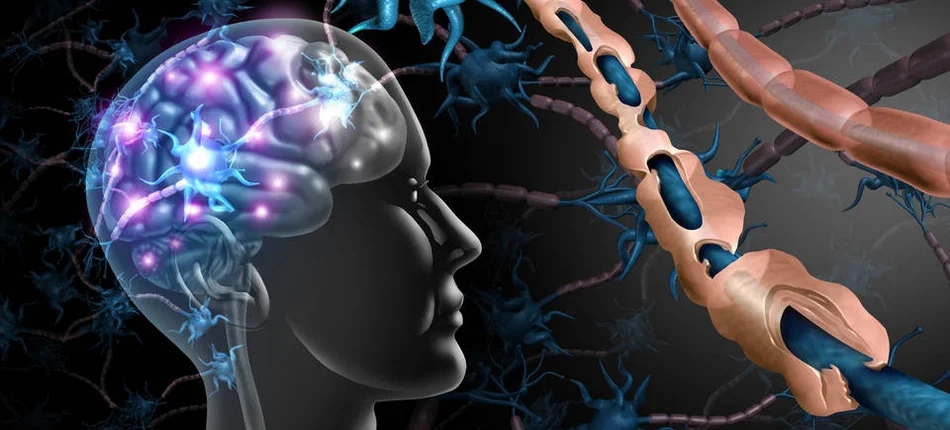
Parkinson's disease is a progressive brain disorder affecting the central nervous system, more specifically the black matter, which is responsible for motor coordination. It manifests itself, among other things, in slowed movement, trembling of the limbs or muscle stiffness. A characteristic symptom is a problem with writing manifested by a reduction of letters when the patient writes down text. Typical mental symptoms observed in the course of Parkinson's disease include depression, memory disorders and even hallucinations and delusions. As the disease progresses, the ailments worsen, limiting motor skills more and more severely, which consequently leads to many limitations in daily life activities, making work and, over time, the simplest daily activities impossible.
On April 11, the European Parkinson's Disease Association established World Parkinson's Day on the anniversary of the birth of London physician James Parkinson, who was the first to recognize and describe the symptoms of the condition. The symbol of the holiday is a red tulip. Like other such medical holidays, it aims to raise public awareness of the disease, as well as to support patients and their families in dealing with the difficulties they experience in their daily lives. It is a reminder of the importance of educating doctors about new methods to slow the course of the disease. The entire therapeutic process involves the cooperation of many specialists: neurologists, neuroradiologists, neurosurgeons, psychologists, psychiatrists, physiotherapists, speech therapists and nutritionists. After Alzheimer's disease, Parkinson's disease is the second most common neurodegradative disease. Nearly 100,000 people in Poland suffer from it, with about 8,000 new patients each year. It is worth noting that it is not an inherited disease.
Current treatment is aimed at slowing the progression of motor problems associated with Parkinson's disease. Research is still underway in many research centers around the world to invent an effective drug that would not only slow the progression of the disease, but also, make it possible to cure it. The recent results of the PASADENA study, presented at the American Academy of Neurology congress, suggest that prasinezumab formulations will play an important role in the causal treatment of Parkinson's disease in the future. Also of great interest was a study whose results were published in the New England Journal of Medicine. It involved a drug used to treat type 2 diabetes and obesity. For the study, 156 patients with Parkinson's disease living in France were selected and divided into two groups. The first was given a drug with an active ingredient called lixisenatide, while the second was given a placebo. The drug in question is a peptide drug that selectively activates the GLP-1 receptor, which is the target receptor for one of the endogenous incretin hormones, glucagon-like peptide-1 (GLP-1). The drug is intended for adults with type 2 diabetes as an adjunct to proper diet and physical activity. It is usually administered once daily by injection, with a meal.
After a year of follow-up, the group receiving the injectable treatment saw no worsening of motor symptoms compared to the placebo group. The study's author, Prof. Olivier Rascol, a neurologist at the Université de Toulouse, stressed that this is the first time that clear data have been obtained showing that an anti-diabetic drug has an effect on slowing the progression of the disease and has a neuroprotective effect. During the study, some patients reported some gastrointestinal side effects and weight loss. Further studies are needed to confirm the safety and efficacy of the treatment before it can be used more widely. Nonetheless, the results of the study are another step that may help improve treatment outcomes.
Topics
choroba Parkinsona