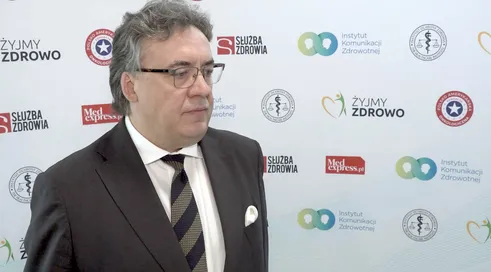
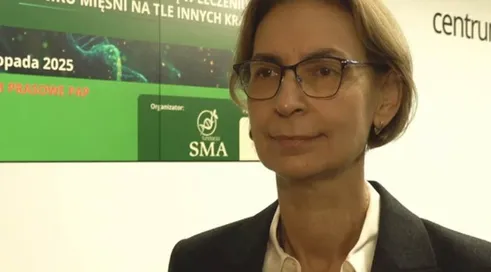
Interview with Prof. Tomasz Szczepanski, president of the Polish Society of Pediatric Oncology and Hematology.
Prof. Tomasz Szczepanski on hemophilia: We have reached a certain level of quality of life, but we are still a little short of talking about normal life

Published May 13, 2024 10:36
Fot. MedExpress TV
What is hemophilia and what population is affected by this disease in our country?
Hemophilia is an inherited disorder associated with impaired blood clotting. The most common condition in Poland at the moment is hemophilia A, with hemophilia B being the second most common. These are sex-linked inherited diseases, which means that men are most often affected, while women are carriers. However, there are also a few female patients in our population. Hemophilia A is associated with congenital factor VIII deficiency, and in hemophilia B it is associated with congenital factor IX deficiency. If there is a severe form of hemophilia (less than 1 percent factor), these patients have a very high risk of bleeding, especially delivery and intramuscular bleeding, and repeated delivery bleeding leads to joint destruction. Fortunately, such situations are already rare, because we can protect patients from this in a good way. It is worth adding that not only patients with severe hemophilia can have recurrent bleeding. There is also a group of patients who have more than 1 percent of the factor, but whose disease phenotype is so severe that bleeding occurs, and these people also require prophylactic management.
What is hemophilia in children associated with? What problems do parents face and how does it affect the life of the whole family?
This year marks the 30th anniversary of my graduation. Over these years, I have been able to observe how the management and lives of patients with hemophilia have changed. On the one hand, 30 years ago, when I started my work in pediatrics, hemophilia patients with joint strokes were regular visitors to the emergency room. At that time, they were given factor in an interventional manner, as well as pain medication. The next day, these patients would show up at the Emergency Room again. Their lives went from stroke to stroke. The quality of their functioning was not the best, especially since any trauma could trigger these bleeds.
How has the approach to hemophilia treatment changed in recent years?
A watershed moment that happened a dozen years ago was the introduction of prophylaxis for these patients. They began to be given factor VIII or IX preparations, and suddenly it became clear that such a supply could significantly reduce the number of bleedings. The inconvenience with classical factor preparations is that they have to be administered at least two to three times a week, and there are some patients who have to receive it every other day. This means the need for about 150 punctures a year, which raises vein problems. So we use vascular ports. This is undoubtedly inconvenient, but the use of intravenous prophylaxis produces long-term results in most patients. However, a certain group of patients, estimated at about 20 percent, develop antibodies to these agents. They require an alternative approach. In recent years, agents with prolonged duration of action have emerged, which could theoretically be administered once a week, and on the other hand, a subcutaneously administered antibody - emicizumab - has emerged, which can be used in patients with hemophilia A once a week or sometimes even once every two weeks. Its mechanism of action is similar to that of factor, although it is not exactly the same. The antibody is effective in preventing bleeding, and subcutaneous administration, and at long intervals, is more convenient than intravenous administration. In Poland, this drug is used in hemophilia A inhibitor patients in whom immunotolerance has not been achieved.
What is the availability of this prevention option?
In most European countries, this antibody is approved for a wider group of patients and reimbursed. In Poland, the main limitation is cost issues. Together with a group of experts, we determined which of the remaining patients without the inhibitor would most need this treatment. We came up with three groups of patients: those who experience recurrent bleeding despite intensive factor VIII therapy, patients who have no intravenous access (after twice replacing a vascular port). The third group is infants with newly diagnosed hemophilia A, in whom there are indications for prophylaxis.
Access to prophylaxis means that we are already seeing patients with bleeding less and less, and their quality of life is greatly improved, to the point that they even want to play sports. And not just safe sports like swimming. We have reached a certain level of quality of life, but we are still a little short of talking about normal life.
What are the key challenges in treating children with hemophilia in Poland today? Also, what changes should be made, looking at it from the perspective of clinicians?
Ideally, it should be the case that we, in consultation with the parents, choose the method of treatment, not necessarily guided by cost. More access to subcutaneous prophylaxis is needed in patients at risk of the intravenous form not being administered properly.