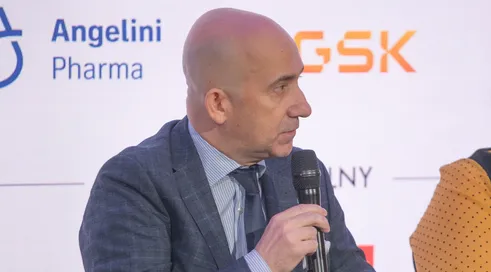
After 10 years since the adoption of the Public Health Law, we have a decline in life expectancy, a marked increase in overweight and obesity affecting a fawn of the population, an increase in alcohol consumption by one-third and the initiation of nicotine use by almost half of teenagers, lamented Prof. Boleslaw Samolinski during the Medical Rationale of State debate "Diseases of civilization - current challenges to our security." Experts discussed how to change these indicators.
Medical Rationale
Diseases of civilization - current challenges to our security

Published Nov. 4, 2025 07:20

Diseases of civilization in Poland are responsible for more than 70% of deaths and impair the quality of life and functioning at work. The treatment and prevention of these conditions was the subject of the Medical Rationale of State, held on October 23 this year.
Prof. Boleslaw Samolinski, head of the Department of Environmental Public Health at the Department of Environmental Hazard Prevention Allergology and Immunology at WUM, reported that Poland is one of the regions in Europe with one of the shortest healthy life expectancies. According to him, Poland lacks an integrated state health policy and inter-ministerial cooperation. - There is no financial provision for the implementation of health-promoting policies and, unfortunately, a complete fiasco when it comes to the National Health Program. There have been two editions, and we don't see results," he added.
He called for the establishment of an inter-ministerial team in the form of a Public Health Committee, which would be supervised by the Minister of Health, but would penetrate those ministries where health-promoting policies should take place. - What is needed is a team of experts, and not, as under the current law, representatives of various communities that do not have an expert character, he pointed out.
Joanna Syta, director of the Healthcare Benefits Department of AOTMiT, emphasized the value in the work of an expert institution that supports the development of nationwide health policy programs is the opportunity to use solutions that are scientifically proven and successfully applied in other countries.
The importance of dialogue across national borders, ministries and clinical specialties in the face of the challenges of diseases of civilization was emphasized by all participants in the debate aware of the community of risks of cardiovascular, cancer, metabolic and psychiatric diseases.
They also unanimously called for a return to health education as a compulsory subject as soon as possible.
- Only in this way will we raise a generation of conscious people, knowing what they can and even should expect from the system, and what will be their personal contribution to a sense of health security," added Michal Dzięgielewski, plenipotentiary of the President of the National Health Fund.
The silent killer
Chronic kidney disease is the second most common chronic disease in Poland after hypertension. Currently, 4.7 million Poles suffer from it, and as many as 80-100 thousand die from it annually. Some patients manage to slow the progression of the disease, some qualify for a kidney transplant, and some are treated with dialysis - by hemodialysis or peritoneal dialysis.
The problem is the asymptomatic nature of the disease in its early stages. That's why regular preventive examinations are so important to enable early diagnosis and implementation of appropriate treatment, which can significantly slow the progression of this condition.
Marta Pankowska, legal advisor at the NIK Delegation in Krakow, presented the conclusions of the Chamber's audit devoted to the diagnosis and provision of care for patients with chronic kidney disease. The NIK formulated conclusions addressed to the Health Ministry, including that it should take measures to increase the availability of early diagnosis. - The point is to link preventive programs with occupational medicine examinations, as under Prevention 40+ the level of participation was 25% of those eligible. We also pointed out the lack of nephrologists and pediatric nephrologists, and the need to contract services in this area in regions where they are much less available, she enumerated.
The number of nephrologist physicians who will reach retirement age in 2024 will be 241, while the number of physicians who will become specialists will be only 176.
Prof. Magdalena Krajewska, national consultant in nephrology, reported that procedures in nephrology are undervalued and thus there are too few places where a nephrology patient could be treated. This applies to both outpatient care and inpatient care. In addition, the elimination of internal medicine departments has resulted in nephrology in the hospital being overrun with internal medicine patients. - And this results in fewer and fewer treatment options for kidney disease," she lamented.
President of the National Association of My Kidneys Prof. Rajmund Michalski added that the waiting time for an appointment with nephrologist specialists has doubled in recent years 2022-2024. - The lack of nephrologists is a drama for patients. Meanwhile, according to official data, of the 4.5 million Poles with kidney disease, only 5% are diagnosed, he reported.
Reduce hospitalization in favor of home treatment
The latest data from the Polish Dialysis Patient Registry shows that a total of 20,970 patients were dialyzed in 2024, of whom 20,198 by hemodialysis and 772 by peritoneal dialysis. Peritoneal dialysis accounted for 3.68% of total dialysis treatment. Meanwhile, any patient who has the conditions for home dialysis should have the option, as it is a friendlier form of treatment and more cost-effective due to less involvement of missing medical personnel. In Norway, more than 22% of patients are dialyzed at home, and by 2030 the figure is expected to be 30%. A similar decision has been made by the Finnish government, where 40% of patients are to be treated at home. The percentage of patients on peritoneal dialysis in Western European countries averages about 15%, while in Poland it is less than 4%.
- Peritoneal dialysis performed at home for many patients is a better treatment method than hemodialysis performed in the hospital. In addition, it is less financially demanding above all when it comes to medical personnel, which is an unusual problem in nephrology, because nephrology nurses are almost non-existent. Therefore, increasing the use of peritoneal dialysis is an absolute necessity. 4% is scandalously low," lamented Prof. Magdalena Krajewska.
Prof. Mariusz Kusztal of the Department of Nephrology Transplant Medicine and Internal Medicine at the USK in Wroclaw pointed out that two-thirds of dialysis patients are elderly. - It probably doesn't need to be explained to anyone what a threat prolonged hospital stays are to an elderly person, where we have exposure to all sorts of already selected strains of bacteria resistant to various antibiotics. That's why the whole world is focusing on moving this therapy to the home," he pointed out.
- If the senior's home conditions are good and there is a person to help him, a family member or a neighbor, then let's try to arrange some small salary for this assistant, because it has been proven that this is still cost-effective and safer," he argued.
Prof. Rajmund Michalski pointed out that many doctors do not inform patients about the possibility of choosing the type of dialysis. And for young patients who are economically active or studying, this is the optimal solution.
Cezary Pruszko, president of MAHTA's Health Technology Assessment, reported that randomized clinical trials comparing peritoneal dialysis with hemodialysis in terms of survival indicated similar efficacy of both methods. However, peritoneal dialysis has an advantage in terms of quality of life, offering the patient more freedom in daily functioning, the ability to work professionally, pursue hobbies, and travel. A person-day of peritoneal dialysis is priced 45% lower than the cost of a person-day of hemodialysis, but hemodialysis is used only 3 days a week, while peritoneal dialysis is used 7. Therefore, the total cost of providing peritoneal dialysis is more than 25% higher than the cost of using hemodialysis, but it is within the QUALY (cost-effectiveness threshold), which today is 217 thousand zlotys. This means that the therapy is cost-effective and worth funding. - If the number of patients treated by home treatment were to double in the next five years, the increase in outlays would not approach 1% of the total costs incurred for renal replacement therapy for all patients treated today, the expert pointed out.
Artur Falek, a health system expert, added that if we want to achieve a percentage of dialysis at home of 30%, we should introduce correction factors in the billing of these procedures. - Firstly, correct pricing, and secondly, encouragement and stimulation of providers, that is, showing with a stream of money that we expect you to develop this. And if the providers see that they will benefit from this in a few years, then there is a chance that it will work," he recommended.
Prof. Rajmund Michalski pointed out that just a few years ago, peritoneal dialysis in Poland was 10%. - The decrease is, among other things, because we are probably the only country in Europe where contracts with dialysis stations are separate for hemodialysis and separate for peritoneal dialysis, he pointed out.
Prof. Mariusz Kusztal added that calculating in front of healthcare providers what is more profitable and implementing more profitable procedures is anarchism. - One should be guided by the fact that a chronic patient should live a long life, have a good quality of life and not cost the system and society, he said.
Obesity the mother of many diseases
During the debate, Prof. Boleslaw Samolinski asked Prof. Leszek Czupryniak, head of the Department of Diabetology and Internal Medicine at WUM, co-founder of MRS, whether pharmacological prevention of obesity in the population of people struggling with the condition would pay off in terms of short- and long-term prospects. - Definitely. We have six years of experience with these drugs and treated patients without severe disease. If someone, at 48 years old, loses 20 kg, it's impossible to count at all what benefits we are dealing with. Therefore, on the reimbursement list, these drugs should be included with the indication of treating obesity," the expert noted.
Indeed, adherence to treatment with GLP-1 and GLP-1+GIP analogs is important, which includes not only taking the drug regularly, but also maintaining a healthy lifestyle, including a proper diet and physical activity. The most common barrier to maintaining adherence is the high cost of therapy - lack of reimbursement or low reimbursement can prevent long-term use of the drug. Also, inadequate knowledge of the drug's mechanism of action, expected effects and how to manage side effects can lead to uncertainty and, ultimately, discontinuation of therapy. GLP-1 and GLP-1+GIP analogs act on biological mechanisms that regulate appetite and metabolism. Therefore, as in the treatment of hypertension or diabetes, therapy must be continued to maintain the effects achieved. Interruption of treatment often leads to a return to baseline weight. Continued treatment, on the other hand, leads to sustained health improvements, reducing the risk of cardiovascular disease, type 2 diabetes and other complications of obesity.
- Telling obese patients to eat less and move is simply insulting. Although I did it myself for many years, because we couldn't say anything else. And we did it without believing in any effectiveness. Because, after all, everyone knows that they should eat less and move. But he can't. Patients say, I have such a weak willpower, and I explain that it's a disease of not feeling satiated. These patients tell me: I could eat a whole dinner, wait five minutes, eat a second dinner, wait five minutes, eat a third dinner and still stuff with dessert, and now after medication I put a full plate of my favorite food, eat half of it and don't eat more," explained Prof. Czupryniak.
He added that despite the online revelations, there is no scientific data that these drugs are doing harm to patients.
Prof. Mariusz Wyleżoł, president-elect of the Polish Society for the Treatment of Obesity and head of the Warsaw Obesity Treatment and Bariatric Surgery Center at Czerniakowski Hospital, lamented that although we know more and more about obesity disease and public awareness of it is growing, nothing is changing when it comes to the possibility of treating it systemically. - We are still leaving this disease on the shoulders of the sick. Imagine if we left breast cancer solely to sick women," he said.
Currently, only 1.5% of patients with indications for therapy are treated in Poland. - 90% of patients carry the cost of treating the disease on their own shoulders. What consequences does this have for society? Obesity is responsible for the development of about 200 different types of complications. If it were possible to successfully treat obese patients, we would probably avoid about 500,000 cases of malignant tumors in our country, he calculated.
Prof. Boleslaw Samolinski asked why we do not have a national consultant for obesity prevention? Prof. Mariusz Wylężoł pointed out that while there are medical specialties in all possible complications of obesity disease, there is no specialty on the cause of these diseases. - We are currently practicing palliative medicine based on our knowledge. We are only alleviating the effects of the disease instead of treating the cause.
Diabetes treatment
Prof. Leszek Czupryniak spoke about the importance of drug and non-drug innovations in the treatment of diabetes. - The breakthrough was the appearance of GLP-1 analogue flosins and reimbursement decisions in this regard. We were treating diabetes the old way, because we couldn't do it any other way, but not very effectively and with the burden of hypoglycemia, without reducing cardiovascular risk. We used insulin very extensively. When I was seeing patients in the outpatient clinic, I used to prescribe insulin every day in type 2 diabetes, and at the moment it happens to me once every two months. If I can use semaglutide, thiothiazide and phlozins, I push back insulin, which pathophysiologically is not the optimal treatment when it comes to type two diabetes," he explained.
He added that patients taking semaglutide have a 20% lower risk of stroke. The most recent data published a month ago say the same thing about thiothrombotide. - When treating diabetes, we are already thinking about those very often distant cardiovascular complications that can occur decades after starting diabetes treatment, and this too is a breakthrough, he stressed.
Experts also discussed screening for type one diabetes. This is because it is usually diagnosed at a late stage, which increases the risk of preventable complications. With autoimmune antibody screening, it is possible to detect the disease months or even years before symptoms appear. Early diagnosis can prevent fatal ketoacidosis and improve cognitive development in children.
There is a pilot program in Poland for the early diagnosis of non-clinical type one diabetes to prevent the disease (EDENT1FI). It is being implemented in the Mazowieckie Province and covers 20,000 children. The program is open to parents with children aged 2-17 who have not yet been diagnosed with diabetes. The test involves collecting capillary blood from the finger once and analyzing it for the presence of autoantibodies typical of this type of diabetes. Their presence indicates an ongoing autoimmune process leading to the destruction of pancreatic beta cells. The introduction of a lipidogram in a six-year-old's balance sheet, opens up possibilities for the diagnosis of other diseases, including type one diabetes.
Dr. Monika Zamarlik, president of the Diabetes Federation, reported that 50% of patients with type one diabetes are diagnosed with diabetic ketoacidosis, a life and health threatening condition. And several patients die every year.
Prof. Leszek Czupryniak admitted that screening would eliminate the complication of ketoacidosis. - And the other thing is that drugs are emerging. Such a drug is teplizumab, which slows down the destruction of beta cells by the immune system. So there is hope for the development of therapies that maybe can be used at this preclinical stage," he said.