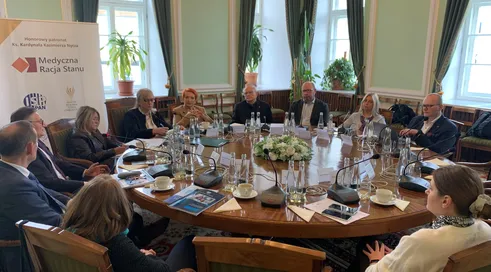
Health education or... Either we can't cope, the system won't hold up organizationally and financially, the public's health indicators will sink - this is how the expert discussion on lifestyle-dependent diseases at the 12th Public Health Congress could be summarized, in the shortest terms.
KZP 2025
Lifestyle-dependent diseases

Published Dec. 19, 2025 08:23
Fot. Getty Images/iStockphoto
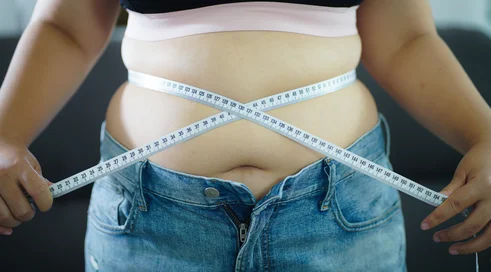
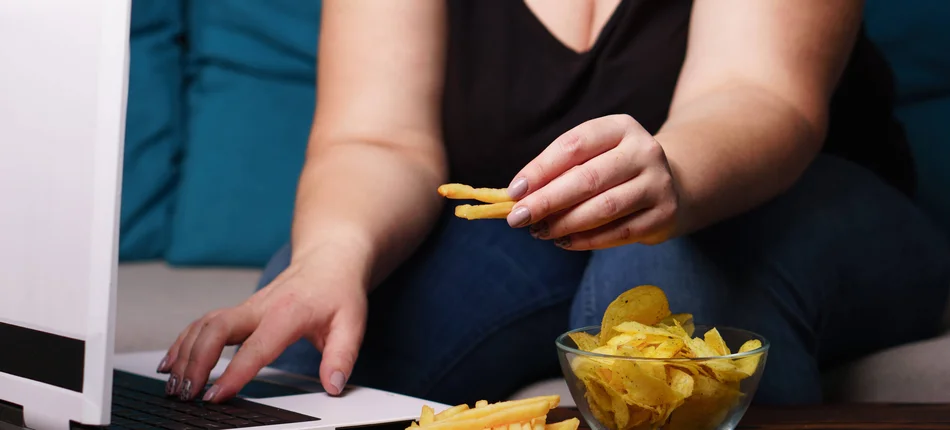
Prof. Artur Mamcarz, head of the Third Department of Internal Medicine and Cardiology at the Medical Faculty of Warsaw Medical University, protested against calling diseases such as diabetes, hypertension and obesity "diseases of civilization," reminding that the word "civilization" carries - or at least should - a lot of positive content. - These are diseases that depend on lifestyle and our choices, the expert pointed out. Besides, he said, the catalog of these diseases is much broader, because obesity alone increases the risk of more than two hundred diseases, including - oncological diseases. Prof. Mamcarz has no doubt: we need to improve efficiency and in the prevention of these diseases and in their treatment, starting precisely with obesity and overweight. - We need to prevent, through healthy choices, taking into account nutrition, physical activity, but also, for example, the quality and quantity of sleep or, finally, proper social relations," he enumerated, reminding that the latter, although there is no widespread awareness of it, are an important factor in vascular, but also metabolic diseases.
The challenges posed by reality are enormous, since more than half of adults have a problem with overweight and obesity, the problem also affects children and young adults. - We can no longer just talk about it," Prof. Mamcarz pointed out. Action must start with health education. - It needs to be introduced into schools effectively, an optional subject is a failure and a missed opportunity. What is needed is modern education with the right tools.
Prof. Leszek Czupryniak, head of the Department of Diabetology and Internal Diseases at WUM, stressed that although certain issues seem obvious to experts and those involved in medicine and health care, the general awareness of health is not high at all. Men in particular are a problem, as they - at least up to a certain age - even consider themselves "immortal." This translates into a lack of willingness to take responsibility for one's health. Once a patient does see a specialist, he often says he does it because "his wife told him to" or "he got a referral." - By the way, I have never heard from a woman: "my husband told me to". - he admitted. - I say then that I'm interested in the patient's health as much as the patient himself," Prof. Czupryniak said, noting that many people believe that doctors or the state are responsible for their health, not themselves. The challenge is also to make parents aware that they are responsible for their child's health - including the habits that are formed in childhood, starting, for example, with drinking water, not sweetened beverages.
The expert reminded that although the state is responsible for health care financing and organizational issues, its task is to support and stand guard so that the basic principles of social solidarity are preserved. The responsibility for health rests with the citizens themselves. This is a model that assumes that the public is well educated, and that power is exercised by highly competent people who think in the horizon of at least a decade, not the next term. There is another aspect. - Within the Medical Rationale of State, a think-tank that has been active for years, we often say that health is a value above politics. This is true, but money is a very political issue," he stressed. And it is money that determines many of the decisions that are made in the area of health care.
Prof. Czupryniak acknowledged that these decisions are often not accurate, which does not always receive a proper reaction and evaluation from professionals. There is a lack of healthy criticism, because the one practiced by the opposition is usually total and as unmeritorious as the decisions of those in power. The situation is complicated by the fact that public health, issues of education, prevention and disease prevention are at the gray end of the queue for attention (and funding). Much more visible are the fields of restorative medicine, especially the most "spectacular" (though obviously necessary) ones like transplantation and robotics. Although they save the lives of individuals rather than millions. The specialist also said that considering ways to convince adults to change their lifestyles - on a global scale - leads nowhere, because changing lifestyles is extremely difficult. - We say focus on shaping the attitudes of children and adolescents so that they develop the right lifestyle. And make adults aware that in the end they are responsible for their own health anyway," he concluded.
- Health education alone is not enough to make the right health choices. There must still be a base, conditions for such choices to be made," Professor Anna Fijałkowska, head of the Department of Cardiology at the Institute of Mother and Child in Warsaw, reminded at the same time, stressing that even the most attractively conveyed knowledge will lose out to reality if making healthy choices is impossible or even very difficult.
Meanwhile, the state of children's health must be a cause for concern. The latest COSI (Childhood Obesity Surveillance Initiative) study shows that one in three 8-year-old children in Poland is overweight or obese (obesity affects 10 percent of children). - We rank eighth in this statistic among 37 countries in Europe, but first in our region," Prof. Fijałkowska said. Admittedly, after the pandemic, the rates have declined somewhat, but they are still higher than before the pandemic. The expert pointed out that the increase in the problem of overweight and obesity may not be "dramatic," but it is there. - The dramatic jump was indeed recorded during the first period of the pandemic, she recalled. And while the rates for teenagers are already much better - the percentage of overweight and obesity in both sexes is declining - the problem is back in older teenagers and young adults, who again face problems with abnormally high body weight. As Prof. Fijalkowska said, the experience of IMiD researchers shows that effective interventions in this area are possible. Such an example is the "High-five" program, aimed at children and parents, the pillar of which is to awaken the child's sense of agency. Indeed, the expert pointed out that today's children are unprepared to take responsibility for their choices - including through tools that give parents real-time knowledge of events at school. - If a parent embraces everything, including the fact that a kid got an A, how is a child supposed to take responsibility for himself and his health? - she asked rhetorically. Once causality is built (awakened), knowledge about nutrition, physical activity or healthy sleep can be shaped (the COSI study also showed that the latter parameter should be of concern, with only 1 percent of eight-year-olds getting the desired nine hours of sleep a night).
The specialist acknowledged that raising awareness of the importance of the problem should start with pregnant women, because the first years of a child's life are absolutely crucial to his or her health future. - Metabolic reprogramming in childhood has consequences, she warned, adding that it is not without reason that cardiologists and diabetologists debate about children and their health habits. - We know what this means in adulthood," she added, returning to the topic of the base of good health choices. - There must be healthy food available, there must be conditions that entitle people to physical activity. Local governments must be aware and involved and provide roads that allow children to get to school safely by bicycle, without risking collisions with speeding electric scooters, she enumerated.
Respiratory diseases can only partly be considered lifestyle-dependent. Prof. Piotr Dabriecki, chairman of the Polish Federation of Asthma, Allergy and COPD Patients, pointed out that asthma is the most common chronic disease in children, and atopy or allergy, which can lead to asthma, affects up to 35 percent of the youngest. One reason is air pollution, because even if the situation with particulate matter has partially improved, in terms of other pollutants we are at the forefront. The main reason remains home heating and 2.5 million smoky chimneys. Studies have already shown that women who breathe polluted air give birth to children who are twice as likely to develop asthma. - While lifestyle determines more than half of our health, this environmental factor of air quality comes second. We have limited influence on it, although we can, of course, decide where we live, what we heat our home with, what we travel with," he pointed out. In this area, too, the expert admitted, the "learned helplessness" of politicians prevails. - When the conversation comes down to the need to fight smog, successive ministers say, "It can't be done," he said. The price for this is tens of thousands of premature deaths each year.
Respiratory diseases also cry out for health education, Prof. Dabriecki stressed. - One in 10 children on a spirometry test has obstruction, he said. Problems left without further diagnosis and treatment mean a path to COPD or severe asthma.
The effect of air pollution on the cardiovascular system is also a huge problem. Fatal air quality increases the number of strokes and heart attacks, and also affects the increase in cancers. However, both the issues of improving what we breathe and health education are being "traded" on the altar of politics. - We do not ask the patient's political views. In the same way, we will all benefit and be happy if air quality improves," he pointed out.
Air quality on the one hand, poor health choices on the other. Prof. Dabriecki cited data showing that one in four adolescents aged 11-14 smoke/vape daily. - Half have had contact with vaping. Who let them do it? - he asked rhetorically, pointing out that the problem of disposables is still not solved, and it happens that children as young as eight or nine are reaching for them. - They are not to blame for the fact that they can buy something around the corner that is as addictive as heroin.
The expert stressed that underrecognized respiratory problems, regardless of their causes, can result in severe asthma, a disease from which some patients die. The problem is the scale of underdiagnosis of cases of severe asthma, because diagnosis is a basic condition for effective treatment. But the problem is also the lack of awareness - on the part of patients, but also, for example, of PCPs - that at the moment severe asthma can (should) be treated differently than with oral steroids. - We have biological treatment available, there are five preparations available. However, we treat 4,000 patients in our outpatient clinics, and more than 35,000 patients meet the criteria for the drug program," he said. Those who do not reach specialists, he predicted, will ultimately generate massive system costs, if only through necessary hospitalizations related to exacerbations of the disease. In addition, steroid treatment is not without negative consequences for the body, among which the expert mentioned osteoporosis, glaucoma, cataracts or the risk of heart attack.
Joanna Wicha, Vice-Chairwoman of the Health Committee, which heads the work of the Parliamentary Subcommittee on Public Health, stressed that many of the problems raised in the discussion could have been better addressed if the public health law from a decade ago had been amended and a new National Health Program had been in place. The legislation is intended to ensure that it is better funded, and without funding it is difficult to conduct health policy effectively. - Public health activities must be multi-sectoral and cross-ministerial, she stressed, adding that the amended law provides for the establishment of a government committee to coordinate the activities of the various ministries. - As for one-offs, the need for notification in the EU has slowed down this process of eliminating them, but this is expected to happen next year, as the Health Ministry promises, she recalled.
Alcohol is also a huge challenge. The MP pointed out that the problem of alcohol consumption, including addiction, manifested, for example, by daily purchases of so-called "monkeys," affects both men and women. - A million monkeys bought in the morning until 9 a.m. Women working in corporations also do this, she reminded. That's why the Left submitted some time ago a draft amendment to the law on restrictions on the sale and promotion of alcohol (this includes the so-called "night prohibition," i.e. the ban on the sale of alcohol outside premises, which would apply throughout the country, not just in municipalities that currently impose such bans). Wicha also announced that although President Karol Nawrocki vetoed the bill increasing excise taxes, the topic is sure to return, as the proceeds are needed, among other things, to combat the effects of alcoholism, including the operation of sobering rooms.
It is not only (and probably not primarily) politicians who are waiting for the new National Health Program. Prof. Mateusz Jankowski, School of Public Health, Center for Postgraduate Medical Education; Polish Society for Personalized Medicine stressed that, as in restorative medicine, personalization should be a leitmotif in public health as well. In the sense that there is a need for well-targeted, precisely defined methods for solving problems identified with great accuracy. - We have very large data sets that we should use and apply to plan health policy priorities, he said. On the basis of these data sets, registries, epidemiological data or those from narrower surveys, we should look for answers to the question of what is the health status of the Polish population and what are the needs. This should be the basis for decision-making at the level of the government and parliament, so that interventions - related to the placement of financial resources - are apt and thus effective. As an example of data at hand, the expert pointed to information available to the National Health Fund on the level of implementation of preventive programs, or ZUS data on sickness absence. - They are in open access and not used for decision-making," he reminded, adding that for the purpose of implementing the Public Health Act, a repository of knowledge on the health status of the population should be created, for example at the NIZP PZH-PIB. Thanks to the "preview," it would be possible to determine priorities, identify socioeconomic groups or regions where actions should be prioritized.
Marek Augustyn, vice president of the National Health Fund, in turn pointed out that while decision-makers - at various levels - may indeed lack competence and knowledge, a huge human resource are public health graduates, who should be involved to a much greater extent than now in decision-making processes, if only at the level of local governments, where key decisions are made. Decision-makers, he said, sometimes lack basic knowledge of the health care system, which does not prevent them from making promises and announcing radical breakthroughs, resulting in investments in expensive equipment that "then stands unpacked." - There is a lack of knowledge about the system, about its capabilities and limitations, related, for example, to the level of funding," the NFZ vice president grumbled, clearly referring to the ongoing discussion about the necessary consolidation of smaller medical entities, as he continued, speaking of the "lack of will to optimize processes at the subregional level concerning health policy. - Often this lack of knowledge leads to an underutilization of the potential we have," he pointed to primary prevention programs.
Topics
Joanna Wicha / Kongres Zdrowia Publicznego / Choroby cywilizacyjne / prof. Mateusz Jankowski / Kongres Zdrowia Publicznego 2025 / Edukacja zdrowotna / Prof. Artur Mamcarz / Prof. Leszek Czupryniak / Choroby zależne od stylu życia / Choroby metaboliczne / Nadciśnienie tętnicze / Marek Augustyn / Otyłość / Cukrzyca