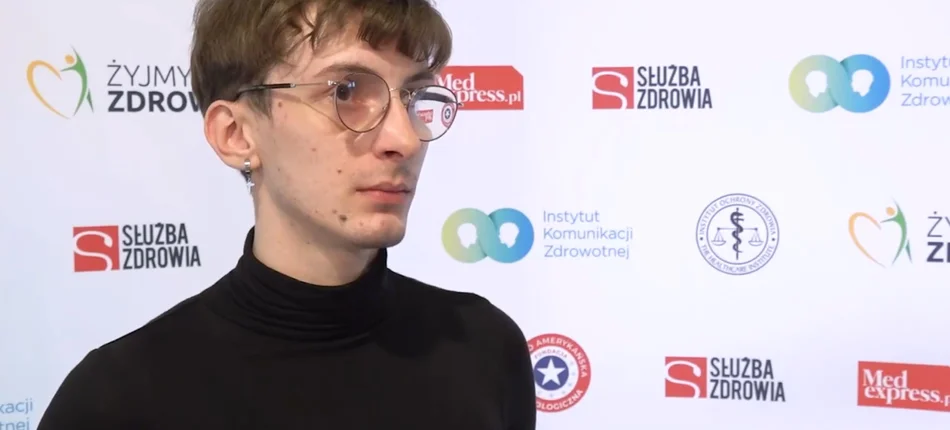
An interview with Dominik Kuc of the GrowSpace Foundation.
Dominik Kuc: The needs of child psychiatry are enormous

Published May 24, 2024 08:00
There has been a great deal of talk for some time about needs in psychiatry, both for adults and children and adolescents. What do the needs look like if we look at it from the point of view of young people who are struggling with their problems, being in a certain environment, usually school?
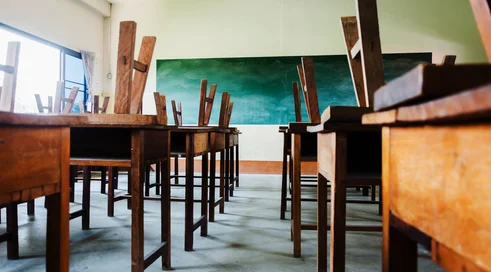
In fact, we see that there is a growing need for young people to use the health care system, mental support systems. There are two key points to be made. First of all, the health sector should cooperate with the education sector. We see that young people should also have expanded opportunities to use level zero. This means that before they even enter the health system, they should be able to benefit from other forms of support, such as consultation with a school psychologist, but also psychotherapy. There is a need for psychoeducation or intervention already on school grounds. So we see a great need for schools to actually cooperate with first-level referral centers, for example. On the other hand, there is also more and more talk about this third side of treatment, namely the family and the environment. When a young person goes to a psychiatrist, it's impossible not to also talk about the family at the same time, and we can't underestimate the influence of the family on the young person. The needs are growing, but we see a very strong commitment, including the systemic one. The transfer of 3 billion zlotys for child oncology and child psychiatry is a step in the right direction, but of course we are monitoring the needs further, and they are enormous.
These needs are enormous, and there is indeed a lot of talk about ending siloed operations. Let's focus on the education ministry for a moment. Is this system of mental, psychological support in schools already in place?
I think it is, but it needs to be developed. We have the standardization of the employment of psychologists and school psychologists, teachers and specialist teachers. This is a good step, but 450 municipalities in Poland did not have a single psychologist or school psychologist, and these are the kind of things that need to be fulfilled. We're talking about work standards, we're talking about professional secrecy, respecting that this person is actually a person of trust on the school grounds. On the other hand, of course, there is still a lack of psycho-educational programs, coordinated by the department of education, but also consulted by the department of health and the department of family and social policy, because this department is also responsible for crisis intervention, for example. We hope to involve the education superintendents, who will be able to reach out to teachers. The regular support system is something that is yet to be developed.
In large cities, local governments also play a role. In Warsaw, there is a program called School of Welfare, which supports young people, but this is Warsaw. We need to reach out to smaller cities and towns, to municipalities in Poland in different provinces.
Let's just look at these smaller cities and municipalities, the white spots. What is a young man to do who needs help, but lives somewhere where he will only have access to a psychologist in a few days?
Usually such young people are directed to NGOs, for example. Here a very big role is played, for example, by the helpline, to which young people can anonymously turn for help and advice. This is not just a phone we call in extreme situations or in situations of great crisis. You can also just talk, and this is certainly an important aspect. There are organizations that also provide free psychological consultations or even therapy if that is also needed. This is a way to reach smaller cities and towns, but often it is also local governments that, for example, implement programs directed at these needs. However, this is now heavily decentralized. If a particular county or municipality has the resources to do so, it will allocate them, but in less affluent municipalities or less affluent counties these resources are in short supply. Crisis intervention centers or intervention points do not cover the whole of Poland, so such systemic support must still reach there.