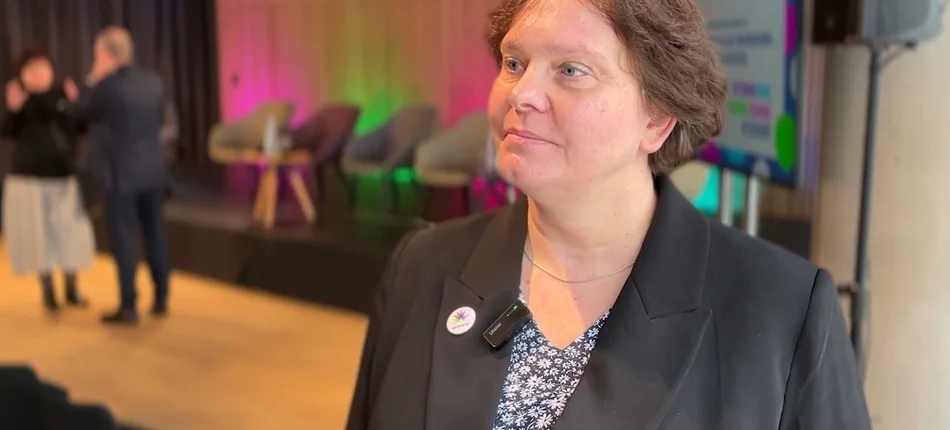
An interview with Dr. Ewa Glab-Jabłońska of the Department of Screening and Metabolic Diagnostics at the Mother and Child Institute.
Dr. Ewa Glab-Jabłońska: We are thinking about pilot screening for lysosomal diseases

Published March 11, 2024 12:40
Health Minister Izabela Leszczyna recently announced that applications for seven services related to newborn screening have been submitted to AOTMiT. What diseases could be diagnosed as part of such screening?
At the moment, 30 diseases are diagnosed through newborn screening, and this is mandatory for the whole of Poland. We want to include screening for congenital combined immunodeficiency later this year, we are thinking of screening for galactosemia, and of course we are thinking of having a screening, for now a pilot, for lysosomal diseases.
What could be the potential benefits of just implementing universal newborn screening for lysosomal diseases?
Certainly earlier diagnosis, that is, faster detection of diseases that involve patients shortens this diagnostic odyssey. I know that there are several centers that already treat these patients, while there is no consensus worldwide on which of these lysosomal diseases should be detected. In the United States, there are only three on the mandatory panel at the moment. These are Pompe disease, MPS 1 and MPS 2, while the European panel various countries have not yet reached a consensus.
How does this early detection translate for these young patients?
Screening makes sense when there is treatment. Right now there is a boom of new drugs that allow us to treat very early. The problem is early detection. At the moment, we theoretically have the tools and opportunities to bring these types of diseases into the screening panel. However, not all of them have treatment and reimbursement options. There are some, such as Pompe disease, which have I think three reimbursable drugs at the moment, while there are others, such as Krabbe disease that don't have this treatment.
An often-cited example of a situation where we have treatment and we have screening is SMA.
Testing for SMA makes it so that by the second week of life we have a result and children by a month have therapy switched on. Most often it is gene therapy. It allows the children to develop normally and have a normal life, as do their families.