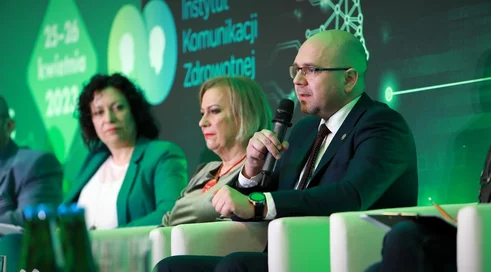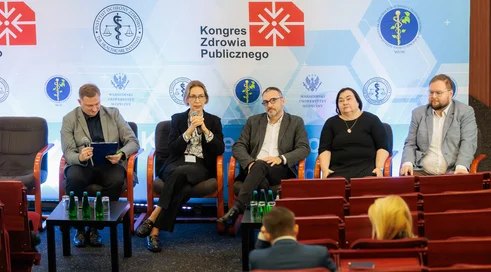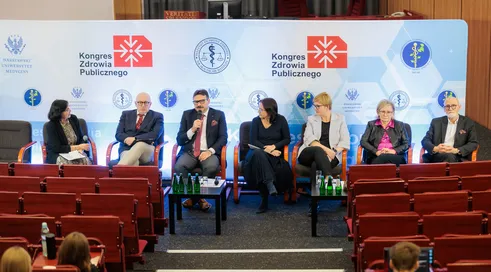
Inequalities in access to health care, to services, are a problem not only in Poland - it is also highlighted, in various aspects, for example by the European Commission. Reflections on equality were also not to be missed at the Patient Empowerment 2023 congress, with the panel "Equality in quality of life, treatment, care and e-health. How not to widen the gap in access to health well-being?".
How not to widen the gap in access to health well-being?

Published May 22, 2023 09:00
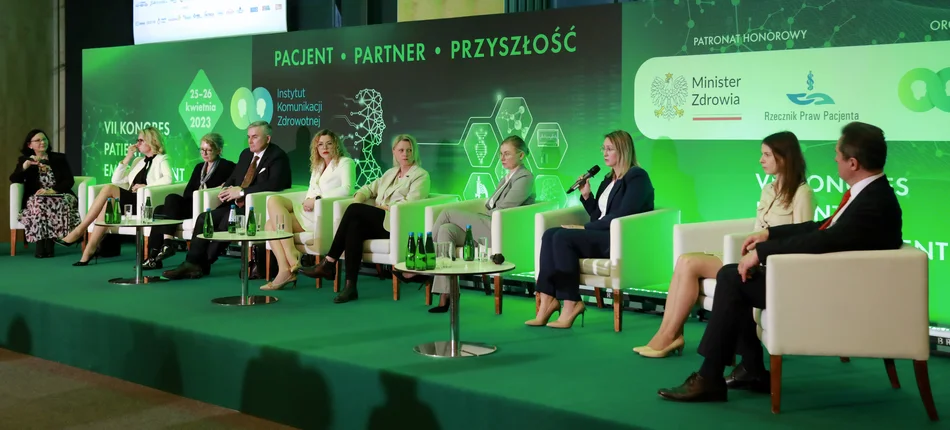
Fot. Igor Kohutnicki
Maria Libura pointed out that we very easily fall into the traps of inequality, as it were, at our own request. There has been a rapture over the possibilities of e-health in recent years, and it has begun to be seen almost in terms of "salvation." Meanwhile, the expert said, these are just tools - the results depend on how these tools are used. - For the time being, all uses of digital tools in the case of public policies show a widening gap, she stressed, pointing out that, especially in the case of the use of AI, we can even talk about "patterns of discrimination that humans would not invent," because artificial intelligence sees correlations in algorithms imperceptible to the human brain - and is guided by them in its decisions.
The logistics themselves also play a big role. - If we are betting on digitization in health, broadband must be a patient's right. This demand resonates very strongly in the message of patient organizations in the US and Western Europe," Libura stressed. Of course, digitization has its demographic limitations - some people are excluded by age, some by disability, because the tools are prepared with average, able-bodied people in mind.
How to talk about equality when even in the area of the same specialty - neurology - there are diseases treated completely differently. MS can be an example of success, while lupus - also a disease that very often affects a similar group, namely young women - seems to be completely forgotten. - The situation is all the more difficult because it is a rare disease, the symptoms are not unambiguous and patients often report to doctors already at an advanced stage," said Violetta Zajk, president of the National Association of Young People with Inflammatory Connective Tissue Diseases 3 Let's Hold Together, stressing that a not insignificant problem is the fact that changes in the organs are also accompanied by external changes, difficult to accept especially for young women. - A common symptom in advanced disease is skin changes on the face, she reminded. In addition, she said, side effects of currently available therapies are a problem in treatment. Therapies that are outdated.
Dr. Katarzyna Romanowska-Próchnicka, M.D., from the Clinic and Polyclinic for Systemic Connective Tissue Diseases at the National Institute of Geriatrics, Rheumatology and Rehabilitation, said that 18,500 patients in Poland are struggling with lupus, of whom 4,000 have the severe form, which is associated with multi-day hospitalizations and high sickness absence. - The goal of treatment is to avoid disease exacerbation and maintain remission, she stressed, adding that this is only possible with modern treatment. With this, however, there is a problem, because out of sixteen therapies available in Europe, immunosuppressive, biological drugs, in Poland reimbursement covers three. - Lupus patients have no access to biologic drugs at all. None of the therapies that are included in the scientific recommendations are covered by the drug program," the expert said, stressing that these drugs enable (or rather would enable) patients to live a normal life. - We are treating in the exacerbation phases of the disease," she lamented, listing drugs that are not available, or, like the biosimilar rituximab, are available under the RTDL. Dr. Romanowska-Próchnicka stressed that lupus drugs have been awaiting reimbursement for more than a dozen years. - There is a great need for a drug program, as it would provide better accessibility to modern treatment. Talks are going on, but there are no official confirmations as to a decision. Expectations are huge, as we are an outlier in this regard in Europe.
- I wish epilepsy patients were as educated as MS patients," said Alicja Anna Lisowska, CEO of the Epibohater Foundation. Unfortunately, years of silence around epilepsy mean that the lack of education, both on the part of patients, as well as the public and even some medical staff, is huge. Especially since epilepsy is a very individual disease, and patients with similar characteristics can react very differently to the same drug. They also get sick differently, although, as Lisowska stressed, in general the symptoms of the disease are practically unnoticeable, because the attacks of the disease we know from books or movies affect a fraction of patients. - A seizure is usually a "suspension" for a moment, a temporary loss of contact. Tonic-clonic seizures are rare.
Accidentally, she said, she herself experienced such attacks, but thanks to the fact that she received professional care from doctors and support from her family after the diagnosis, she lives a normal life. - I graduated from college, I have a wonderful family, a husband and daughter, I run half marathons, I run a foundation," she enumerated. Meanwhile, she said, epilepsy patients who are left alone with the diagnosis (and this happens very often), looking for knowledge on the Internet "find out" that they should actually go to bed and wait for a seizure. Nothing is allowed to them, life is over. Meanwhile, at the moment, epilepsy can be effectively treated, even if it is drug-resistant epilepsy.
It's worth reading
- Not only patients need education, not only the public, but also health care professionals," commented Dr. Malgorzata Galazka-Sobotka, dean of the Center for Postgraduate Education and director of the Institute of Healthcare Management at Lazarski University. The expert stressed that at the moment it is difficult, for example, to give a clear answer to questions such as whether the system of care for patients with particular disease entities is organized, whether there are patient pathways. - These pathways vary in each region," she admitted. - The reform of the PCP and the introduction of coordinated care for patients in their immediate environment will determine whether we will cope better with inequalities, she assessed. Because, in her opinion, the alternative is to worsen the situation and exacerbate inequalities, including through the use of modern technologies. If only because these solutions are implemented primarily by leading centers, to which not all patients have access.
Referring to a report on the treatment of epilepsy, Dr. Galazka-Sobotka advocated the creation of separate outpatient clinics, where patients with drug-resistant epilepsy, which require more experience (including at the stage of diagnosis), could primarily seek help. Won't the concentration of treatment hinder access? In the expert's opinion, no, as long as the patient is "guided" to such a center and transport is also provided - if necessary. Because one of the causes of health inequality is purely logistical problems. - This is a real problem. The rate of accessibility to medical transportation in the Podkarpackie province is 28 per 10,000 residents, and in the Lublin province it is 1.5, she said.
Other organizational issues are also a challenge, for which those who regulate the system share responsibility. An example is the KOS-Infarction program, which is extremely effective - only a few percent of patients in some provinces can use it, while in others it benefits every other patient. - That the program is effective has been known for years, but centers still have a choice about whether they implement it and to what extent, the expert lamented.
In a special way, issues of equal access to health care concern the elderly, Maria Libura said. At the moment, the guarantee of being able to take advantage of some of the benefits are relatives, who will take on some of the tasks that the system cannot handle (for example, in terms of organization, transportation, providing care).
Prof. Tomasz Targowski, head of the Geriatrics Clinic and Polyclinic at the National Institute of Geriatrics, Rheumatology and Rehabilitation in Warsaw, and national consultant in geriatrics, stressed that work is underway on a draft law establishing 75 Plus Centers within the National Development Council under the President of Poland, intended for the oldest seniors, which the creators intend - this initiative was discussed even before the 2019 elections - to ensure coordination of health and social care for this particularly vulnerable group, whose needs are enormous (and will, as the population ages, only increase). The expert acknowledged that a huge part of this group is experiencing the effects of digital exclusion, as it is only the generation of current 40-, 50-year-olds that has a chance to keep pace with younger people in terms of using new technologies in old age. A particular challenge in this group is polypharmacotherapy and the ensuing poly-pragmasy, as there is still a lack of technical ability to check the lists of medications that seniors take on a daily basis and to coordinate their prescription between the various specialists to whom older patients go with their - numerous - health problems.
One of them is undoubtedly heart failure. Prof. Przemysław Mitkowski, president of the Polish Cardiac Society and head of the Cardiac Electrotherapy Laboratory at the Transfiguration Clinical Hospital in Poznań, recalled that when it comes to heart failure with a mildly reduced ejection fraction, cardiologists are able to cope well with the available drugs. The problem is heart failure with preserved ejection fraction - also because it is a global phenomenon that affects virtually everyone, as it is the result of the aging process of the body. The treatment of heart failure must thus fit into the treatment of other conditions. A breakthrough in treatment, the expert said, is the phlozines. - I can't remember such a drug that would help in many health problems of old age without harming at the same time, he said. Phlazines have applications in kidney disease, diabetes and just heart failure, the most common afflictions in the elderly.
However, not only pharmacotherapy, but also the use of new technologies in medical devices can support and solve many problems. Here, changes are taking place more slowly than in the area of drugs, but, as Prof. Mitkowski stressed, they are there. - We have an order from the President of the National Health Fund regarding monitoring of implantable devices. There are four more technologies on the reimbursement path," he said. - We will not transplant everyone who needs a heart, but left ventricular assist therapy has excellent results, a patient with an implanted device can live for five years, he reminded.
Marta Kaluzna-Oleksy, MD, president of the Polish Association of People with Heart Failure, from the 1st Cardiology Clinic of Poznan University of Medical Sciences, also spoke about multimorbidity as a special problem of cardiac patients. She argued that, especially in the case of such people, education (both of the patient and his loved ones) is particularly important, because therapeutic success, often involving very large financial, human, organizational resources, depends on the patient's commitment to treatment and compliance with recommendations or therapeutic arrangements made together. She, too, pointed out the benefits of using flosins, which, by responding to different problems, can prevent polypragmasy. - We must look at the patient holistically. We must also not harm the patient. Hence the appeal of the three communities - cardiologists, diabetologists and nephrologists, both medical professionals and patient organizations - to include phlazines in the list of drugs for seniors (75+).
- We are one of the signatories of the appeal. We believe that phlozines should be significantly more widely used, and in the case of seniors it is especially important, because co-morbidities do not really coexist, they just intermingle and intensify," said Anna Sliwinska, president of the Polish Diabetes Association.