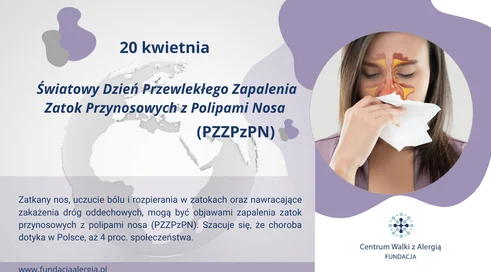
Today is World Awareness Day for Chronic Sinusitis with Nasal Polyps (CPPN). Inaugurated on the occasion of this holiday, the "Do you have it?" campaign aims to change public perception of this disease entity and make patients aware of the symptoms that should prompt them to seek medical help.
The fight against nasal polyps is worth it

Published April 20, 2023 15:14
Fot. iStock/Getty Images
Chronic sinusitis with nasal polyps (CRPD) is a disease often marginalized by society and the patients themselves, despite the fact that it affects as much as 4% of the population, mainly young adults, and significantly impairs their quality of life. Contrary to popular belief, PMS is a serious respiratory disease that has an extremely negative impact on patients' lives.
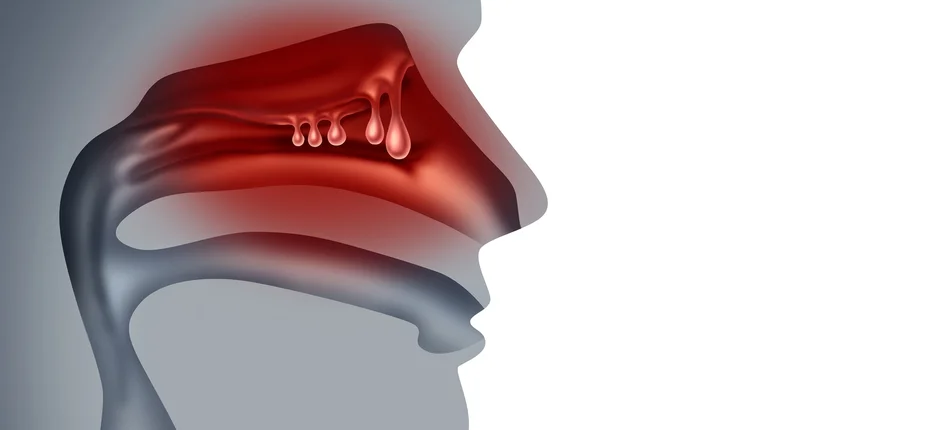
- Polyps are raised formations resulting from inflammatory infiltration in the sinuses or nasal passages, which, depending on their size, we can see with the naked eye or during an endoscopic examination or CT scan. The lesions usually occur bilaterally. Sinusitis is a relatively common disease. It most often appears in its acute form as a consequence of a viral infection," explains Professor Maciej Kupczyk, a specialist in internal medicine, lung diseases and allergology from the Department of Internal Medicine, Asthma and Allergy at the Medical University of Lodz, president of the Polish Society of Allergology.
- As many as 70% of those surveyed who were diagnosed with chronic sinusitis with nasal polyps described its negative impact on their quality of life as either great or very great, describes the results of the survey on PAPD by its originator, Hubert Godziątkowski, chairman of the board of directors of the Polish Society of Atopic Diseases. - The patients' responses clearly illustrate the scale of the problem and give an idea of how much of a burden this disease is. Its symptoms significantly limit patients' ability to be socially and physically active.
Respondents who have been diagnosed with nasal polyps cited among their symptoms:
- A feeling of nasal congestion (88%),
- Impairment or loss of smell (66%),
- The flow of secretions down the back wall of the throat (55%),
- Leakage of serous contents from the nose (50%),
- Taste impairment (46%),
- recurrent upper respiratory tract infections (34%),
- Headaches (32%),
- snoring (30%),
- Tearing (27%),
- Sleep apnea (27%),
- A spreading sensation at the base of the nose (27%),
- Toothache (14%).
- The social costs of nasal polyps are not insignificant: the disease disrupts the quality of sleep, but is also not without its impact on self-confidence, especially when it involves a loss of smell. Its chronicity and therapeutic difficulties can cause lowered mood and even depression. Another important factor is the similarity of its symptoms to viral infections, which can result in social exclusion, especially now, after the pandemic, when we are more cautious in dealing with the sick, says Szymon Chrostowski, CEO of the Winning Health Foundation involved in the campaign activities.
It is often the case that patients - despite experiencing symptoms of the disease for a long time - do not seek consultation with doctors, and the diagnosis of sinusitis is not made until many years later. According to studies, most patients with the first symptoms of sinusitis undertake self-medication with over-the-counter products, which creates the possibility of overuse of nasal mucosal decongestants.
Changing this is a priority of the public campaign "Do you have it in your nose?" because proper diagnosis and prompt implementation of treatment can prevent polyps, which are the consequence of an advanced, chronic inflammatory process taking place in the sinuses.
- Extensive education about the possible symptoms of chronic sinusitis is essential so that we can help patients before their disease develops into a severe form with nasal polyps. In patients who are diagnosed at the right stage and who receive effective treatment at the right time, we will be able to avoid administering invasive drugs and performing repeated surgeries," hopes Prof. Dariusz Jurkiewicz, head of the Department of Otolaryngology and Laryngological Oncology at the Military Medical Institute National Research Institute in Warsaw, and chairman of the Board of the Polish Society of Otorhinolaryngologists Head and Neck Surgeons.
- Current surgical methods, i.e. endoscopic surgery, cause less concern among patients than nasal polyp removal under local anesthesia, but we cannot underestimate patients' fear of hospitalization and surgery, as well as potential complications associated with general anesthesia, Prof. Jurkiewicz adds.
- In outpatient practice, pharmacological treatment modalities depend on whether the disease is in a stable period or an exacerbation. In the stable period, the mainstay of treatment is intranasal corticosteroids. In the early stages of the disease, doctors additionally encourage patients to rinse their sinuses. Irrigations provide real relief if the patient can perform them properly. During periods of exacerbation, pseudoephedrine preparations are used on an ad hoc basis to shrink the nasal mucosa. When patients suffer from purulent superinfection, which happens very often with this condition, antibiotics are given. In patients with advanced sinusitis with nasal polyps, surgery is considered, usually functional sinus endoscopy. Sometimes patients being prepared for these procedures periodically have to use systemic steroids. Unfortunately, even after a perfectly performed procedure, polyps tend to recur, especially in patients with comorbidities. I have such patients under my care who have had the operation repeated as many as 17 times. - Prof. Maciej Kupczyk, MD, shares his experience.
The recurrence of nasal polyps despite the use of pharmacological agents and surgical treatment is indeed a huge problem. 93% of respondents in a survey on the FMP reported that pharmacological treatment of nasal polyps had not produced lasting results, despite the fact that many of them (more than 55%) were using systemic steroids, drugs with potent effects but risking many serious side effects. The very common surgical procedures for removing polyps, while safe and effective, carry the risk of recurrence and reoperation - more than 88% of those surveyed described the effect of their surgeries as unsustainable. On average, relapse among all surgically treated patients occurs after just 22 months, causing patients to return to their doctor's care and struggle again with symptoms, which consequently leads to a renewed decision related to another surgical operation in this very sensitive area.
Both the need for hospitalization and prolonged convalescence after surgery are obstacles to patients' working lives - sick leave after polyp removal surgery lasts an average of 15 days, but respondents indicated that sometimes their leave reached several months. In addition, days off work patients with nasal polyps are also forced to take when there is an increase in symptoms and during the numerous recurrent upper respiratory tract infections that often accompany the disease.
Exacerbations of bronchial asthma, which very often coexists with AS, are also a considerable problem for patients. These diseases have a common basis - type 2 inflammation, a mechanism involving excessive, inadequate to the threat, reactivity of the immune system. Type 2 inflammation is responsible for most severe forms of chronic sinusitis with nasal polyps and bronchial asthma, but also other diseases, including atopic dermatitis and eosinophilic esophagitis. Clinicians point out that when these diseases coexist, treatment becomes very challenging.
- An opportunity for patients with AS is a biologic drug that intervenes in type two inflammation. Dupilumab is a monoclonal antibody directed against the alpha interleukin-4 (IL-4) receptor, which inhibits IL-4 and IL-13-mediated signal transduction, key mediators of type two inflammation. Dupilumab blocks this factor, which induces an increase in the inflammatory process. It acts point-blank on the exact pathomechanisms that are critical for the progression of severe forms of the disease. Therefore, after biological therapy, the risk of nasal polyp recurrence is significantly lower," explains Prof. Kupczyk.
Biological therapy has long been used in the United States and some European countries. In Poland, biological therapy has been successfully used to treat asthma and atopic dermatitis.
- We would like and hope that access to biological therapy will be introduced in the near future. Clinical trials have shown it to be very effective. These are drugs that we can use in patients with the most severe symptoms of chronic sinusitis with recurrent polyps, despite surgery. Many years of inadequate treatment and subsequent surgeries undoubtedly place a burden not only on the patient, but also on the healthcare system from a pharmacoeconomic perspective and we know that biologic drugs such as dupilumab have excellent results in patients with recurrent polyps and comorbidities. We hope that in the coming months such treatment will become available to patients in Poland, and that it will enable patients with severe forms of the disease to return to their normal lives: to work, school, that they will not have to use sick leave and sick benefits, and that we will be able to reduce unscheduled medical visits and unnecessary antibiotic treatments," concludes Prof. Kupczyk.
Topics
polipy nosa