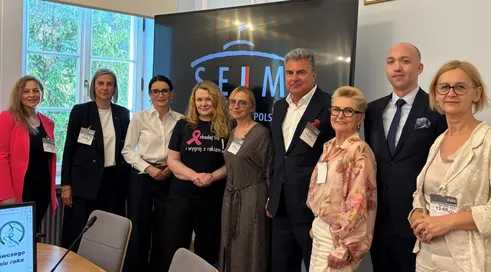
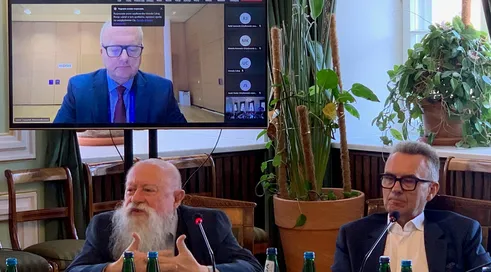
The marked increase in life expectancy observed for decades slowed down considerably in the middle of the second decade of the 21st century - this is one of the main conclusions of the NIZP PZH-PIB report "Health Situation of the Polish Population and its Determinants," with the presentation of which the Health Summit 2025 began.
Health Summit 2025
Key health policy tasks for the ruling coalition in the current term - availability of services, digitization, medical personnel

Published June 27, 2025 07:37
The report's conclusions were presented by Beata Małecka-Libera, chairwoman of the Senate Health Committee, which coordinated the work on the Public Health Law passed a decade ago. A law that will be amended at the moment. Beata Malecka-Libera stressed that life expectancy between 2014 and 2019 increased by only 0.2 years for women and 0.3 years for men. The deceleration in the rate of growth of this indicator, observed before the pandemic, experts consider the primary reason for concern. Another is the huge differences in life expectancy not only between the sexes (Poland belongs to the group of countries where men live radically shorter than women; in Western European countries there are also differences, but they are much smaller), but also by geography. Statistically, men are most likely to live long, or in any case noticeably longer, in two regions - Podkarpacie and Małopolska, while women are most likely to live in practically the entire eastern wall. Why there? That's what the experts don't know (yet), more research is needed.
Prof. Boleslaw Samolinski, head of the Department of Public and Environmental Health, Department of Environmental Hazard Prevention, Allergology and Immunology, Warsaw Medical University, also referred to the report. - The sense of good health in the population is declining, he concluded, stressing that from the point of view of the sense of healthiness, what happens in the health care system is very important, but what happens outside it is equally important. And there are disturbing things happening, the expert said, as confirmed by simple observations. - In the 1970s, we had a few dozen cases of type one diabetes. Today we have several thousand," he pointed out. A powerful problem already is the diseases of civilization and, at the same time, the spread of anti-health attitudes (nicotinism, alcohol consumption, lack of physical activity, incorrect body weight, addictions to new technologies). The expert pointed out that abnormal body weight alone is a risk factor for about two hundred diseases and their complications.
An additional problem, Prof. Samolinski pointed out, is the progressive destruction of the health care system. - There is no system, there are no pathways, optimizing the health effect," he pointed out. At the same time, the expert stressed that the basic problem is the accessibility of the system, because if a patient arrives late, the effects of his treatment will never be optimal.
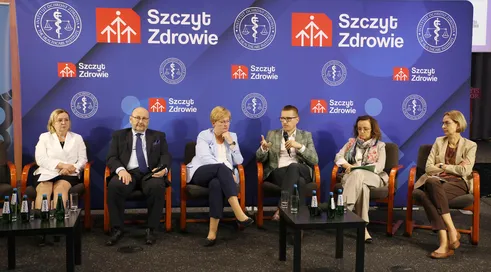
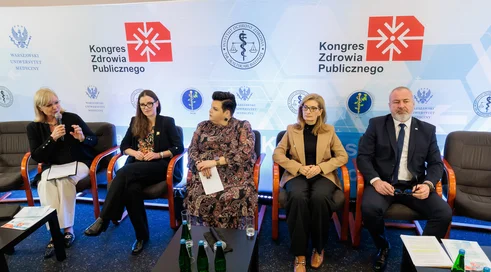
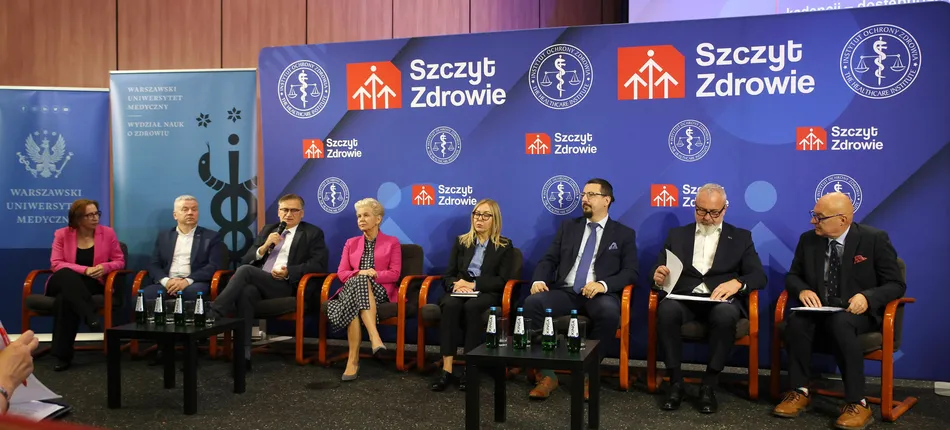
During the panel "Key health policy tasks for the ruling coalition in the current term - availability of services, digitization, medical staff", the voice in favor of health education also resounded strongly. Prof. Samolinski stressed that without health education - including that conducted in schools - we will not be able to cope with the key task of stemming the avalanche of civilization diseases. He also acknowledged that a great deal depends on how the subject, which enters schools as optional (which was lamented in virtually every discussion accompanying the conference), is conducted.
Grzegorz Juszczyk, PhD, assistant professor, Department of Public Health, Faculty of Health Sciences, WUM, thousands of public health graduates remain on standby and can also be used in schools, to impart knowledge to children and adolescents. - These are people who know a great deal about health and the health care system, they just need training in pedagogy," he said, admitting that the model being implemented at the moment, that is, raising the competence of teachers, is not the only one that should be considered. The expert pointed out that also the recent decisions of the Health Ministry, regarding the My Health program, create more space for public health graduates. - A preventionist appears in the basket of guaranteed benefits in this program. It's a pity that it has only two consultations available, we are trying to increase that number," he said. However, nothing will be done, as the former director of the NIZP PZH-PIB stressed, without money. - We allocate 2 percent of the health budget for prevention. If billions of zlotys are not available for the implementation of the next edition of the National Health Program, the best program will end up like a beautiful trip that ran out of money to explore the wonderful attractions, he said.
The topic of finances resounded in practically every thread raised during the discussion. As Andrzej Tytuła, vice president of the Supreme Council of Nurses and Midwives, said, we are currently dealing with a paradox: on the one hand, salaries in the nursing profession have clearly increased and have become attractive. - About 12 thousand people are taking up their studies in the first year. About 8 thousand complete them. After the PWZ, 4-5 thousand apply, depending on the year, and even fewer take up jobs in the profession, primarily in the health care system," he calculated. One of the main reasons for this (though not the only one) is precisely the salaries. Hospital directors are reluctant to take on new nurses, because with the current level of funding, the amount of contracts, this professional group is the biggest burden on hospital budgets. However, it's a vicious circle: because there are not enough nurses, those who enter the profession and take jobs quickly burn out and resign, seeking employment either in ambulatory care, the private sector, or outside of health care in general (for example, in the cosmetics industry).
Their retention in the system, said Joanna Wicha, MP for the Left, vice-chairman of the Health Committee (and a nurse), is not helped by the lack of mentoring, psychological support or, finally, the level of security in the workplace, lowered by increasing incidents of aggression against medics. Wicha recalled that according to the report, prepared by the nursing government, there is currently a shortage of 156,000 nurses in the system, and by 2039 there will be a shortage of more than 100,000 more. The shortage, she said, is looking at the levels of reference countries, the demographic structure of the profession and employment standards that are not in place or are not being met. One of the problems, the MP stressed, is the lack of mentoring. Since young nurses, if they enter the profession in the most difficult section (hospital), without such support, quickly burn out and change to a safer place of work, even increasing the number of nursing students or graduates will not have the effect of reducing the staffing gap.
There is no doubt that there are areas in the health care system where there have, however, been improvements in recent years. One of them is pharmacotherapy, access to medicines. As Iwona Kasprzak, director of the Drug Management Department of the National Health Fund, emphasized, Poland has significantly reduced its lagging behind EU countries in terms of the pace at which new therapies are made available to patients, and the changes that are planned in the next amendment to the Reimbursement Act will only accelerate this process. - They will benefit both patients and providers, although they will increase the tasks of the NFZ," she said.
Because although reimbursement decisions already put Poland (almost) on a European level in terms of availability of therapies, there are still challenges in the organizational and financial areas that complicate the actual availability of therapies to patients. One of the most important changes brought by the amendment to the law stipulates that patients will have access to therapies from the first day of the new announcement (they will not have to wait for weeks, even months). During the first three months, the supply and financing of the drug will be charged to the responsible entity, which will then be able to count on the payer to compensate for the expenses. The Health Ministry has high hopes for greater involvement of patient organizations in the reimbursement process, while patients are certainly looking forward to easier access to medicines offered under drug programs, the Fund representative said - the idea is to allow, in some programs, to pick up medicines near the patient's place of residence (e.g., at AOS clinics or pharmacies) without having to go to the hospital.
To what extent the positive trends of increasing patients' access to drug therapies or new technologies can be maintained absolutely depends on finances. Vice President of the National Health Fund Marek Augustyn already stressed during the inauguration of the Health Summit that his dream is for the payer to be able to operate in stable financial conditions. In the course of the discussion, he elaborated on the theme, leaving no shadow of doubt that current conditions are very far from that stability. The reason is the obligations imposed on the payer in 2022, most notably the obligation to finance the Minimum Wages Act. The total impact of the increases over four years, without taking into account the latest recommendation, amounts to 128 billion zlotys, he said. On June 12, the recommendations of the AOTMiT were not yet known, as well as the choice of the option that the National Health Fund will receive for implementation from Health Minister Izabela Leszczyna, but it is still known that relative to the 2022 salary level this year, the payer will have to set aside PLN 50 billion (plus the amount resulting from the recommendations). - I don't deny the necessity of these increases, which had to take place, but if you propose increases, you also have to indicate the sources of their financing," Augustyn said.
The deputy head of the Fund pointed out that when the law under which the payer operates was enacted twenty years ago (2004), the system was designed differently - the institution's only task was to contract health services. In recent times, these tasks have expanded rapidly, which has not been compensated for and is not compensated for by money, transferred from the state budget. - The NFZ operates on the basis of a balanced budget. How much money comes in, we can spend. We would like to work for the development of the health care system and not just administer or manage a continuous financial shortfall," he stressed, adding that the basic challenge facing decision-makers is to secure an adequate level of health care financing and, next, the proper organization of the system to rationalize the spending of limited funds.
- We built a system focused on diseases. We took care of patients, built hospitals, focusing on treatment. And here we have successes, we treat well, we have good equipment, qualified doctors, there are no problems with the availability of medicines," Beata Małecka-Libera said. As she stressed, the system, of course, needs to be modified, but the basic challenge is health policy... or, in fact, the lack of it. In order to build it, Dr. Malecka-Libera stressed, data is needed, and in fact a well-designed system for processing it, because at the moment the data collected is not used. The politician also admitted that the condition for the implementation or spread of pro-health behaviors is to educate and involve the public, because at the moment even the level of use of preventive programs, both in terms of screening and vaccination (influenza) proves that we have a huge problem with this.
Beata Małecka-Libera also stressed that there is no escaping discussions and decisions on what the NFZ is supposed to finance, what the state budget is supposed to pay for (or not). - If the NFZ is to finance benefits, why is it financing research under the Medical Research Agency, but also free medicine for seniors, which was supposed to be an obligation of the state budget, she pointed out. Referring to the raised problem of a staffing crisis, Małecka-Libera assessed that the basic issue is the proper use of those cadres already working in the system, mapping their skills and competencies. - If a nurse is competent to issue prescriptions, she should issue those prescriptions, she stressed.
Since during the discussion Prof. Boleslaw Samolinski put forward a thesis about the progressive degradation of the health care system, the discussion leader Prof. Mariusz Gujski asked the expert to elaborate on the topic. - We had a system ideally built, based on district doctors, with teams that integrated specialists and took a comprehensive approach to the patient. Fifty years ago you could get to a doctor overnight, there were no queues even for specialists. Today, the patient doesn't know how to navigate the system, he gets lost in it. We have a system that is detrimental to the patient, to the payer," said Prof. Samolinski, calling for an end to "financing medical events" in favor of paying for the health effect. - Right now it pays to bill for procedures," he concluded.
Topics
Szczyt Zdrowie 2025