One of the cities that make up the Kyiv metropolitan area has become a symbol of the war crimes that occurred during the Russian aggression against Ukraine. During the occupation, the nightmare of mass murder of civilians played out there. In these realities, under fire and without access to basic resources, local medics worked. What was most difficult for them?
Landscape after the genocide. Testimony of a doctor from Bucza

Published Dec. 12, 2025 07:06

Bucha is located less than 35 kilometers from the Ukrainian capital, Kyiv. Its population was more than 36,000 before the war. Children used to come there to visit the sanatorium - the same one that became a place of execution of defenseless civilians during the Russian occupation. Images of bodies lying in the streets shocked the whole world.
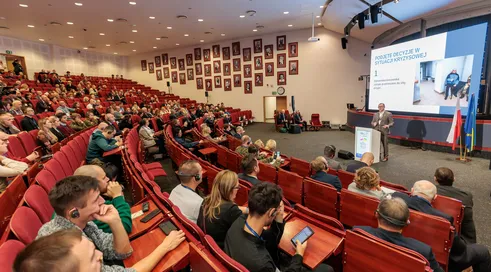
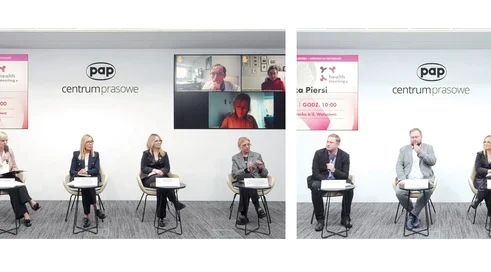
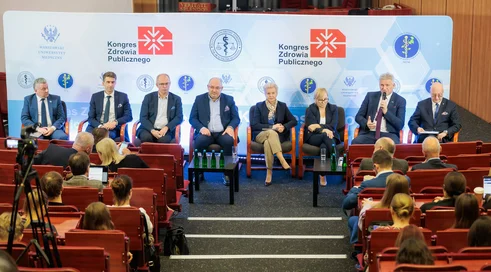
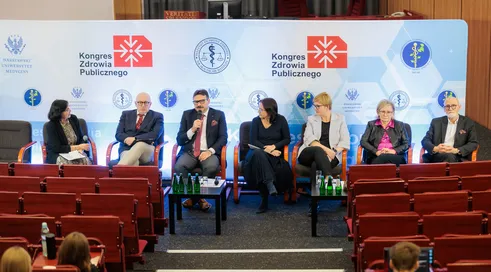
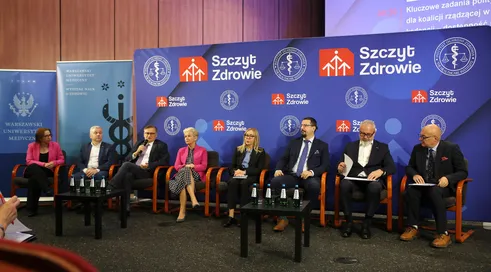
Doctors worked in the midst of this occupation hell. Oksana Djam, a pediatrician and head of the Municipal Health Care Center in Bucha, shared her story at the "Health Care System in Wartime" conference held at Warsaw Medical University on December 5. It has 14 outpatient clinics that form a network covering the entire municipality. These facilities employ 48 doctors and 55 nurses.
- Oksana remained in the occupation together with her team and organized help for people in particularly difficult conditions. She risked her life to save her patients. After the occupation, she was one of the first to return to the city and rebuild the work of the outpatient clinic with her team," said Iryna Mykychak, advisor to Ukraine's Minister of Health.
- After the occupation, Bucha looked like the frames of the movie "Armageddon." Killed people, destroyed town. Whenever I hear crows, I always remember the war in Bucza," with these words Oksana Dzham began her story about what she and her employees had to face in the most tragic days in the history of this town.
Helping patients under occupation. "None of our medics were killed."
As Oksana Dzham recalls, on February 25, 2022, the Russians began active combat operations - their goal was to seize Kyiv in an instant, so a huge military force was directed to nearby Bucha. On the first day of the war, not all medical workers showed up at outpatient clinics. Schools and kindergartens were not working, so those with young children had to take care of them. Others could not get to work for logistical reasons, as public transportation did not work. Those in bombing zones also had to stay at home, for obvious reasons.
- So when I came to the clinic, I worked with those who could be there with me. We organized a staff. Of course, the number of staff was the most important issue. The second concern was the condition of the outpatient clinics belonging to our facility. There was still the question of how we would provide medical assistance in such conditions... We were quickly blocked by the occupiers, who began to surround us and gradually filled our territory," Oksana Dzham said.
The medical center manager emphasized during her speech how important the role of leaders and their decision-making is in such situations.
- Working in such conditions required quick operational tactics and flexibility. Everything changed within minutes as new information came in about how the enemy was occupying our territories. We were balancing the safety of employees with the provision of medical assistance. I am convinced that those decisions we made were the right ones. I believe so, because we did not stop providing medical assistance, and at the same time none of our medical workers were killed," said Jam.
Meanwhile, the danger was great, especially when occupants forced their way into one of the outpatient clinics. Doctors hid in the basement, and managers tried to agree on green corridors to get them out. After a few days, the medics were successfully evacuated.
Strategic decisions and documenting deaths
In order for the outpatient clinics to operate, strategic decisions had to be made, including securing assets such as the facility's documents, seals and equipment.
- We took out the more expensive equipment and hid it as far away from the enemy as possible. On the first day, during the bombing, I sat with the chief accountant and calculated salaries for the workers so that they would have at least the minimum money to survive, because we didn't know how it would go on. We transferred salaries and blocked our accounts. We still managed to buy medicines and dressing materials," the medical center manager mentioned.
Transport was organized jointly with the territorial defense, she added. In addition to efforts to maintain the continuity of the outpatient clinics, it was also important to reach the sick directly with aid.
- One team of medical personnel together with the territorial defense went to shelters, to basements where people were hiding. Some of the medical staff were in the main headquarters and segregated medicines, which were then given to the sick by doctors or directly to those patients who came for them themselves," Oksana Jam explained.
- The difficulty was in ascertaining deaths. People asked us what to do. At first we issued paper documents, then we recorded them virtually - we wrote it down in some diaries. Finally, there came a point when I asked people to put the documents in the clothes of the dead. Back then, no one buried in cemeteries. Graves were in backyards, where people lived. The documents were supposed to allow the identification of the corpses when they were exhumed - at the time we didn't even know when this could be done," she added.
Hospital in school classrooms
Due to the occupation, however, the clinics had to be closed. It was then quickly decided to organize a hospital in the local school, where internal medicine and surgery were provided.
- We prepared a separate room for the mass flow of the wounded. We built makeshift structures in regular classrooms so that we could hook up IVs. We did whatever we could," Oksana Jam reported.
The help its employees gave people was not just medical. - We carried medicine, groceries and water to the residents, and also helped with evacuation. From time to time there were evacuation buses. With the enemy surrounding us, our authorities agreed with the Russians on the routes by which people could be taken away. However, the green corridors were not respected. People were shot anyway," she recalled.
When the full occupation occurred, combat operations intensified, and the Russians fired on civilians. Electricity and hot water supplies were cut off, communications were severed. Pharmacies stopped working.
- I didn't know what was really going on in Bucza, and that saved me. We just did our own thing and didn't even try to find out what was happening in the city. The full occupation lasted until April 1, 2022. People wrote on the fences: "Children. Don't shoot," asking (unsuccessfully - ed.) that the Russians not destroy the buildings," said Oksana Dzham.
"They even shot at TV sets. Realities after the occupation
It wasn't easy for medics after the occupation either. Not all of them were able to return to Bucza, as the staff housing was destroyed. All outpatient clinics needed renovation and new equipment.
- I arrived in the city on the fourth day, when the Ukrainian armed forces allowed it, because Bucha was a closed city - the area was mined. I made contact with volunteers. These were people who had stayed there during the occupation and were ready to help rebuild the city. I asked my doctors that whoever could, whoever was able, should come back. Several of them came. We were few, but we were there. Pharmacists joined us. At that time, emergency medical services, hospitals, pharmacies and private facilities were not working. There were only us - a few family doctors, nurses and pharmacists," recalled Oksana Jam.
Among other things, the task of those who arrived on the scene was to assess the losses and restore the clinic's operations. - It's a difficult story, because every facility suffered in some way. There was all sorts of damage, broken windows, damaged doors, and chaos reigned inside. The Russians stole equipment. They took everything they could, and they even shot at TV sets," she said.
Medics, together with volunteers, repaired the buildings so that medical aid could be provided in them as quickly as possible. They set up generators, which managed to supply electricity and heat the facilities. Support also flowed in from abroad.
Images that cannot be erased. No one was prepared for it
But what will always remain in Oksana Dzham's memory will be the exhumations of the bodies of those who were buried in graves dug in gardens, among other places. - Russian propaganda says that photos from Bucha, showing bodies scattered in the streets, are staged. I sincerely tell everyone: I know every family, I know every person killed, because I saw it all with my own eyes. When dozens of journalists asked me the question, "Is it true?", I answered honestly: "It's true," the doctor stressed.
As she added, the corpses were stored in a truck and released to relatives from it. Identification was often made possible only by the fact that, as mentioned earlier, during makeshift burials, foiled cards with the deceased's details were placed next to the bodies.
- I will never forget the story of our pediatrician who lost his son. The child died on the spot, after a direct shot to the heart. I was looking for his body... The father asked us: find him, because I want to bury him. Such stories stay in the memory for a lifetime," recalled Oksana Jam.
There was a shortage of forensic experts, manpower and strength to organize burials. It was a huge challenge to provide mental support, not only to the survivors who searched for the bodies of their loved ones, but also to the staff who helped with this. - We didn't know how to do it, but we sought words of comfort for them. We were all together, united," she added.
***
The organizers of the "Health Care System in Times of War" conference were the Department of Emergency Medicine at WUM and the Institute of Health Care.
Topics
Ukraina / Pomoc medyczna / Rosyjska agresja / Wojna / Tragedia / Medycy / Medycyna w konflikcie zbrojnym