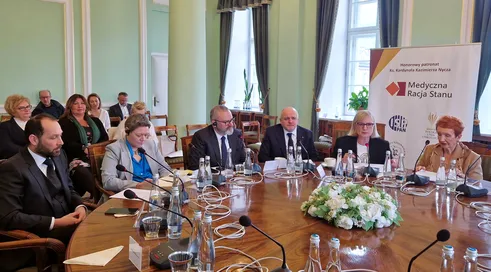
The XXIX Scientific Symposium of the National Institute of Cardiology has come to an end. More than 300 people listened to expert presentations on new directions in the diagnosis and treatment of cardiovascular diseases, presentations of difficult clinical cases and panel discussions.
Spring Scientific Symposium at the National Institute of Cardiology

Published April 18, 2023 13:35
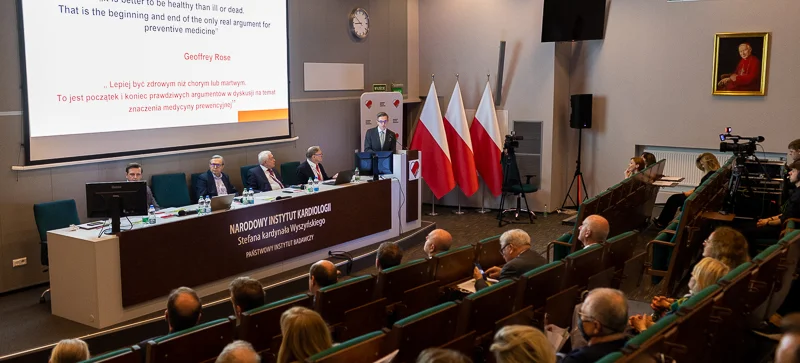
The scientific program of this year's spring edition of the symposium included as many as 7 thematic sessions devoted to modern areas of cardiology, such as the treatment of cardiac arrhythmias, heart failure - from pharmacotherapy to transplantation, and the treatment of coronary artery disease and valvular defects. There was also a topic devoted to modern diagnostic imaging in cardiology. Specialists from the Institute also shared their experiences in robotics and medical simulation. Much space was also devoted to epidemiology and pharmacotherapy of cardiovascular diseases, as well as elements of clinical genetics. New at this year's symposium was a session on the possibilities of vascular surgery in the treatment of aortic and peripheral vascular pathology. The discussions were supplemented by numerous case studies showing the practical side of the clinical cases discussed.
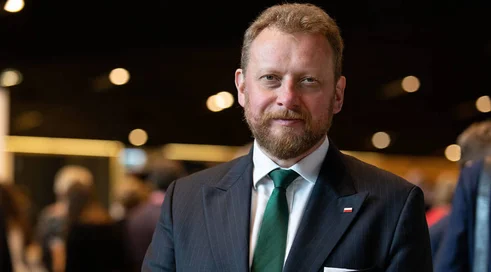
- When organizing this event, we placed special emphasis on the practical dimension of the thematic sessions and the opportunity to meet with doctors, nurses and other specialists working with the Institute. I hope that participation in this meeting provided participants with the necessary knowledge of the latest trends and directions in the development of Polish cardiology," said Professor Lukasz Szumowski, director of the National Institute of Cardiology.
The inaugural lecture, dedicated to answering key questions posed by PCPs and cardiologists regarding the piloting of the National Cardiovascular Network and the implementation of the National Cardiovascular Disease Program, was delivered by Prof. Tomasz Hryniewiecki, National Consultant in Cardiology and Plenipotentiary of the Minister of Health for the National Cardiovascular Disease Program.
As Prof. Tomasz Hryniewiecki emphasized in his speech - The implementation of the National Cardiovascular Disease Program is undoubtedly the most important event in 2023 in Polish cardiology. Planned for an entire decade, the comprehensive cardiovascular strategy has a chance to change the face of cardiovascular disease treatment in Poland.
The theme of the first session of the Institute's scientific symposium was the prevention of cardiovascular events. Experts discussed why Poland is still a high-risk country for cardiovascular events and how this risk should be reduced.
The second session was devoted to diagnostic imaging, a key to optimal patient care. The diagnostic capabilities of the National Institute of Cardiology were discussed. The advantages of using modern imaging methods were also highlighted.
During the session on heart failure and transplantation, they discussed how to optimize diagnosis and treatment in this area. Experts from the Institute shared their experiences in treating heart failure. The National Institute of Cardiology is the leading unit in Poland treating advanced heart failure from pharmacological treatment to treatment with circulatory support (all available devices in the world) and heart transplantation.
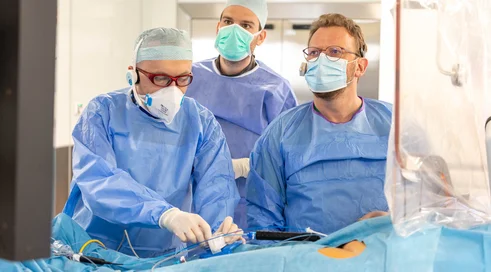
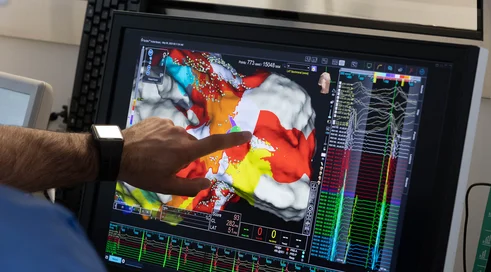
Another session was devoted entirely to arrhythmias. This part of the symposium discussed, among other things, robotic navigation and new forms of energy application in transcatheter ablation. The National Institute of Cardiology is one of the first hospitals in the world and the first center in Poland to be able to offer patients the benefits of robotic technology during ablation of the underlying heart arrhythmia. The future of implantable devices and dilemmas in electrotherapy were also discussed. Much space was devoted to the pharmacotherapy of rare arrhythmogenic diseases and new treatments for hypertrophic cardiomyopathy.
The fifth session focused on valvular defects. Issues related to tricuspid bioprosthesis dysfunction and infective endocarditis were discussed. The difficult clinical problem of asymptomatic aortic valve stenosis was also presented. In addition, the case of a patient with heart failure in the course of mitral and tricuspid regurgitation was analyzed. Symposium participants also learned about the prospects associated with modern treatment of atrioventricular valvular regurgitation.
The Symposium also included issues related to cardiovascular interventions and vascular surgery. In this part of the meeting, participants were able to learn how to improve cooperation between family physicians and the Vascular Surgery Clinic. Presentations included cases of treating patients with heart failure and indications for coronary revascularization, as well as cases of patients qualified for PCI with a left ventricular assist device (LVAD).
The symposium concluded with a session on congenital heart defects. In this part of the meeting, panelists discussed ways to treat a condition such as atrial septal defect. Experts also addressed issues related to the morphological diversity of the defect versus its clinical significance, as well as pulmonary hypertension in atrial septal defects.
This year's Institute Symposium, was held in a hybrid format. For the duration of the COVID-19 pandemic, it was held exclusively online. The Polish Society of Cardiology is a partner of the event. Medexpress.pl, rynekzdrowia.pl, mZdrowie.pl and cowzdrowiu.pl were media patrons of the conference.
infra