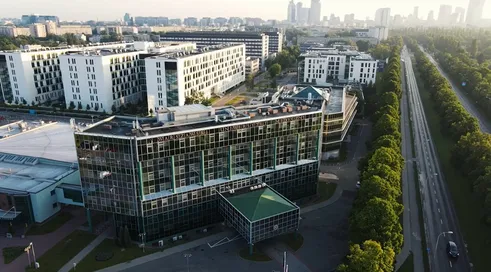
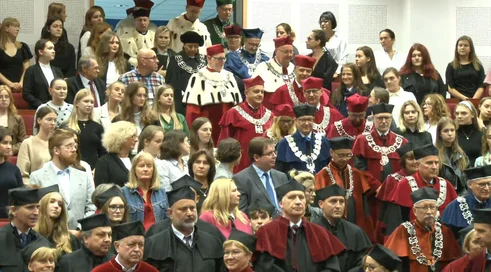
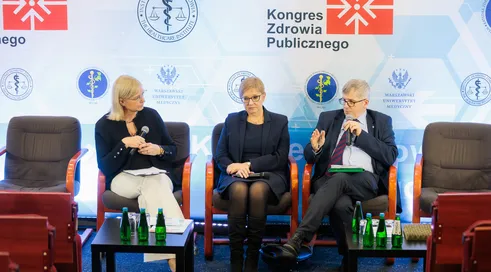
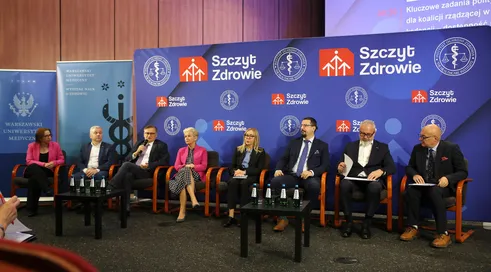
The European Organization for Treatment of Trophoblastic Diseases (EOTTD) is dedicated to optimizing diagnosis, treatment and research in gestational trophoblastic disease, a rare cancer that develops from placental cells. A meeting of EOTTD members was held within the walls of WUM on May 11-13. The event was held under the patronage of the WUM Rector and the WUM Center of Excellence for Rare and Undiagnosed Diseases.
WUM hosts international EOTTD symposium

Published May 17, 2023 12:15
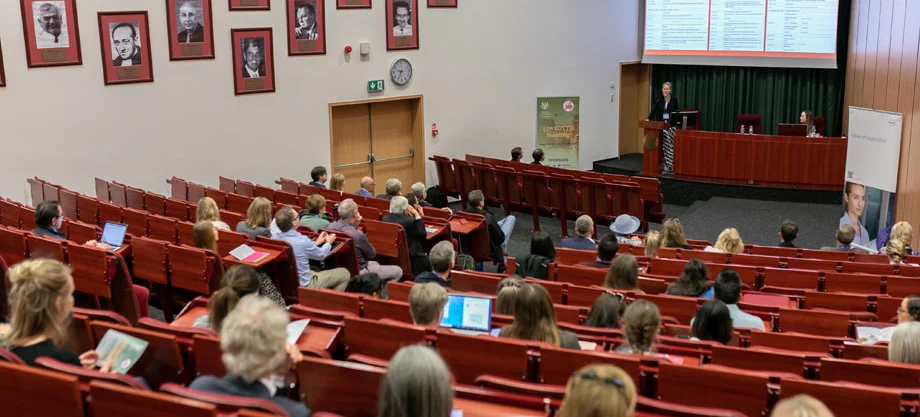
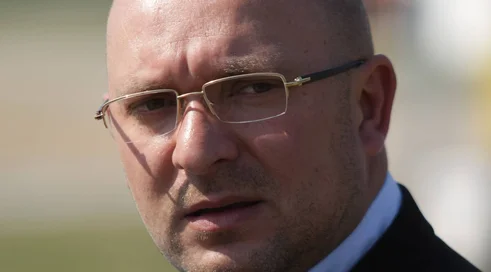
- The meeting serves to expand knowledge and exchange experience in the diagnosis and treatment of gestational trophoblastic disease (GTD). The rarity of this disease is naturally associated with less experience of personnel in diagnostic and therapeutic management, which creates a risk of treatment failure. Nevertheless, it is a potentially curable disease, one just needs to remember to maintain appropriate treatment standards," says Dr. Grzegorz Szewczyk, coordinator of gynecology in the Department of Clinical Obstetrics, Perinatology and Gynecology at UCK WUM, member of EOTTD, chairman of the organizing committee of the 11th edition of EOTTD.
Guidelines for diagnostic and therapeutic management
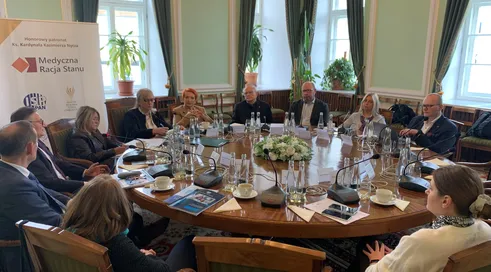
On the first day of the symposium, a meeting of the GCIG-ESGO-EOTTD-ISSTD guidelines committee was held. This is the third of eight meetings that are expected to result in a complete document providing guidelines and guidance for the management of GTD and improving the quality of treatment. The debate was attended by 36 experts from major organizations dealing with the issue: European Organization for Treatment of Trophoblastic Diseases (EOTTD), International Society for the Study for Trophoblastic Disease (ISSTD) and European Society of Gynaecological Oncology (ESGO). The only representative from Poland in this group was Grzegorz Szewczyk, MD, speaking on behalf of ESGO. Also present online were members of The Gynecological Cancer InterGroup (GCIG) and ISSTD. The guidelines are expected to be developed by the end of 2023.
Key topics
On the next day, experts shared their knowledge and experience in five thematic sessions. The first concerned diagnostic methods in GTD. Specialists discussed, among other things, the role of ultrasound, the usefulness of PET-CT or ways to deal with persistently low hCG levels. Another session presented the current findings of young researchers. Among other things, they talked about genomic and transcriptomic analysis of ETT and PSTT, the lack of need for chemotherapy when hCG is normalized, genomic differences between circulating tumor DNA from gestational and non-pregnant trophoblastic tumors. The third session was aimed at nurses. It dealt with the initial shock of diagnosis and patient management. The fourth concerned the pitfalls of managing gestational trophoblastic neoplasia (GTN) - a malignant form of gestational trophoblastic disease (GTD). The session discussed, among other things, the possible simplification of GTN FIGO scoring, low-risk cases and deviations from the standard of care, the place of immunotherapy in GTN. The last session was devoted to the exchange of experiences from centers dealing with gestational trophoblastic disease. Experiences from Belgium, Spain, Kenya and Switzerland were presented.
Expert cooperation
A unique feature of the EOTTD conference is the development of management strategies by working groups composed of clinicians, diagnosticians, pathologists and nurses and midwives. Meetings of such groups were held during the last day of the congress. Prof. Piotr Węgrzyn, head of the Department of Obstetrics, Perinatology and Gynecology at UCK WUM, co-organizer of the conference: - The treatment of gestational trophoblastic disease is a multidisciplinary collaboration, not only between doctors of different specialties, but also with laboratory diagnosticians, geneticists and nursing staff. EOTTD is an organization open to new members who are interested in raising the standard of care for GTD patients throughout Europe.
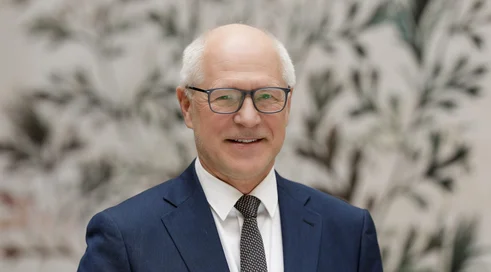
- It is a great honor for us that our university hosted such eminent specialists dealing with gestational trophoblastic disease," said Professor Zbigniew Gaciong, rector of WUM. - This is a rare condition, but it does not mean that it does not occur. It should be remembered that about half a million people live with rare diseases in Poland. That's why such meetings are important for our country's medical community. This is because they provide an opportunity to meet experts, establish contacts and learn about the latest reports and achievements, often those that have not yet been published.
Source: WUM