Despite the high percentage of unfounded diagnoses, the increase in Lyme disease is a fact. Diagnosed at an early stage, the disease can be cured relatively quickly and effectively with antibiotics. The situation becomes more complicated when the first symptoms of infection go unnoticed.
Lyme disease - win against time

Published May 2, 2023 11:33
Thinkstock/GettyImages
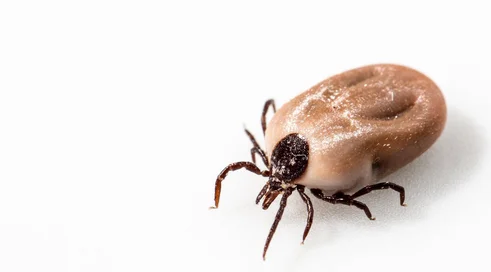
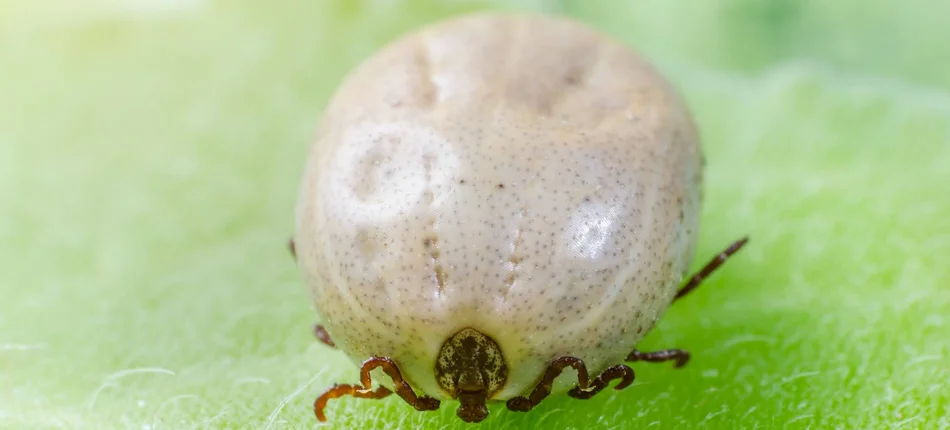
Spring and summer encourage spending time in nature. Unfortunately, a walk in the woods or park, a barbecue in the home garden or a picnic on the city lawn risk a close encounter with a tickwhich may or may not carry Borrelia spirochetes, which cause Lyme disease, also known as tick-borne spirochetes or Lyme disease (after the two towns in the US where the first cases were described in the 1970s).
Habits of ticks
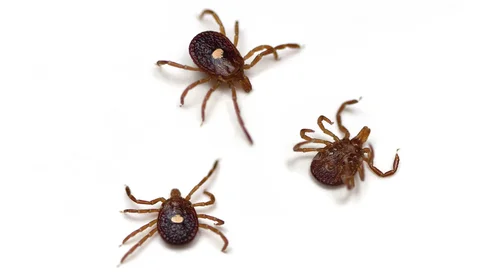
An encounter with ticks threatens us in any latitude. These arachnids are parasites of vertebrates (they need their blood to undergo further stages of development) and therefore transmit many diseases. They carry spirochetes Borrelia become by feeding on rodents like mice or squirrels infected with them, forest mammals, cattle, birds, but also dogs and cats. Contrary to popular belief, ticks do not lurk for their victims in the treetops - they prefer shrubs and grasses. They usually hide up to 150 cm above the ground. They don't hunt in the middle of a forest or clearing, but on their outskirts and near paths, as this is where they can most easily meet a potential host. Ticks awaken to life in spring and remain active until late autumn. They like humidity and heat, but they are not fond of hot weather. They are most likely to feed from morning to noon and from 3 pm, 4 pm to dusk.
Infection scenario
Potential prey ticks are able to smell from a distance of 20 meters (they react to the carbon dioxide they exhale, the smell of sweat and body temperature). They move onto it (rather than jumping over it) when they feel a touch. Before they burrow into the skin, they can search for a convenient spot for up to a dozen hours. The most common places they choose to attack are the groin, armpits, the area below the knees, in the bend of the elbow, under the breasts, behind the ears and at the root of the hair. The skin in these regions suits them best, as it is thin, moist and well-blooded. It is these areas that should be watched especially carefully, for example, when returning from the forest. The moment a tick that carries Borrelia spirochetes bites into a person's skin and starts sucking his blood, the bacteria become active, and then, together with the saliva or vomit of the parasite, they find their way into our body (vomiting is caused, for example, by greasing the tick with fat, so you absolutely must not do this). At the time of the sting, a person usually feels nothing, because at the same time the tick injects a substance that relieves pain.
First symptoms
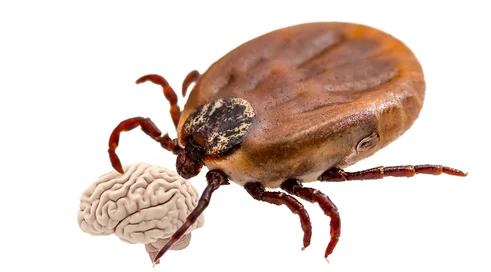
The likelihood of infection is higher the longer the parasite is attached to the skin. Therefore, it is important to remove it as soon as possible. If the infection nevertheless occurs, the disease develops in stages. At first, Lyme disease is local and manifests itself primarily on the skin, usually in the form of erythema migrans. This is a lesion that begins as a reddened spot or lump at the site of a tick bite, and then takes on a flat annular shape. Its characteristics are a rapidly increasing diameter (hence the nickname "wandering") and frequent but not obligatory translucency in the central part. The erythema can appear a few days to a month after the bite. Sometimes it is accompanied by symptoms associated with flu type: weakness, fever and subfebrile states, headache, muscle or joint pain. If the development of the infection is not stopped at this stage, the bacteria are able to spread basically all over the body and attack different parts of it. The most common are the skin, as well as joints, the nervous system and the heart, where acute inflammation (such as meningitis) develops. Over time, the lesions can become chronic and lead to permanent damage to either the musculoskeletal organs or the nervous system. Fortunately, such cases are rare.
Diagnostic dilemmas
Migrating erythema occurs in 50 to 80 percent of those infected and is the only symptom reserved exclusively for Lyme disease. This means that it is sufficient to make a diagnosis and start treatment. All other symptoms are so non-specific that they require confirmation by serological tests, showing the presence of serum antibodies directed against Borrelia spirochetes. These are carried out in two stages: first, a quantitative test is done with an ELISA, in the second a more qualitative Western blot test. These tests are now performed by many laboratories and with access to them there is no problem, but they have some weaknesses. They do not allow one to determine unequivocally whether one is dealing with "fresh" Lyme disease, or one that was cured or fought by the body on its own many years ago. For certain forms and symptoms of Lyme disease, sometimes additional tests such as lumbar puncture, skin sampling or ECG are needed.
Antibiotic is a must
Treatment of Lyme disease involves killing the bacteria that cause it, so it requires antibiotics. Since ticks and wild animals or birds have not previously come into contact with such drugs, it is difficult for the spirochetes to become resistant to them, and so they manage to be eradicated quickly and effectively. In Lyme disease, antibiotics should be taken for two to four weeks. The length of treatment and whether the patient takes antibiotics oral or intravenous, depends on the phase and symptoms of the disease. In forms involving the joints, nervous system (known as neuroborreliosis) and heart, additional drugs and treatments may be indicated in addition to antibiotics. Recovery time also depends on the phase of the disease at which we start fighting it. Oral antibiotics given at the stage when the infection is confined to the skin and manifests itself as erythema migrans, give very rapid improvement and guarantee an almost 100 percent cure.
Expert advises
Prof. Slawomir Pancewicz, MD, head of the Department of Infectious Diseases and Neuroinfection of the University Clinical Hospital in Bialystok
Despite the high percentage of unfounded diagnoses, the increase in Lyme disease is a fact. It is related to our activity. That is, people are venturing into places they used to avoid and are therefore more likely to be stung by ticks. What's more, in such escapades we are often accompanied by dogs, which, like birds, have a stake in the established indisputable invasion of these arachnids into urban areas (they simply carry them into them). Although the risk of Lyme disease infection is currently higher, the disease is curable. No scientific studies (whether domestic or foreign) mention the deaths caused by it.
The most favorable from the patient's point of view is the diagnosis of Lyme disease at the stage of erythema migrans. One can even risk saying that whoever has erythema is lucky in misfortune. This is because this symptom appears in the early stage of infection (in the first month after contact with a tick) and is specific to Lyme disease. Thus, it allows to quickly make a diagnosis and start treatment. A patient who starts taking antibiotics at the erythema stage, as a rule, the adventure with Lyme disease on erythema ends. He does not develop other forms of the disease, such as Lyme arthritis or neuroborreliosis. So if someone notices such a change, he should immediately go to the doctor. Flu-like symptoms, i.e. muscle aches, fever, headaches, are also a reason for such a visit.
If you find a tick attached to the skin, you should immediately remove it in its entirety. I recommend doing this with special kits sold in pharmacies, but the mechanical ones are of the pawpaw type or look like a credit card. Unfortunately, if the tick penetrates deeply, its removal may require a skin incision by a surgeon. For a period of about a month after such an incident, it is important to be vigilant and, if there are any worrying symptoms, immediately go to your family doctor, who can either refer you to a specialized clinic or order serological tests. There is currently no problem with the availability of such tests. However, it is important to remember not to perform them earlier than one month after contact with the parasite, and that even then the results can be false positives. For example, the presence of IgG antibodies (so-called immune memory - ed.) does not prove an active disease process. It only tells us that someone has been in contact with the pathogen, but when that happened we don't know. On the other hand, the recently fashionable examination of a tick removed from the skin does not make much sense and cannot be an indication to start treatment. This is because the risk of infection depends on how long the carrier of the bacteria sat in the skin and whether it managed to pass them on to us, and it is impossible to determine this precisely.