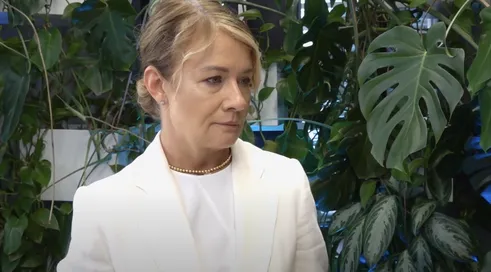
Access to laboratory tests fundamentally increases the proficiency of patients, because it allows them to better understand their own body and consciously influence their health, says Dr. Agata Strukow, director of Medical Education at ALAB Laboratoria. As she emphasizes, regular performance of basic tests, such as morphology, glucose and lipidogram, helps not only to detect health problems earlier, but also to observe the effects of lifestyle changes and build responsibility for one's own health.
Access to laboratory tests is fundamental

Published May 15, 2026 08:29

There is a lot of talk these days about patient proficiency. To what extent does access to laboratory testing increase patient agility?
It is safe to say that it increases fundamentally, for the reason that if we know the results of our laboratory tests, we know what the parameters are - sometimes crucial for our life, but definitely for our health - then we can go further. We know what to do with our lives. We know how to influence those results to improve if they are not quite what we would like. So access to laboratory tests is one of the key elements of taking care of ourselves and our health.
And do you see any change? Do patients want to take responsibility for their health? Because knowledge, the results of research is knowledge that can be used.
Yes. I definitely see an improvement thanks to the programs that have been introduced that dealt specifically with laboratory testing, whether it was Prevention 40 plus or the current My Health program. There has been an increased awareness that laboratory tests are important, and patients actually want to do laboratory tests. Of course, sometimes it varies. There are people who permanently avoid tests. I think this will also change over time, but what has made an important difference is the awareness and such an element in patients' minds that laboratory tests are also an element of taking care of health and - which is very important - that they should also concern young people.
If we have a person who avoids examinations and is afraid, as it probably often stems from fear, what would you advise? Where to start? With what kind of research?
We should start with three basic tests, that is, blood count, blood glucose and lipidogram. These are the kind of three tests that will really tell us about quite broad areas of our lives, and on top of that, they are tests whose results can be easily corrected with diet or physical activity. À proposing yet that fitness we talked about before, laboratory tests are such a grateful resource for us to observe what changes we make in our lives and what they bring. And going back just now to, to this question that the patient is afraid of, there are such laboratory tests where we can very easily correct them with just whether a healthy diet or an appropriate lifestyle. And if we're making such changes, for example, it's good to do lab tests to see if we're going in the right direction.
What is one change you would recommend in this approach to health that we as a society should make to stay healthier longer?
I think if we were talking about one thing like this, I would say that it's the realization that it's not like my health depends on one factor. That I will eat some miracle supplement that various companies promise me and my health will improve. Or that I will make some drastic change in my diet, avoid sugar or fat. That our taking care of our health is a complex of our various activities, which just consists of a healthy diet, physical activity, laboratory tests. Let's just think of it this way in a broader way.

Topics
lipidogram / morfologia / zdrowie / glukoza / odpowiedzialność pacjenta / badania laboratoryjne