A conversation with Jolanta Meller, coordinator of the 1st Oncology Clinic at the National Cancer Institute in Warsaw.
Jolanta Meller: The coordinator should be the guardian angel of the sick woman

Published June 16, 2023 10:02
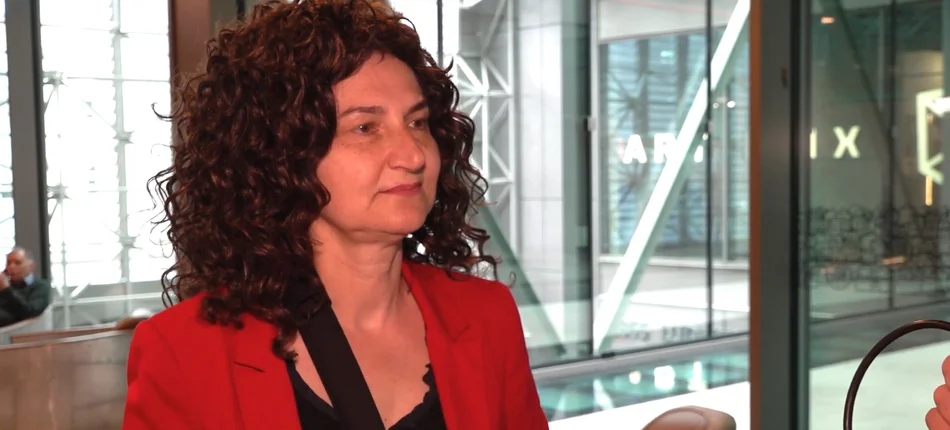
The very suspicion of cancer, and certainly the diagnosis, is undoubtedly a shock to the patient. What can help her not to get lost in the health care system?
The diagnosis itself, of course, comes as a shock. It is necessary to stop for a moment and think about what to do next. This is possible if you analyze your situation. The challenge is to make sure that the entire diagnostic and treatment process goes smoothly and without problems. This is the so-called path of the cancer patient. Passing it gently is possible both at the National Cancer Institute and at any other hospital that deals with breast diseases. Recently, we have a number of treatment entities where the breast cancer unit, or coordinated oncology care for breast cancer patients, is implemented. This is a diagnostic and treatment process in which the patient is guided by individual oncology care coordinators. These individuals provide support and assistance, both in the diagnostic process, that is, when we determine all the diagnoses and what will happen next up to the point of the so-called MDT, that is, the meeting of specialists who will propose an appropriate treatment plan, that is, determine whether the patient starts with chemotherapy or radiation therapy, or perhaps with surgery right away. Such a process is carried out until the end, that is, until the so-called follow up, which is the observation after oncological treatment.
It can be said that the coordinator is a guardian angel for the sick woman, on whose support she can always count?
The role of the coordinator is to guide the patient through the entire disease process. Cooperation between the patient and the coordinator takes place all the time. At the same time, it should be added that the role of the coordinator is to be a liaison between the patient and the doctor. The coordinator is not always able to help the patient directly, for example, when the patient feels unwell after the first course of chemotherapy. Then his role is to contact the doctor and determine whether a teleportation or a direct visit to the unit is needed, or perhaps just to reassure and explain that this may be the case during treatment.
This may work perfectly in some facilities and a little less well in others, but we should strive for coordinators to really be guardian angels for such a patient and give her mental support and a sense of security. In the case of illness and the healing process, this is really very important.
More on how to smoothly navigate hospital formalities: