- The National Oncology Network offers a chance to place Poland in the same rank in terms of oncological care as the rest of Europe. It should not be introduced chaotically, but gradually and based on the reported data - said prof. Adam Maciejczyk, chairman of the National Council for Oncology, president of the National Association of Public Cancer Centers and Institutes during a conference on the pilot and broad implementation of the KSO.
KSO is a patient-centered idea - assess the oncologists carrying out the pilot study

Published Oct. 12, 2022 14:17
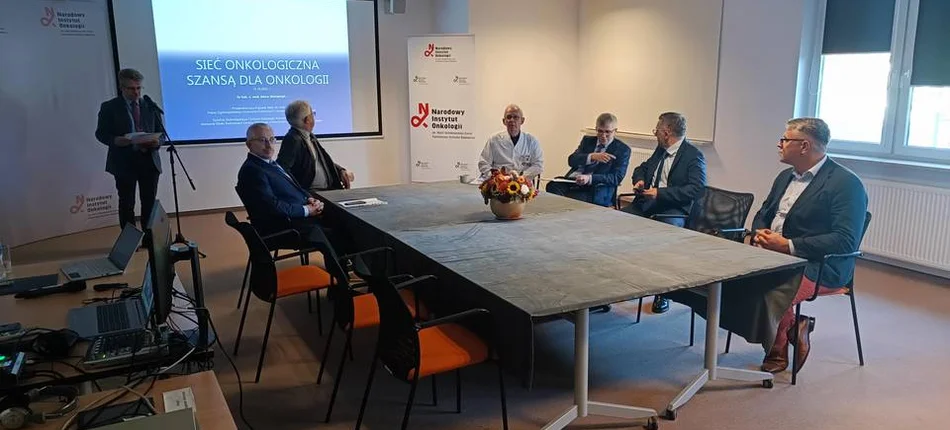
As emphasized by prof. Adam Maciejczyk, the pilot of the National Oncology Network, was positively received by patients. They appreciated, among others tools such as the introduction of an oncology helpline. From the system side, it is important to be able to collect and report data quickly. This allows you to analyze, inter alia, how the patient is guided through the centers, from the diagnostic stage to the entire treatment process.
The method of managing care is to be remodeled within the framework of the National Oncological Network. Hospitals, mainly at the regional level, are to be connected by a network. As a result, cancer patients would receive the best diagnosis and treatment. The pilot project, which was carried out in the following voivodeships: Dolnośląskie, Podlaskie, Pomorskie and Świętokrzyskie, ends this year. Prof. Adam Maciejczyk announced that his summary report is almost ready.
- The National Oncology Network is a patient-centric idea. It is focused on the patient's needs and gives them access to tools such as an oncology helpline. It also means extended access to cancer care coordinators and a system for monitoring diagnostic and therapeutic pathways. Thanks to these tools, it will be possible to provide patients with comprehensive access to oncological care, said the chairman of the National Cancer Council.
Prof. Maciej Krzakowski, national consultant in the field of oncology, assessed that the National Oncology Network is a response to patients' expectations.
- Patients want to receive good, modern treatment consistent with the guidelines and rules of procedure, so that all available diagnostic and treatment methods are used, as well as good availability of diagnostics and therapy. A system of reference centers that will oversee the diagnostic and therapeutic process may improve the current situation, and this one is bad. Cancer patients wait too long for a final diagnosis to be made, which entitles us to make a decision to start treatment - emphasized prof. Maciej Krzakowski.
The pilot of the National Oncological Network was carried out, among others, by in Świętokrzyskie. Director of the Świętokrzyskie Cancer Center, prof. Stanisław Góźdź said that the most important elements of the KSO from the patient's point of view are access to comprehensive treatment and coordinated care.
- The patient has his guardian throughout the diagnosis and treatment of oncology. He doesn't have to knock on different doors and bounce off them. What is also very important, we conduct a qualitative vivisection. We need to report qualitative measures on the treatments we provide. This allows us to reflect on what we are doing - said prof. Stanisław Góźdź.
The national monitoring center in the KSO is to be the National Oncology Institute.
- Therefore, a lot of tasks await us and we try to prepare for it. The National Oncology Network, however, is an initiative that the oncology community has been waiting for for years. It is to solve one of the main problems of oncology, which is the fragmentation of services. This is a situation where one procedure is performed in one hospital and another in another. This extends the treatment time, which is critical for the patient's prognosis - assessed prof. Andrzej Kawecki, Deputy Director of Clinical Affairs at the NIO.
In the opinion of prof. Adam Maciejczyk, the implementation of the KSO will make Poland equal in access to oncological care with the countries of Western Europe.
- Last year, an initiative was launched under the European Cancer Strategy, one of the flagship ideas of which is networking oncology services. By introducing the oncology network for the first time, we have a chance not to be at the tail end of Europe in terms of the organization of medical care. The quality of cancer care is very good for us, but only in places where comprehensive care is available. However, not every patient has such an opportunity - emphasized prof. Maciejczyk.
As he added, the analysis of the data collected in the National Cancer Network pilot has highlighted the problem of unequal access to care. Networking of services is expected to help smaller centers to improve management to the benefit of the patient. It turns out that prevention in Poland is also limping. Patients are diagnosed too late in the disease stage.