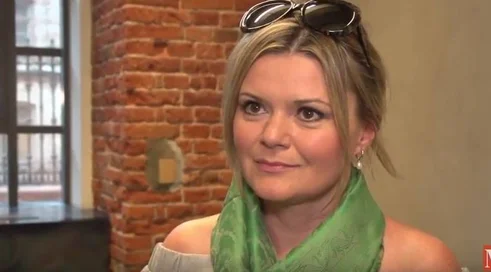
Małgorzata Pacholec, founder of the Retina AMD Association Poland, talks about the challenges of retinal diseases.
Małgorzata Pacholec: drug program for treatment of exudative form of AMD is exemplary in Poland

Published Feb. 22, 2024 08:00
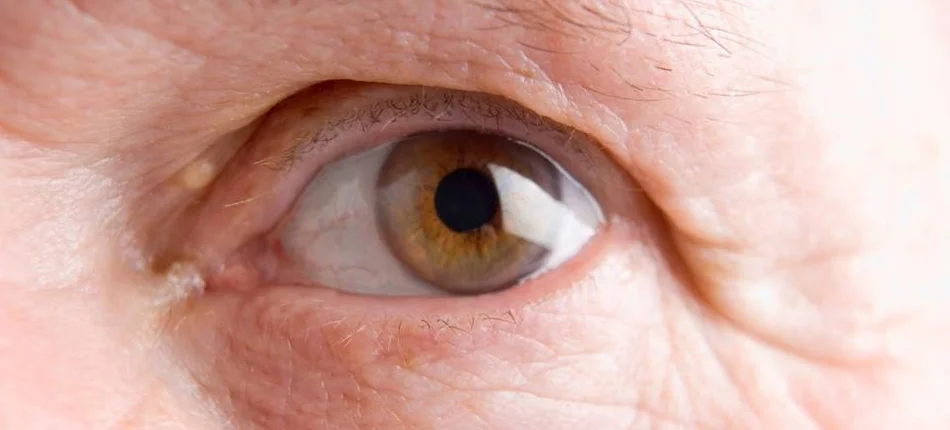
Fot. Thinkstock/Getty Images
How challenging are retinal diseases for seniors?
Despite medical advances, we are still afflicted by conditions that threaten to take away our vision. One of them is AMD, or age-related macular degeneration, dubbed the epidemic of 21st century blindness. More and more people are living to a ripe old age, and the condition is emerging just in the third period of our lives, that of seniors. Although if we say that already 50-year-olds can have AMD, we do not associate it with the term senior citizen. There are retinal diseases that develop later. Therefore, we need to know about them to guard against their effects. Because acutely AMD or other retinal diseases are progressive and badly promising diseases, untreated they take away our vision. And if a person can't see, his quality of life dramatically deteriorates and life loses its meaning. So it is important to talk about these diseases, about the fact that life is not given once and for all, that it is necessary to get examined regularly, even when we have good eyesight, that the brain sees, the eyes are only a viewing device. The brain always takes information from the better eye. So if something bad happens in one eye, the brain takes information from the good eye. So it can deceive us. That's why all examinations should be done, because they are important. So is self-examination, testing whether I can see well with one eye and the other.
You spoke about retinal diseases, among others, AMD, that these are dangerous and progressive diseases. We know that since January there have been changes in the reimbursement list. What kind of changes?
We are very happy because the drug program, treatment of the exudative form of AMD (wet form of AMD) is exemplary in Poland. We would like to thank the Ministry of Health and all those who have contributed to the fact that we have an excellent drug program in Poland. The program uses drugs that inhibit the development of the disease. To date, we still do not have a causal treatment. So we don't have a perfect drug that, when applied, cures the patient. There are symptomatic drugs. But any drug that brings greater benefit and effectiveness is a boon and is a victory. We are pleased that a new drug has been added to the list, which is used in the procedure for treating the exudative form of AMD. It is, one might say, dual-purpose. I am not expressing myself precisely and medically, but we know that it has a broader spectrum of action, which is important for the patient but also for the system. It can be used less frequently with the same, or perhaps greater, effectiveness.
If you could appeal to seniors, what would you tell them in the context of retinal diseases?
Retinal diseases are unfortunately a fact of life. The retina must be taken care of, because it is the most delicate and our most sensitive organ responsible for vision. Sight needs to be examined, even if we think we have very good eyesight. I believe that everyone should have their eyesight checked once a year. Let's remember to check one eye separately and the other eye separately. Let's compare whether we see in them the same way. A simple self-examination to check our eyesight is the so-called Amsler test. You can print it from the Internet, stick it, for example, on the refrigerator and use it, because it is trivial. Regularly, at least once a month, perform the test yourself for 30 seconds. If I do not see well, something is wrong (there are instructions on the test), do not delay going to a specialist. For many conditions, including wet AMD, there is a rescue. And, after all, the point is to remain functional for as long as possible. I myself walk with a white cane and I know what it means to have no vision. For many people who have low vision, the drama is the deterioration of their quality of life. It's worth taking care of your eyesight, because it is responsible for 80 percent of the information reaching our brain.