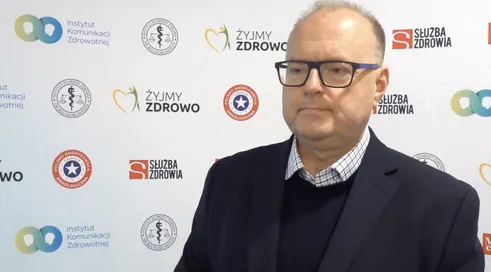
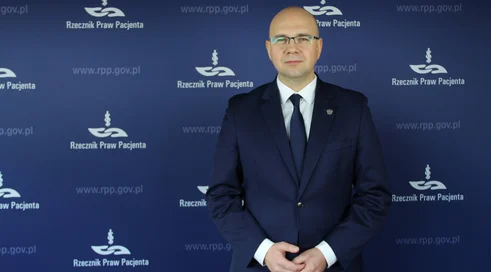
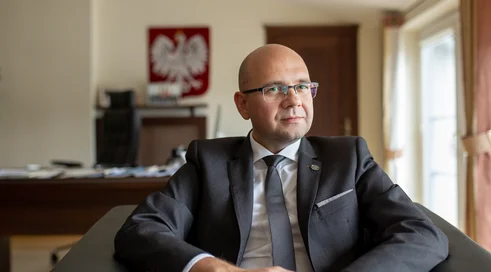
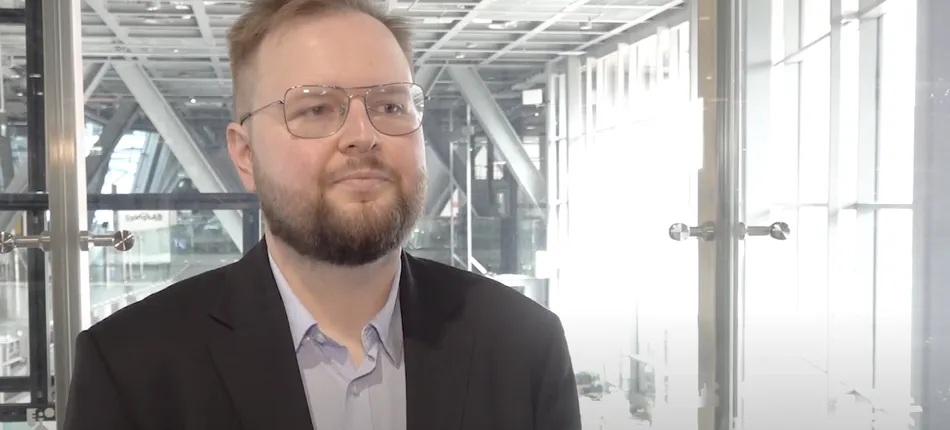
President Donald Trump's decision to cut drug prices in the United States has caused anxiety in pharmaceutical markets. Stocks of pharmaceutical companies are seeing declines, and experts are wondering whether European countries - including Poland - could be affected by the change. Mateusz Oczkowski, deputy director of the Drug Policy and Pharmacy Department, talks about the possible consequences and safeguards for the Polish drug market.
M.Oczkowski: it's high time to talk about where the price of a drug comes from

Published May 15, 2025 08:31
Mr. Director, President Trump wants to lower drug prices in the United States. The stocks of pharmaceutical companies are falling in the stock market, and quite significantly. Doesn't the fear arise that the industry will have to compensate by raising prices in those markets where drugs are relatively cheap compared to the United States, so for example in Europe, including Poland?
As for the prices of reimbursed drugs, here, fortunately, we are protected. Our prices are rigid, and this price rigidity is valid for at least two years, most three years. That's how long we issue reimbursement decisions, so in this near term we are secured in this respect and we are not threatened by any perturbations.
Of course, any responsible party has the right to submit an increase application. On the other hand, each of these requests may be granted or denied. In the long term, indeed, it may be that such moves by pharmaceutical companies will take place. They may try to compensate for changes in Donald Trump's decision, which could form the basis for increases by virtue of the fact that there prices will fall, and they will want to compensate for this. So we can expect that such requests will come from companies that have a presence in that market.
A basic question should be asked here: where does the price of the drug come from? Can it be argued that Europe is to blame for this? Europe is a better negotiator and is more rational about drug pricing, having developed mechanisms over the years for risk-sharing instruments and reference pricing. As a result, we buy more health for less money. It is worth remembering that in the United States, drug prices can sometimes be absurdly exorbitant compared to Europe.
The cost of developing a new molecule, or clinical trial, is at most about 10 billion zlotys. However, once the drug hits the market and is reimbursed by public payers in Europe, the investment can pay off after just the first year on the market. Further profits are invested by pharmaceutical companies in the purchase of new technologies or start-ups that have ready-made solutions waiting to be implemented.
Nowadays, artificial intelligence is gaining importance, and it is entering the drug development process by a wide margin. It makes it possible to identify more precisely the molecules that have the greatest potential for effectiveness in treating patients. This speeds up the research process and increases the efficiency of creating new therapies. After the return on investment for the pharmaceutical company, there is so-called "virtual money" that can be used to lower prices in Europe. It should also be taken into account that central pharmaceutical markets are naturally guided by adjusting their price to a given market, looking at what the wealth of the country is.
Proposing the same price all over the world, unfortunately, would be a road to nowhere, as many countries would not choose to invest at all and include the technology in reimbursement as readily as they do now.
Our Polish reimbursement regulations are secure. We are secured for at least three years, and in the case of attempts to increase always the Minister of Health has the right to refuse . I think it's high time to talk about where the price of a drug comes from and what it should really be. We see that generic drugs, when they appear in the Polish reimbursement price, can reduce the price by up to 90% compared to the original drug, and after all, the generic company also wants to make money, so we have to ask ourselves how much it costs to produce such a drug.
Topics
ceny leków / Polska / Mateusz Oczkowski / rynek farmaceutyczny / Donald Trump / refundacja leków / leki oryginalne / generyki