Sepsis is not a disease in the traditional sense, but a set of symptoms of organ failure resulting from the body's violent response to infection. Although it is most often caused by bacteria, it can also result from viral or fungal infections. Regardless of the cause, sepsis is an immediate life-threatening condition
Patient Week
Sepsis - the challenge of the present, the fight for the future

Published May 21, 2025 12:49

Fot. iStock/Getty Images
What makes sepsis particularly dangerous is the body's inability to calm the inflammatory response. Instead of controlling the infection, the immune system starts attacking its own tissues and organs. Contrary to popular belief, nearly 80% of sepsis cases are not related to hospital infections. The disease often develops at home, school or kindergarten - anywhere there are concentrations of people that favor pathogen transmission.
According to data published by the prestigious journal The Lancet, about 50 million people develop sepsis each year, and as many as 11 million of them die (Rudd et al., 2020). This means that every three seconds someone in the world dies from sepsis. In Poland, the number of cases is estimated to reach 100,000 per year, with a mortality rate close to 50%. It is worth noting that surviving sepsis does not mean full recovery - many patients experience permanent complications and reduced quality of life. Some analyses indicate that up to half of recovering patients die within three years of experiencing sepsis (Iwashyna et al., 2010).
Therefore, rapid diagnosis and immediate implementation of treatment - the so-called "septic fast track" - is crucial. Every hour of delay in diagnosis reduces the chance of survival by about 8% (Kumar et al., 2006). No less important is education - both among medical personnel and the public. Public campaigns help raise awareness and enable a faster response to the first symptoms (WHO, 2023).
Sepsis remains a therapeutic challenge. Despite more than 100 clinical trials, no single effective drug has been developed. Treatment requires multiple modalities simultaneously: antibiotic therapy, fluid administration, drugs to stimulate circulation, steroids, respiratory support or dialysis. The good news is that all these procedures are reimbursed in Poland.
Since it is impossible to predict who is more susceptible to sepsis, prevention plays a key role. Vaccination - both mandatory in children and recommended in adults - is an effective, inexpensive and readily available form of protection against diseases that can lead to sepsis.
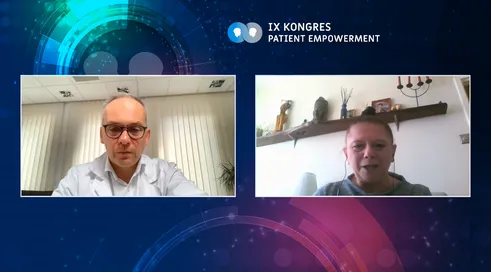
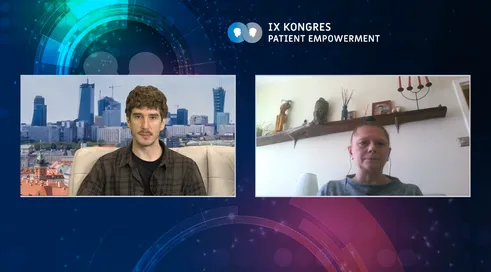
As a person who experienced sepsis directly 24 years ago, I know how much emotion, fear, uncertainty, suddenness of events, but also hope the short word "SEPSA" holds. Therefore, representing patients in our activities for more than 27 years as the Urszula Jaworska Foundation, we have taken up the challenge and want to face the problem that sepsis represents.
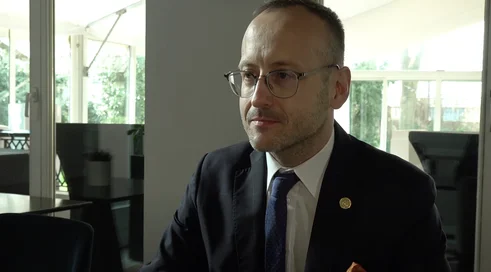
Quoting Dr. n. med. Konstaty Szułdrzyński, Deputy Director for Medical Affairs of PIM MSWiA in Warsaw - the participation of patients in creating the health care system and making changes in it is very important, because the patient is the subject of actions, and the patient's perspective makes the medical community aware of problems that they may not see or treat as less important.
On the occasion of World Sepsis Day, celebrated annually on September 13, the Urszula Jaworska Foundation, in cooperation with the National Medical Institute of the Ministry of Internal Affairs and Administration in Warsaw, invites you to the 2nd International Seminar "SEPSA - VISION OF THE FUTURE", to be held on September 11, 2025. This is a unique opportunity to look for solutions to one of the most difficult challenges of modern medicine together - experts, patients and decision-makers.
Ewa Pląsek - Vice President of the Urszula Jaworska Foundation
Literature:
- Iwashyna, T. J., Ely, E. W., Smith, D. M., & Langa, K. M. (2010). Long-term cognitive impairment and functional disability among survivors of severe sepsis. JAMA, 304(16), 1787-1794.
- Kumar, A., Roberts, D., Wood, K. E., Light, B., Parrillo, J. E., Sharma, S., ... & Cheang, M. (2006). Duration of hypotension before initiation of effective antimicrobial therapy is the critical determinant of survival in human septic shock. Critical Care Medicine, 34(6), 1589-1596.
- Rudd, K. E., Johnson, S. C., Agesa, K. M., Shackelford, K. A., Tsoi, D., Kievlan, D. R., ... & Naghavi, M. (2020). Global, regional, and national sepsis incidence and mortality, 1990-2017: analysis for the Global Burden of Disease Study. The Lancet, 395(10219), 200-211.
- Singer, M., Deutschman, C. S., Seymour, C. W., Shankar-Hari, M., Annane, D., Bauer, M., .... & Angus, D. C. (2016). The Third International Consensus Definitions for Sepsis and Septic Shock (Sepsis-3). JAMA, 315(8), 801-810.
- World Health Organization. (2023). Sepsis. Retrieved from https://www.who.int/news-room/fact-sheets/detail/sepsis