The last 10 years have seen a significant increase in sexually transmitted diseases. Data from the National Institute of Public Health PZH-BIP confirm the alarming trend. From January to the end of August, 941 cases of gonorrhea were detected. In the whole of last year there were 600, and 287 the year before. In the same period as many as 2,038 cases of syphilis were reported, of which there were 1,000 in the whole of last year. According to data from the National AIDS Center, the number of HIV-infected people is growing, with 18,200 people receiving treatment at the end of 2022. The number of those infected by the heterosexual route is growing, and more and more pregnant women are finding out that they have HIV or another sexually transmitted disease. However, these numbers do not tell the whole story about the level of infection, as they only refer to cases that have been diagnosed, reported and registered. Many people live in ignorance that they are infected. Some patients are treated in private practices or non-public medical consortiums. These cases, despite the legal obligation to report such diseases, are not always reported to the Sanitary Inspectorate. Ewelina Sadecka, M.D., a nurse, epidemiology specialist, who cooperates with the Social Education Foundation as a counselor of the HIV/AIDS, free and anonymous Consultation and Diagnostic Point, argues that only education and regular testing of people who engage in risky sexual contacts can stop the spread of infections and thus reduce the number of new cases.
In the first instinct, when someone learns this about the disease, he does not believe it

Published Oct. 11, 2023 09:32

Fot. Thinkstock/Getty Images
Barbara Mietkowska: Which sexually transmitted disease is the most dangerous? Why should infections not be underestimated?
Ewelina Sadecka: Any untreated disease is dangerous, as it brings many losses. It leads to a significant deterioration of health, affects well-being and interpersonal relations. But above all, it contributes to its transmission to our sexual partners.
Underestimating the problem will always result in a health crisis, but also a crisis in relationships. When engaging in sexual activity, not all infections can be prevented. Therefore, it turns out to be essential to know how to protect yourself and that the sooner the infection is detected, the sooner it can be cured. And, in the case of HIV, inhibit the growth of the virus in our bodies.
It seems that basic measures to protect against infection are widely available. So why is there an increase in sexually transmitted diseases?
It can be said that the increase in infections is always fostered by a lack of knowledge about diseases. In this particular case, the lack of education by competent people is important. According to the latest statistics of the National Institute of Hygiene, Poland is experiencing an increase in syphilis, gonorrhea, chlamydia. Some people are not at all aware of the health risks posed by these diseases and are unaware of how infection occurs. The pandemic contributed to the increases because people did not get tested during the lockdown period. And, of course, the outbreak of war in Ukraine. Among Ukrainians, there are people with newly diagnosed HIV infection, but also those who were previously treated and need to continue treatment in Poland. However, before the war and before the pandemic we also saw a steady increase in newly detected HIV infections. This is probably related to lifestyle changes. In the absence of systemic differentiated prevention and education, we cannot expect a decline in infections.
Are the infected more in big cities? Do more patients come to the Foundation after the holiday season? What age are they?
According to statistics, the highest number of cases is recorded in the Mazowieckie Voivodeship. As Prof. Magdalena Rosińska of the PZH says, large differences between provinces must be interpreted in terms of differences in the effectiveness of epidemiological surveillance. Statistics, can also be strongly influenced by the availability of diagnostics, but also by education in this area in a given population. People between the ages of 25 and 40 come to our Foundation. And this shows that they are more aware of the risks and are better educated, if only through social media. Older people who do not navigate these media efficiently come less often.
More and more people are infected with multiple diseases at once? How is this possible?
Yes. This is confirmed by medical publications and statistics. If we are infected with one sexually transmitted disease, it increases the risk of becoming infected with another. For example, HPV-induced condyloma hyperplasia can be a gateway to HIV infection. Most commonly, sexually transmitted diseases are contracted by engaging in unprotected sexual activity. There are also other routes of infection and these are much less frequently discussed. Transmission of gonorrhea, or human papilloma virus (HPV), can occur through shared sauna seating. Infection is at risk if hygiene rules are not followed due to the humid environment, prolonged contact and the formation of microtrauma. Another thing that is not talked about are erotic toys/gadgets, which should be dedicated to one person. Otherwise, they can be a source of infection.
So what to do if you begin to suspect that you may have contracted an infection in one way or another, but are afraid to visit the doctor because of embarrassment?
One such place is the Consultation and Diagnostic Points. The Social Education Foundation, where I work, has been conducting educational activities in the field of mental health, psychosexual health, prevention of substance abuse and behavioral addictions for 21 years. It deals with comprehensive prevention of HIV and other sexually transmitted diseases, offering free and anonymous testing continuously since 2004. The Foundation operates two Consultation and Diagnostic Points in Warsaw, where any adult can get tested for HIV, HCV and syphilis free of charge and anonymously. (Addresses of the points in Warsaw at the bottom of the text).
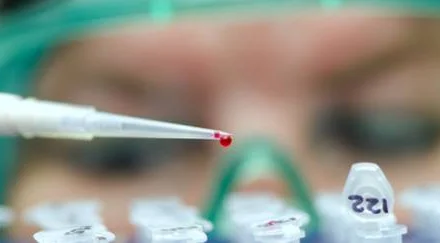
Anonymously means that in the questionnaire the patient is given a number and gives a password invented by him/her, with which the blood sample will be described and then the test result. Collection of blood for the test is preceded by a conversation with a counselor, during which counseling/education on sexually transmitted diseases is provided. During this conversation, a questionnaire developed by the National AIDS Center is completed. The patient's blood is then drawn in the treatment room. For HIV and HCV, infections can be ruled out or confirmed with a rapid screening test (result after 15 minutes) if 12 weeks have passed since the risky situation. A rapid test for syphilis gives a reliable result 6 weeks after a risky situation.
In case the risky situation occurred in a shorter period of time, he recommends repeating the tests.
In the case of HIV, infection can be ruled out or confirmed earlier by performing laboratory tests. As early as 5-6 weeks after a risky situation, we get a reliable result. The client receives the laboratory result the next working day.
The results are issued by the counselor. In the case of a positive result, the counselor informs about treatment options, gives addresses where to go for treatment. He also informs people of the need to inform their sexual partners of the infection and to refrain from sexual contact until the infection is cured.
HIV, HCV and syphilis are not the only sexually transmitted diseases, so if a person has symptoms indicating other diseases or is concerned about infection, I am advised that he or she should see a doctor to confirm or rule out infection.
Do couples appear in the Foundation who examine themselves before starting a life together, or do people shy away from putting such conditions on their partner?
We have more and more health-conscious people. Maybe testing themselves for infectious diseases of people who want to live in a relationship is not very common yet, but there are more of them than there used to be. I very much support and recommend this. As a point, I always say that anyone who decides to get tested shows a lot of responsibility, they do it for the sake of themselves and for the sake of their sexual partner. If we decide to be in a relationship, it should be based on mutual trust.
Symptoms of infection with some diseases such as syphilis or gonorrhea are not immediately noticeable. Shouldn't women test themselves more often, especially before and during a planned pregnancy.
Yes it is true. Infection in some cases can be asymptomatic, so, without specialized testing, it is difficult to notice the development of the disease. Therefore, when engaging in risky sexual intercourse, remember to perform screening tests.
In the case of pregnant women, in fact, every doctor is obliged to inform about the possibility of HIV testing. He should also test for HCV and syphilis. Testing should be done by the 10th week of pregnancy and between 33-37 weeks of pregnancy. It is extremely important to test pregnant women to prevent transmission of the infection to the child. Lack of treatment in this situation is associated with serious health consequences for the mother and her offspring.
In your experience, does a patient receiving a positive test result get treatment right away, or does he or she delay explaining the embarrassment?
This is a very difficult question. In the first instinct when someone learns about the disease, he doesn't believe it. He does not accept the fact of infection. He must have time to come to terms with this test result. This is a defense mechanism that has fear at its core. Nevertheless, a client who is informed about treatment methods and the negative consequences of untreated infection consequently declares that he will take treatment.
Is every sexually transmitted disease curable these days?
Yes, but it is important to remember that the earlier the infection is detected, the easier it is to treat. Untreated syphilis can lead to death. In the case of HIV, it is possible to control the infection, the drugs used today , which lead to inhibition of the growth of the virus in the body, and thus inhibit the development of indicator diseases. Today, a person living with HIV thanks to regular medication has undetectable levels of the virus in the body, this does not infect in sexual intercourse. The basis for success is early treatment for all sexually transmitted diseases. The same is true for HCV.
How to control the increasing number of infections. Is this even possible?
Above all, education in this area is needed, both among young people, in schools and among adults. Its absence encourages risky behavior. Large-scale educational campaigns are needed to encourage responsibility not only for one's own health, but also the health of others. Campaigns for different age groups. The odium of sex should be lifted from the practice of sex as an embarrassing subject. After all, in human life, intercourse is a perfectly normal phenomenon. At the same time, it is necessary to educate about the health risks associated with it. It is worth making the public aware of the effectiveness of preventive tests and encouraging people who have risky sexual intercourse to perform them regularly. Testing for HIV and other STDs transmitted in sexual relations and beyond should be generally available.
*Consultation and Diagnostic Points function at:
Marszalkowska Street 68/70 - Center, open Monday through Friday from 4 to 8 pm.
Nugat Street 3- Ursynów, open Monday through Friday from 4 to 2) and Saturdays from 10 a.m. to 2 p.m. Tests for HIV, HCV and syphilis are available at the points.