The Draft Ordinance of the Minister of Health amending the Ordinance on treatment with blood and its components in medical entities performing medical activities such as stationary and 24-hour health services was submitted for consultation.
Laboratory diagnostics: The Ministry of Health extends the catalog of persons performing tests in the field of transfusion immunology on their own

Published Dec. 13, 2022 08:26
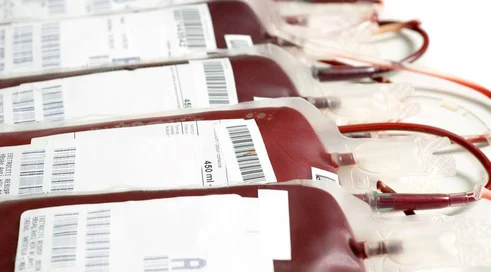
Fot. Getty Images/iStockphoto
According to the current wording of § 13 of the Regulation of the Minister of Health of October 16, 2017 on treatment with blood and blood components in medical entities performing medical activities such as stationary and 24-hour health services, recipients of blood or its components are obligatorily hospitalized and monitored for 24 hours after transfusion. The above is often not justified, it is impractical and increases the occupancy of hospital wards transfusing blood and its components and hinders access to these services for patients requiring regular blood transfusion, e.g. hemato-oncology.
The second problem to be solved is the issue of the impossibility to ensure that laboratories performing tests in the field of transfusion immunology are staffed only by laboratory diagnosticians, therefore the project also introduces the possibility of independent performance of tests in the field of transfusion immunology (without the possibility of authorizing the results of these tests) for people with a master's degree in in the field of biology, medical biology, microbiology, medical microbiology, and a master's degree or master's degree in biotechnology or medical biotechnology.
Changes to the Regulation:
Shortening the observation time to 12 hours and the hospitalization of recipients of blood and its components will reduce the burden on medical entities performing the transfusion procedure. It will also increase the accessibility of hospitals for patients (both treated with blood and requiring other treatment).
The change in the regulation is also a response to the changes taking place on the labor market. Currently, analytics technicians are no longer trained, and the labor market is supplied by laboratory diagnosticians, graduates of master's studies. The professional group of medical analysis technicians is disappearing. The solution to the above problem is to extend the catalog of people performing these tests on their own, after training in organizational units of the public blood service and obtaining authorization to perform immunohaematological tests. Authorization of test results would continue to be performed by laboratory diagnosticians or physicians with the appropriate certificate.
Project: TU
Source: RCL