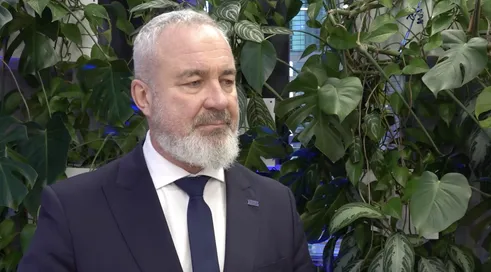
Interview with Prof. Zbigniew Krasinski, head of the Department of Vascular Surgery, Angiology and Phlebology at UMP, president of the Polish Phlebology Society.
Prof. Zbigniew Krasinski: Smoking is one of the risk factors for thrombosis. Smokers are looking for and need alternatives

Published Oct. 16, 2023 14:22
How common a problem among Poles today is venous thromboembolism? How has it changed over the past decade?
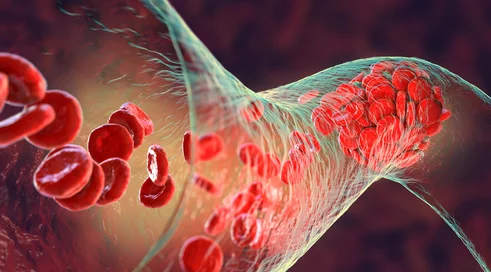
We are in Warsaw. This is a good example, because if two people per thousand have thrombosis annually, that means that in Warsaw, roughly four thousand people a year have it. As for Poland as a whole, extrapolating data from other large studies in Western Europe, we can say that a medium-sized city disappears annually (30,000 people die annually). So the problem is huge. These complications are more in the elderly, with multimorbidity. What has changed in the last 10 years? We are certainly an aging society, and age is predisposing to the disease. Treatment of the disease is also changing. We are getting more and more radical in treatment. We're putting in a lot of dialysis catheters, chemotherapy catheters, we're operating, we're also doing bariatric procedures, which are treatments for overweight patients. These are risk factors, and as a result, thromboses are plentiful. What is not unchangeable is that thrombosis in many people is asymptomatic. It is a silent killer. Thrombotic material from the lower extremities or pelvis can break off and reach the lungs, causing the patient's sudden death.
What are the risk factors for thrombosis?
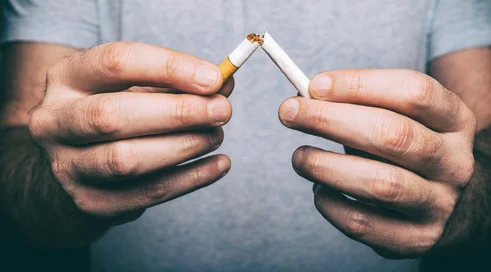
They are quite well known since Virchow's time. They are: lack of exercise, pregnancy, contraceptives, oncology i.e. any malignant tumor, long-distance travel, immobilization associated with trauma. Immobilization per se, i.e. if we end up in bed for a few days, is also a risk factor. A factor that worries me a lot, and that I'm seeing more and more of, is a return to nicotinism. Cigarettes are a risk factor. And that's where we have a problem, because we don't have a strategy, other than saying that smoking is not good.
On the one hand, we have smoking as a risk factor for the onset of thromboembolism, on the other hand, smoking affects patients who are already diagnosed with the disease. In all this, there are still passive smokers....
I currently have a 13-year-old child in my clinic who got thrombosis, admittedly arterial, as a result of second-hand smoke. My hope that we would smoke less was in electronic cigarettes. The Swedes have made great progress in this. There are fewer and fewer lung cancer diagnoses there, and there is also less risk of cardiovascular disease. We are seeing the same thing with the Czechs. So maybe there is a way forward? I don't know if we can wean the Polish public off smoking cigarettes, but we can look for alternatives that will reduce risks, including deep vein thrombosis. I also dream of smoking clinics. These people often face a dilemma because they know they shouldn't smoke and are looking for an alternative. In my opinion, medicine has so far looked at the problem too passively.
The ideal situation is when someone is able to quit smoking. On the other hand, you mentioned ways that can be used to help this - that's pharmacology and harm reduction.
This seems to be a situation we should sit down over as specialists in vascular disease, thrombosis, strokes, heart attacks - that is, where cigarettes are as hard and recognized evidence of a risk factor - and try to find alternatives for these people. Of course, skeptics will say that changing one addiction for another is not beneficial. But, if we knew what is burned in cigarettes, what substances are in them, and had state oversight over it, maybe there would be an alternative. It is encouraging to hear data from Sweden, where the problem of smoking classic tobacco products is getting smaller and smaller, that this makes sense and produces results after all. Health policy as a whole has many challenges: cancer, thrombosis, strokes, heart attacks, but if we were to look for one factor that connects it all, smoking is paradoxically one of them. So we need to start discussing this more broadly with the public and look for alternatives. Probably the electronic cigarette is not a golden mean, because there is no such thing. It's best not to smoke at all. But we are only human.
The fact that we are only human and the problem in Poland is serious can be seen in a report by the Polish Academy of Sciences, which says that the percentage of smoking adults in Poland has risen to 29 percent.
I don't have hard data, but my observations among medical students confirm the increasing trend. It's hard for me to comment on what you said, but my impression is that, again, more and more young people are smoking.