The American medical journal JAMA Internal Medicine has published the results of a study showing that pulse oximeters that measure patients' oxygen levels give false readings in people of a skin color other than white.
Pulse oximeter and patient skin pigmentation: what does the research say?

Published July 12, 2022 10:55
Fot. Getty Images/iStockphoto
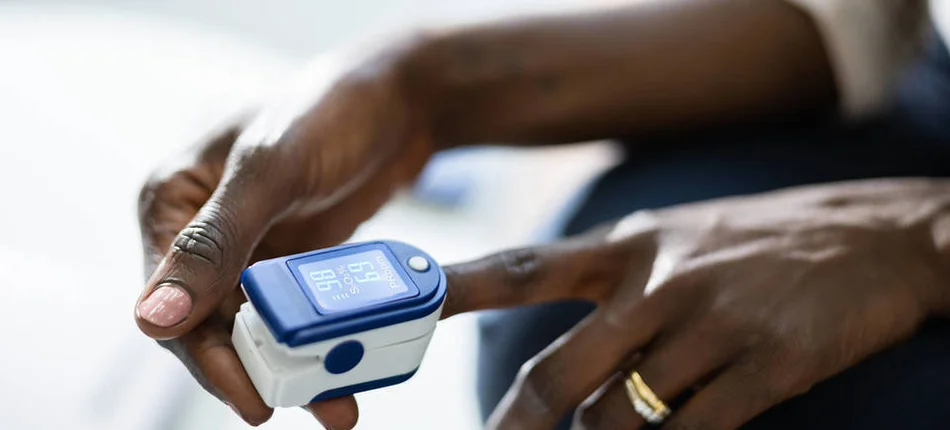
Pulse oximeters are attached to the fingertip, and to measure the oxygen level in the blood, they shine red and infrared light through the skin. It has been known since the 1970s that skin pigmentation can interfere with readings, but until now these discrepancies have not been thought to affect patient care.
Among the 3,069 patients treated in Boston's intensive care unit between 2008 and 2019, people of color - compared to white patients - received significantly less supplemental oxygen than they should have. This was due to inaccurate pulse oximeter readings.
Dr. Leo Anthony Celi from Harvard Medical School and Massachusetts Institute of Technology, who supervised the study, emphasized that due to the defect of this device, nurses and doctors make bad decisions towards seriously ill patients from, for example, Asia or Africa.
The authors of a separate study of patients with COVID-19, recently published in the same journal, noted "latent hypoxemia" - oxygen saturation levels below 88 percent despite readings showing between 92-96 percent - in nearly 4 percent of blood samples from patients with Asia, black patients, and nearly 3 percent of samples from people of Latin American descent. Among samples taken from white patients, the phenomenon of undiagnosed hypoxia was detected in 1.7 percent. Experts indicate that treatment delays or interruptions in this group of COVID-19 patients were due to erroneous pulse oximeter data.
Dr. Eric Ward, co-author of the article and study, says it is important to urge the manufacturers of pulse oximeters to make changes to them. Research firm Imarc Group forecasts the global pulse oximeter market to reach $ 3.25 billion by 2027, after sales halted at $ 2.14 billion in 2021.
Medtronic director Frank Chan said the company can certify the accuracy of its pulse oximeters, which are tested on more than required numbers of participants with dark skin pigmentation. On the other hand, the pulse oximeter manufacturer Phillips Healthcare, asked by Reuters for a comment, did not reply
Source: Reuters