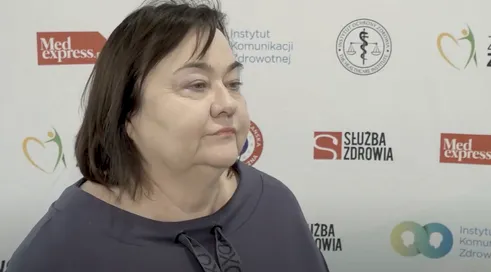
- Atezolizumab contributes to prolonging disease-free time. The efficacy of this treatment was significantly associated with an assessment of the expression of the receptor for programmed death, PD-L1. The immunotherapy trial found that patients responded better the higher the expression, Dr. Maciej Bryl, director of the Wielkopolska Center for Pulmonology and Thoracic Surgery, said in an interview with Medexpress.
Immunotherapy can significantly delay relapse in lung cancer

Published March 27, 2023 16:00

Lung cancer is the most common cause of death from malignant tumors in both sexes. Only 15-20 percent of patients are diagnosed in the early stage. Eighty percent are already patients with a poor prognosis. What does early diagnosis give us, and what could make early diagnoses as numerous as possible?
Early diagnosis gives us the possibility of either a permanent cure or a very long disease-free period. The problem is that it is difficult to find patients at this stage. For the most part, these are accidental detections and not routine practice, but efforts are being made to increase the number of patients so diagnosed. Early detection gives us the opportunity to remove the cancer focus and the disease will give the patient peace of mind for years, if not a lifetime.
Early diagnosis today is mostly achieved by putting patients in the highest risk group, those who have smoked for many years, under constant surveillance. This looks a little different than in other screening tests. For example, in mammography, cytology screening for cervical cancer or colonoscopy, one test is a closed result. In the case of lung cancer, largely the essence is patient surveillance. The first examination sometimes results in finding a nodule that requires diagnosis. Over the course of a patient's life, more such nodules appear. The observation is that if we see a lung lesion on one examination, we do another routine examination in a year's time and see what happens to the nodule. If it enlarges, we suspect that cancer may develop from it and it should be diagnosed. Lung cancer screening, therefore, is not based on one-time reporting, but on guiding the patient through successive rounds and analyzing changes in the lungs. Therefore, a whole program is needed.
What regimen is used if early non-small-cell lung cancer has already been detected?
It is very difficult to detect non-small-cell lung cancer at an early stage. Most often we detect a small nodule in the lung, 1-1.5 cm in size, which is suspicious. It is often difficult to take a sample from it. Biopsy techniques of deeply located nodules are quite difficult. If the nodule is located shallowly, just behind the chest wall, biopsy is sometimes successful. In most situations, however, bronchoscopic examination will be unremarkable and the nodule will be difficult to access for biopsy. The bronchonavigation technique is slowly developing, but it is quite expensive and is not in the catalog of procedures funded by the National Health Fund. With it, we could preoperatively diagnose such a nodule.
Today, it is the case that once a suspicious lesion is located, we refer the patient for a PET-CT scan, which, for nodules about a centimeter and larger, can determine whether they are suspicious in nature based on glucose metabolism analysis. If this is the case, the patient is sent to the thoracic surgery department, where the nodule in question is removed intraoperatively and examined. If such examination reveals that the nodule is cancerous, the procedure is expanded to the removal of a lung lobe and mediastinal lymph nodes, as specified by the protocol.
What does complementary treatment look like and what role can immunotherapy play in it?
Immunotherapy today is applicable to patients above stage two. In stage one, for the moment, immunotherapy has not been registered. The only treatment is to carry out genetic testing of the cancer cells and evaluate for the possibility of targeted treatment. Such complementary therapy is registered for nodules over 3 cm. More than 20 years ago, the receptor for epidermal growth factor (EGFR - editor's note) was found on cancer cells. As a result of molecular studies, it turned out that in a group of patients in about 10 percent of Caucasian patients and in about 40 percent of Asian patients, the gene for this receptor is altered and is present in the tumor in an active form, that is, it is stimulated at all times. Drugs have been synthesized that block the action of the altered receptor and disease progression. We have used this type of drugs in patients with metastasis, but because they gave significant improvement and remissions of months and sometimes years, an attempt was made to use this type of treatment in patients immediately after surgery, if we find this mutation of the gene for epidermal growth factor in the postoperative material. Thus, today we have been administering targeted drugs for 3 years, delaying relapse in a significant group of patients. For the first time, we were able to achieve an improvement effect in stage I patients. In stage Ib, statistically significant results of prolonged disease-free time were also obtained.
The results show that the substance atezolizumab significantly improves treatment outcomes compared to chemotherapy alone.
Atezolizumab was used in a clinical trial in which patients who received standard chemotherapy treatment after surgery were randomized to receive one year of treatment with this immunotherapy. It turned out that there was an increase in disease-free time in patients, especially in stage II and III. The efficacy of this treatment was significantly related to the evaluation of the expression of the receptor for programmed death - PD-L1. In the course of the immunotherapy trial, it was found that patients responded better the higher the expression. In practice: we analyze the excised tumor under a microscope and determine that it is cancer. Then we analyze it molecularly and determine whether a mutation for EGFR appears, and if there is none, we check the expression of the ligand for PD-L1. If it's high, the effectiveness of immunotherapy in preventing relapse will be higher.
What is the availability of this therapy in Europe and Poland?
It depends on the country and the reimbursement system. In Europe, therapies are already registered, and some countries work in such a way that if a therapy passes pan-European registration, it immediately becomes available. This is the case in Germany or Spain. In Poland, the system works in such a way that when a drug is registered, a reimbursement application can be submitted, which undergoes an assessment of effectiveness at the Agency for Health Technology Assessment and Tarification. Once a positive opinion is given, an application is made for the treatment to be included in the drug program. Atezolizumab itself is used on a daily basis for the treatment of advanced non-small cell lung cancer disease, as well as advanced small cell lung cancer disease.
However, the expansion of the reimbursement indication is still in the process?
Yes, the drug is in the AOTMiT evaluation. Today, such treatment would have to be paid for by the patient out of his own pocket, at a cost of about 100 thousand zlotys.
Thank you for the interview.