A 42-year-old extremely hypothermic patient was rescued by a team from the Clinical Anesthesiology and Intensive Care Unit of the Regional Hospital in Kielce. The man's so-called deep temperature when emergency services found him was 22 degrees Celsius.
Kielce doctors save extremely hypothermic patient

Published Nov. 25, 2024 12:25
fot. WSzZ w Kielcach | Facebook
The patient was unconscious, extremely hypothermic and showed no signs of life.
- After examination by the Emergency Medical Services Team, a diagnosis of cardiac arrest was made, since according to guidelines and current medical knowledge, death cannot be pronounced until the patient is warmed to a temperature above 35 degrees Celsius. The team decided to implement pre-hospital management, according to the hypothermia treatment algorithm. From that moment, the dramatic fight for the man's life began," reports Dr. Luke Dobaj, a cardiologist and intensive care specialist.
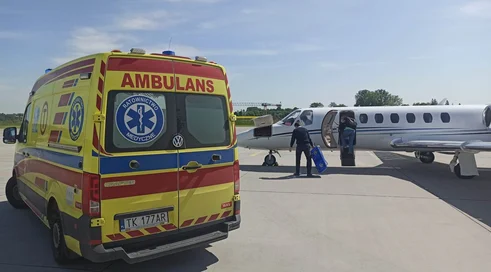
As the doctor tells the story, the patient was hooked up to a ventilator and cardiac massage was started using an automatic chest compression system, which allows high quality chest compressions to be conducted, during the prolonged transport of the patient.
The man was first taken to the County Hospital in Chmielnik where the deep temperature was measured and monitored, which was 22 degrees Celsius, qualifying the patient for the stage of deep hypothermia.
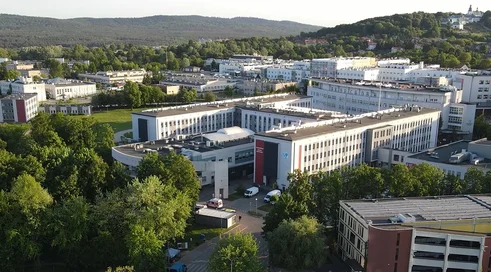
The man was immediately taken to the Clinical Anesthesiology and Intensive Care Unit of the Regional Hospital in Kielce.
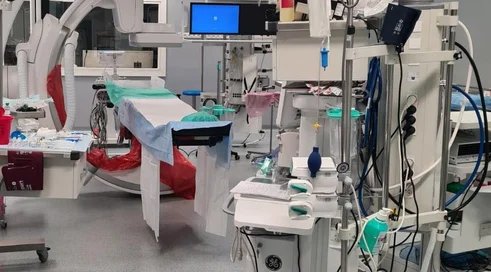
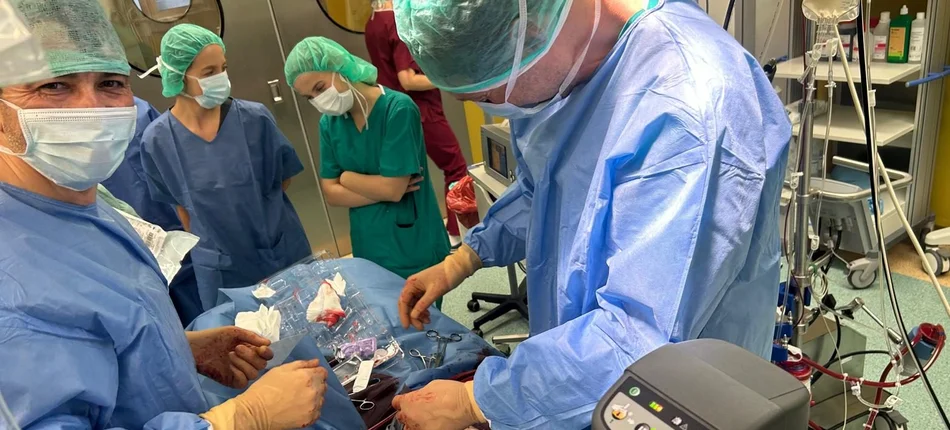
- While waiting for the patient to arrive, the team of the Clinical Anesthesiology and Intensive Care Unit prepared the necessary equipment, medications and a device for extracorporeal membrane oxygenation - ECMO. For patients with cardiac arrest and hypothermia, the use of extracorporeal circulation is the method of choice - it is the Holy Grail of hypothermia treatment. It provides warming, oxygenation and forcing blood circulation, and gradually raises the patient's deep temperature," explains Dr. Michal Domagala, head of anesthesiology and intensive care at the PTSU.
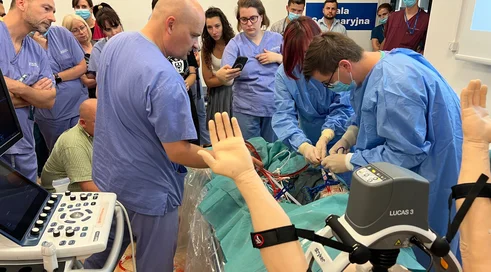
- Within the hybrid room, doctors Michal Domagala, Przemyslaw Rupart and Magdalena Sachajko and perfusionist Piotr Worwa cannulated the patient, who was in a state of arrest the whole time, and then connected him to ECMO. From that moment, the work of the heart and lungs was taken over entirely by the device, and resuscitation activities could be stopped, says Michal Domagala.
The patient in the Clinical Anesthesiology and Intensive Care Unit was cared for by doctors Lukasz Dobaj and Marcin Jastrzebski.
After several hours, thanks to active warming with ECMO therapy, the man's circulation and breathing returned spontaneously, and the next day he was disconnected from the device, a ventilator, and awakened from a pharmacological coma.
After a few days, the man, in good condition with no neurological losses, although his cardiac arrest lasted more than four hours, was discharged from the ward.
- This success was possible thanks to the efficient coordination of activities and the commitment of the entire team," emphasizes manager Michal Domagala.
WSZZ is the Reference Center for the entire province for extracorporeal support. The hospital has the only Department of Cardiac Surgery in the region and is listed in the national register of centers for extracorporeal heating.
Doctors from the Clinical Intensive Care Unit of the PTSC cooperate substantively with the Silesian Center for Heart Diseases in Zabrze, where they train and improve their skills in ECMO therapy.
Source: WSZ Kielce