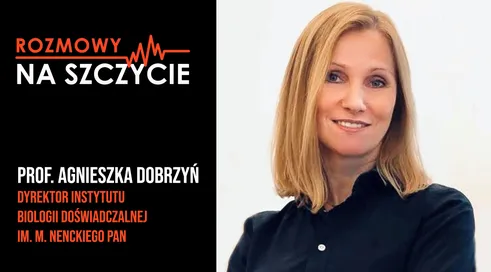
Professor Mansur Rahnama-Hezavah, head of the Department of Dental Surgery at the Medical University of Lublin and national consultant in the field of dental surgery, was awarded an honorary doctorate from the University of Rzeszow in June. In an interview with Medexpress, he talks about the significance of the award, as well as his cooperation with the University of Rzeszow in the scientific field. We also ask him about the influence of the Council for Scientific Excellence, of which the professor is a member, on the development of medicine, as well as how the approach to maxillofacial surgery has changed in recent years and what dental treatment regimens are used for special groups of patients, including oncological patients or those suffering from multiple diseases.
Prof. Mansur Rahnama-Hezavah: The approach to dentistry requires a holistic view of the patient's health

Published July 7, 2023 14:45

You have been awarded an honorary doctorate from the University of Rzeszow. You cooperate with this university in the scientific field. What kind of projects are these?
It is a great honor and privilege to be honored with an honorary doctorate from the University of Rzeszow. I have always been very impressed by this university's commitment to scientific and educational development in the field of medicine, especially in the area of maxillofacial surgery.
My cooperation with the University of Rzeszow is based on long-term personal and professional relationships with key members of the scientific staff. I greatly value this cooperation, which has allowed me to share my experience and knowledge in the field of medicine, especially maxillofacial surgery.
I have always stressed the importance of maintaining the highest standards in patient care and medical education, as well as the need to constantly strive for innovation and scientific excellence.
I hope that my humble role as an advisor and supporter has helped to some extent in the pursuit of these goals. I am extremely grateful for this opportunity and will always be ready to provide advice and support whenever needed.
You are a member of the Council for Scientific Excellence. What does this Council do and what impact does it have on the development of medicine?
The Council for Scientific Excellence (RDN) is a Polish state body established to act for the development of scientific personnel. This institution was established under the Law of July 20, 2018. - Law on Higher Education and Science, and its term began on June 1, 2019.
The main task of the Council for Scientific Excellence is to ensure the highest standards of scientific quality required for degrees, degrees in the arts and the title of professor. The RDN replaced the Central Commission for Degrees and Titles in January 2021.
The Council is composed of three representatives from each scientific discipline, which means that it is a multidisciplinary body. Council members are democratically elected, and their term of office is four years.
As for the Council's influence on the development of medicine, it is considerable. First of all, the Council plays a key role in maintaining and improving the quality standards of medical research.
In addition, members of the RDN are actively involved in the process of reviewing and evaluating applications for degrees and professorships, which has a direct impact on the formation of scientific personnel in the medical field.
The Council for Scientific Excellence also contributes to promoting and rewarding excellence in research, which stimulates innovation and progress in the medical field.
Finally, through its activities, the RDN has an impact on the formation of scientific policy in Poland, which includes the medical sector. All of this is aimed at improving the quality of health care and the health of the population in the long term.
How has the approach to maxillofacial surgery changed over the past years and decades, but also the options available to doctors?
The changes in the approach to maxillofacial surgery in recent years and decades are truly significant. Developments in technology and new treatment methods have contributed to major advances in this field.
One of the most important advances has been the development of imaging technologies, such as CT scans and MRIs, which enable precise surgical planning. Previously, doctors had to rely on less precise imaging methods, such as standard X-rays.
Another key advance is the development of 3D technology, which allows the creation of accurate anatomical models of the patient before surgery. This allows surgeons to accurately plan the procedure and better understand the patient's anatomy.
In addition, new surgical techniques have emerged, such as endoscopic maxillofacial surgery. These minimally invasive techniques allow surgery with smaller incisions, which reduces recovery time and the risk of complications.
Finally, more and more advanced materials and reconstructive techniques are emerging in maxillofacial surgery. This includes the use of biocompatible implants that can be modeled based on 3D imaging data, and the use of 3D printing technology to create artificial bone and other structures.
Of course, these are just some of the key developments that have taken place in recent years. Facio-maxillofacial surgery, like many other areas of medicine, is an area of rapid scientific and technological progress.
When we talk about dentistry, we often think of it as a completely separate field of medicine. However, dental patients often struggle with multimorbidity or suffer from hemophilia, for example. What are the challenges of treating these individuals?
The approach to dentistry requires a holistic view of a patient's health, especially when dealing with multimorbidity. Multimorbidity, a condition in which a patient suffers from two or more diseases at the same time, poses a challenge for dentists, as the patient's overall health directly affects oral health.
For example, diabetes, a chronic disease affecting many millions of people worldwide, increases the risk of periodontal diseases such as periodontitis. Problems with blood sugar control can promote the growth of bacteria in the mouth, leading to inflammation and infection. High blood sugar levels can also slow the healing process, which is especially important during dental procedures such as tooth extraction or root canal therapy.
On the other hand, patients with heart disease, including those with heart defects, are more prone to bacterial infections that can occur after dental procedures. These infections can lead to serious complications such as endocarditis, a potentially life-threatening condition in which the inner lining of the heart becomes infected. As a result, patients with heart disease require close cooperation between the attending physician and dentist to ensure safe treatment.
Patients treated with antiresorptive drugs such as bisphosphonates also face dental challenges. Bisphosphonates, often used to treat osteoporosis and certain cancers, can lead to a serious complication known as bisphosphonate-related jaw necrosis (BRONJ). This condition can lead to difficulty eating and speaking, chronic pain and, in extreme cases, facial deformity.
In addition, patients taking anticoagulants present dentists with challenges in managing the risk of bleeding. These drugs, which are often prescribed to prevent heart attacks and strokes, can increase the risk of bleeding during dental procedures. Hence the need for careful treatment planning and coordination with the treating dentist.
This indicates how complex and interrelated aspects of general health and dentistry are. Dentists must be aware of these connections and be willing to work in close collaboration with other practitioners to provide the best and safest care for their patients. This is especially important in the context of the growing number of multi-disease patients who require an integrated and coordinated approach to health care.
It is also important to remember that oral health is inextricably linked to overall health.
For example, chronic inflammation of the gums, such as periodontitis, is linked to a higher risk of cardiovascular disease. Bacteria and toxins from inflamed areas in the mouth can enter the bloodstream, leading to inflammation at the systemic level, which is considered a risk factor for heart disease.
In addition, oral infections may contribute to poorer glycemic control in people with diabetes. Studies suggest that severe gingivitis can increase insulin resistance, making it harder to control blood sugar levels. What's more, diabetes is a risk factor for periodontal disease - so a vicious cycle is created that can lead to deterioration of both the oral and overall health of the patient.
Similarly, oral health has a significant impact on nutritional and dietary status. Problems with teeth or gums can make chewing and swallowing difficult, which in turn can lead to malnutrition, especially in older people.
In summary, oral health is closely linked to overall health. Regular dental checkups, oral hygiene and proper treatment of any dental problems are the key to maintaining not only healthy teeth and gums, but also to improving overall health and quality of life.
A special model of dental treatment applies to oncology patients. What are the recommendations for their treatment?
Dental treatment of oncology patients is extremely important and requires a specialized approach due to their susceptibility to infection, altered ability to heal, and complex interactions between cancer therapy and oral health.
First and foremost, it is advisable to have a comprehensive dental examination and oral health evaluation before starting oncology treatment. This allows you to identify and treat any existing problems, such as tooth decay, periodontal disease, or ill-fitting dentures, which could be a potential source of infection or cause additional discomfort during cancer therapy.
Also important is providing patients with thorough education on oral hygiene. Regular cleaning of the teeth and gums, as well as proper oral moisturization, can help prevent ulcers, infections and other dental problems that are common in patients undergoing chemotherapy or radiation therapy.
In addition, oncology patients who are being treated with bisphosphonates or other drugs that inhibit bone resorption (e.g., for cancer metastases to the bone) must be closely monitored for signs of BRONJ (jaw necrosis associated with drugs that inhibit bone resorption), a serious dental complication that can occur in these patients.
Finally, dentists must work closely with oncologists and other members of the health care team to ensure a consistent and coordinated approach to treatment. This interdisciplinary collaboration is key to optimizing treatment outcomes and improving the quality of life for oncology patients.
Thank you for the interview