Chronic sinusitis with nasal polyps is a serious respiratory disease that can lead to many disorders in the health and life of patients. Disproportionately to the magnitude of the problem, awareness of this disease in Polish society is very low, including among those experiencing the condition. Diagnosis is often made too late, only after several years, when the disease has already reached an advanced stage. The World Day of Chronic Sinusitis with Nasal Polyps (CPSN) is an opportunity not only to educate, but also to present the scale of the problem faced by Polish patients.
Quality of life of Polish patients with AS - diagnostic and therapeutic challenges

Published April 22, 2024 09:34
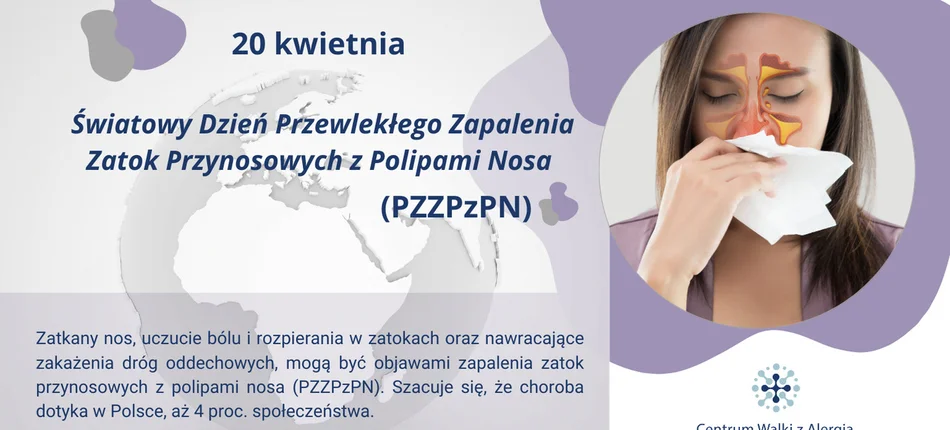
PAPD is a persistent inflammation of the nasal and sinus mucosa of a recurrent nature that lasts for more than 12 weeks. The intractable symptoms and their chronic nature cause patients to describe their quality of life as lower than patients with either Parkinson's disease or coronary artery disease.
Ineffective treatment and struggle with constantly recurring symptoms develop anxiety and depression in patients additionally cause a decrease in social and professional activity.
- Chronic sinusitis with nasal polyps is a serious inflammatory disease, often co-occurring with other diseases such as asthma, atopic dermatitis or allergies. Symptoms of the disease such as chronic headache, congested nose, difficulty breathing, partial or total loss of smell largely prevent patients from functioning normally. Nasal polyps are a chronic and recurrent condition that is difficult to treat, and they often grow so large that they become visible on the outside of the nose, causing intense frustration and feelings of shame in patients. All these symptoms and helplessness in fighting the disease are the cause of patients' low quality of life, development of depression, frequent absenteeism from work and sick leave. Today, on the occasion of World Day of Chronic Sinusitis with Nasal Polyps, we especially want to highlight this problem, as it affects many patients in Poland - emphasizes Grzegorz Baczewski from the Council of the Allergy Center Foundation.
This is confirmed by the Social Security's data on sickness absence, according to which the PZZPN only
in 2022 accounted for 461,712 days of sickness absence and as many as 50,237 sick leave issued.
Development of the disease
Chronic sinusitis with nasal polyps (CPS) is an endogenous inflammation of the nasal mucosa and paranasal sinuses caused by over-reactivity of the immune system, the so-called "type 2" inflammation[1], triggered by a number of potential damaging factors (e.g. viruses, bacteria, allergens or environmental pollution), leading to an influx of inflammatory cells into the airways, damage to the surrounding tissues, their remodeling and the formation of polyps.
- Nasal polyps are a fairly common condition occurring in more than 4% of the adult population. They occur most often in middle-aged and older people, usually between the ages of 30 and 60, and more often in men, emphasizes Prof. Dariusz Jurkiewicz, MD[2].
Those at increased risk of developing nasal polyps include those experiencing asthma, including aspirin asthma, those with an allergic reaction to aspirin or other NSAIDs (non-steroidal anti-inflammatory drugs), allergic fungal sinusitis, cystic fibrosis, Churg iStrauss syndrome (vasculitis), and those with a family history of nasal polyps[3].
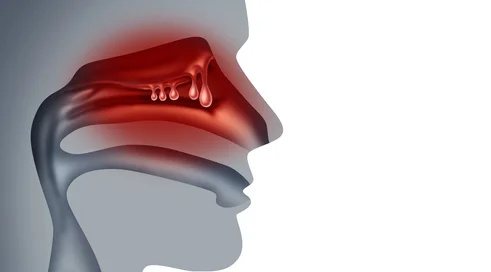
Polyps are shaped like "water droplets" or "stalked grapes" and are not cancerous lesions. They most often develop in people with bilateral inflammatory lesions, arising initially in the paranasal sinuses. Later, they can spread into the nasal passages, causing numerous and annoying symptoms. In the formation of nasal polyps
involved are eosinophils, Th2 lymphocytes and many mediators of the immune response, whose activity makes up the picture of type 2 inflammation[4].
Symptoms of the disease and diagnosis
PMS is responsible for a number of symptoms that significantly affect daily life: chronic rhinorrhea, nasal obstruction, impaired or lost sense of smell, discharge running down the back wall of the throat, a feeling of distension at the base of the nose, headaches due to blockage of the natural sinus outlets, sometimes tearing. In advanced cases, overgrowth of polyps on the outside of the nose and deformation of the nose can be observed.
Patients with symptoms of chronic sinusitis, most often when symptoms worsen, are referred to a specialist for further diagnosis after visiting a PCP and receiving a referral. The diagnosis of COPD is usually made by an ENT (otolaryngologist) on the basis of history, physical and imaging examinations. The primary physical examination is endoscopic (fiberoptic) examination of the nasal cavities, which allows diagnosis of the disease in its early stages. An important complementary examination is a CT scan of the paranasal sinuses, which is most often performed at a stage after the implementation of treatment, in the absence of obvious improvement. The doctor may also order cytological tests of nasal cavity secretions.
Treatment options
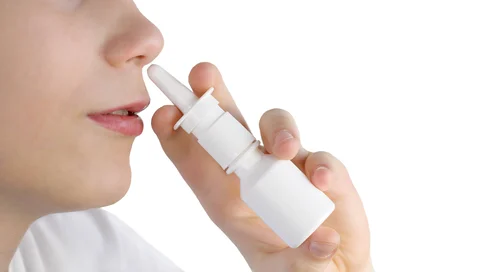
Treatment of chronic sinusitis with nasal polyps begins as standard with pharmacotherapy consistingof intranasal administration of steroid drugs and oral administration of antihistamines to reduce mucosal inflammation and alleviate symptoms associated with swelling and decreased nasal patency, respiratory distress, and olfactory impairment.
In cases where there is no response to conservative treatment or symptoms worsen, it may be necessary to perform a surgical procedure that involves removing polyps and opening and unblocking the outlets of all the paranasal sinuses, known as endoscopic sinus surgery. It should be noted that surgical treatment is usually considered when other methods are unsuccessful. In cases of recurrent nasal polyps, especially if previous treatments have failed to improve, biologic drugs that affect the immune system involved in the inflammatory processes and proliferation of nasal polyps are applicable. This is a new, effective method designed to block the cascade of inflammatory processes in the mucosa. Each case of nasal polyps is evaluated individually by a specialist, and the choice of biological treatment depends on a number of factors, including the severity of symptoms, laboratory results and response to other forms of treatment, as well as the availability of a particular therapy in a given country.
Biological therapy and quality of life
The positive change in quality of life with the use of biological therapy is commented on by the patients themselves, who, after the use of pharmacotherapy and surgical treatment, have been given the opportunity to w
as part of clinical trials or rescue access to treatment (RTDL) to benefit from biological therapy.
- After I started biological treatment, I felt as if I had won a lottery ticket," says Agnieszka Kustos, who has been struggling with chronic sinusitis with nasal polyps (CRPD) for nearly 20 years. - The polyps regressed, I began to have very good lung function, I started exercising regularly, running on a treadmill, riding a bicycle. After years of living with the disease, I began to function like a healthy person," she adds. As evidenced by numerous studies, biological therapy fundamentally changes the treatment of patients with severe eosinophilic asthma with sinus polyps. Patients have a chance for a significant improvement in their quality of life, as well as remission of the asthma itself. However, they are living in anxiety in Poland. - Since the drug is funded under emergency access, there is uncertainty all the time about how long this treatment will be funded. Everything depends on the decision of the Ministry of Health. I have a lot of anxiety inside of me related to the fact that without access to the treatment, I'm facing another operation, and then another one. Because this was the case before the treatment. After such treatment, I very often came home drenched in tears and with depression lingering for the next few weeks. It was a difficult time in my life," the patient concludes.
- As of April 1.2024, it was covered by reimbursement in drug program B. 156 first biologic drug dupilumab for the treatment of adult patients with severe chronic rhinosinusitis with nasal polyps (CRPD), in whom treatment with systemic corticosteroids and a history of at least 2 sinus surgeries (or contraindications to surgery) do not provide disease control.
- We are pleased that the changes that are taking place in the treatment of patients with ASF were highly anticipated by the patient community. Access to biological treatment significantly improves the quality of life of patients, allows them to receive therapy at home and return to a normal life, to professional and social activity," says Joanna Zawadzka, president of the Allergy Center Foundation, adding, "We know that another application has now been submitted for public funding of another biological therapy in this indication - mepolizumab. It would be dedicated to patients in whom the development of nasal polyps occurred against an inflammatory background caused by high levels of eosinophils. We hope for a positive opinion from the AOTMiT and for access to this therapy in the near future, so that patients with PMS are taken care of comprehensively," he stresses.
Source: press mat.
[1] https://www.ptca.pl/wp-content/uploads/2023/03/polipy-nosa-prof-krzeski-druk_PTCA.pdf
[2] Prof. Dariusz Jurkiewicz, PZZPN Report - how to help patients_online_240823.p df.pdf
[3]https://www.mp.pl/pacjent/otolaryngologia/choroby/choroby-nosa-i-zatok/106002,polipy-nosa
[4] Prof. Dr. Karina Jahnz-Różyk, PCPN Report - how to help patients_online_240823.p df.pdf