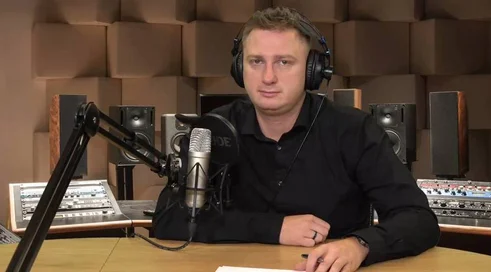
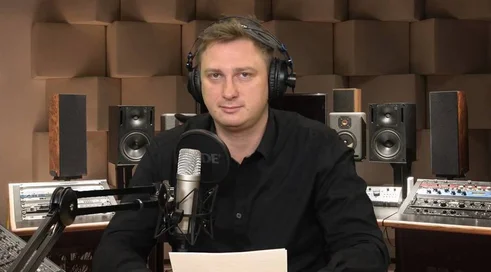
- I once tried to see if we had private health insurance available on the market that would be able to provide 100 percent of the same benefits that the public health service gives us. It turned out that no, such a solution does not exist at the moment. My guess is that even if we came out with such a solution, at some point it would be the case that even so, the entities commercially providing the most expensive services would be very reluctant to do so, because we wouldn't be able to finance such a cost from individual premiums," says Szymon Ostrowski, an economic journalist, creator and head of the channel and blog "Business in Focus.
#WeAreToday
Entrepreneurs pay premiums but use private health care.

Published April 26, 2024 09:00
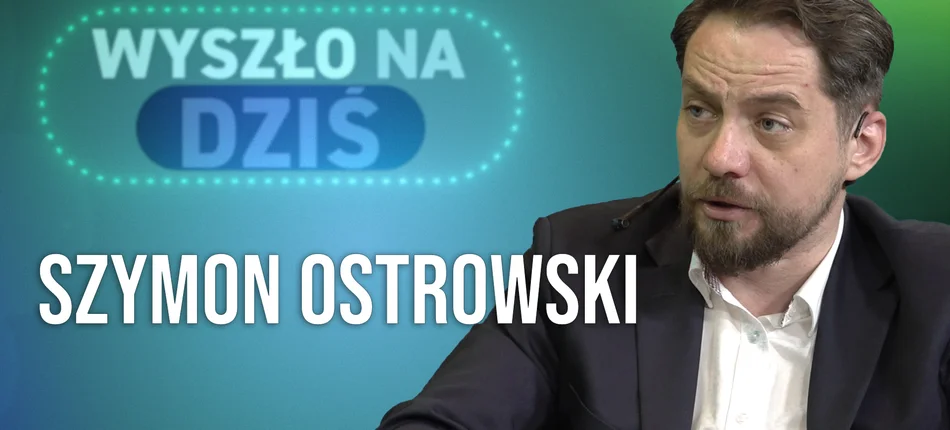
Piotr Wojcik: Since we all contribute to the health care system, both working people and entrepreneurs, the question is whether entrepreneurs equally benefit from the system?
Szymon Ostrowski: If we have entrepreneurs who are paying a lot more for public health care at the moment then it would seem that they would want to use it more readily. But if you look at all kinds of studies and statistics, it turns out that entrepreneurs are pushing themselves to private health care because they think they'll get an appointment there faster and easier. They largely can't wait. If we have a one-person entrepreneur, he won't go on sick leave because he has to work. He needs to get back on his feet very quickly, so he will want to look for a doctor who will remedy it as soon as possible.
Many entrepreneurs have private health insurance that is able to compensate to some extent. I once tried to see if we had private health insurance available on the market that would be able to provide 100 percent of the same benefits that the public health service gives us. It turned out that no, such a solution does not exist at the moment. I don't see what can be done in this case at the moment. My guess is that even if we came out with such a solution, at some point it would be the case that the commercial entities providing the most expensive services would still be very reluctant to do so, because we would not be able to finance such a cost from individual premiums.
Perhaps it would come to a model in which, in part, the patient would have to pay for such benefits for himself?
That wouldn't be a bad solution either. And here, for example, it could be combined at some point with private health insurance, where we have some small part of the premium that we all pay (regardless of how we use the public health service, because, after all, we live in some social, state environment and certain organizations have to be maintained). But also that we should be able to make up for these shortfalls for ourselves, if only with private health insurance.
It is no secret that we all pay, while only a fraction of those who participate in this whole market benefit in an increased way. What are roughly the proportions?
Here it works, as with the rest in many other areas, the pareto principle, which states that 80 percent of the budget for medicines and benefits is used by 20 percent of those who are entitled to it. Therefore, we actually need 80 percent of the budget to cover one-fifth of those in need. The National Health Service even provided data that the average cost of treating each patient is about 2.5 thousand zlotys per year. So you can calculate for yourself that even if we had a premium of 300 zlotys a month, we are freely paying for ourselves and someone else. I came across data from the National Health Service, which states that more than 100 thousand zlotys of the cost of treatment for the last 5 years concerned only 400 thousand patients, and only 2 thousand patients generated a treatment cost of more than one million zlotys in the last 5 years. If we looked at it globally, the unit costs are not large. That's why we're talking about subsidies or the need to add subsidies for specific individuals, for just a portion of the population.
Since social and health contributions are quite a pain for entrepreneurs, in view of this, are they looking for any ways that would allow them not to pay or pay less?
These ways are not many. Especially since the health premium or Social Security in general, when hiring employees, the entrepreneur always has to pay for the employees. He can find ways to avoid paying Social Security for himself as an entrepreneur, but if he hires employees, he must always pay for them. There have been, of course, and are all the time attempts by some entrepreneurs, such as switching from a sole proprietorship to a limited liability company, where under specific structures it is possible not to pay the Social Security contribution. Of course, these are not always decisions without business risks. Everyone bears them themselves. But I would also remind entrepreneurs in such a case that the question will then arise for them: well, if I don't even pay these social contributions, what about my health insurance? Who will pay for my hospital when I find myself in a hospital as a result of an accident? And this is the biggest concern of entrepreneurs. They don't have much of an option at this point to leave this public system altogether. Because, as I said, there is no alternative. Of course, there is the possibility of voluntary insurance in the National Health Fund. These are premiums for today, as far as I remember, about PLN 400 per month. This solution can be used even by a person who is not an entrepreneur, but performs, for example, a work. He can self-insure and have full right to use the public health service, to the full extent.
We have not yet forgotten the slogans that accompanied the fall election campaign. One of them was the announcement of voluntary Social Security. This voluntary Social Security has turned into a vacation from Social Security for us. Is it a good solution? Probably good in some ways for the entrepreneur, because he will have a lighter life. But isn't it a bitterness in entrepreneurs after all?
Many entrepreneurs were looking forward to voluntary Social Security. Because, as I said at the beginning, this biggest pain, especially for micro-entrepreneurs, is precisely this Social Security and Social Security contributions in the social part. And many of them hoped that they would be able to decide for themselves whether to pay the premiums. There are solutions like this abroad, and somehow there are no cases there that these entrepreneurs don't have anything to live on in retirement. Entrepreneurs, taking a business, a risk, are presumed to be responsible people, able to think not only about themselves, but about others, and will be able to secure their retirement. And it doesn't necessarily have to be money paid monthly from some kind of benefit, albeit a typical social pension or something from the state budget. An entrepreneur who would not pay Social Security contributions, even one and a half thousand a month, if some of these funds were able to be invested in some other way, one can presume that these funds would be better spent. But here there is also another psychological aspect. Let each of us consider whether we would be able to independently and responsibly, even if we abolished the obligation to pay Social Security, no matter what attitude we have to our state and what credibility the institution of Social Security in particular has to whether it will pay us a pension and in what amount, would we be able to put this money aside every month for 20, 30 years of running a business? Social Security nevertheless forces us entrepreneurs to put aside some money. Of course, we know that we pay and won't get much out of it, but would we be able to save otherwise? Indeed, entrepreneurs would probably invest this money in a completely different way, at least buy some real estate, which they would then rent out, etc. I myself did a private experiment - renting real estate in Warsaw. And it turns out that the costs I incurred to buy this property were much lower than those I would have incurred paying monthly for Social Security contributions as an entrepreneur. And the benefits that I have from the rent that is generated by the renters are much higher. And one might say, okay, but what should others say? After all, we have a social contract, and this ZUS money of mine is supposed to finance, to a large extent, current pensions. That's how this system of ours is set up, unfortunately, that we should contribute to current pensions. Because what would we do in this transition period, if we had this strictly voluntary Social Security and we decide, for example, from 2025, that some entrepreneurs do not pay Social Security, some entrepreneurs decide that they do not. But how to fund current pensions? Let's not forget that for many more years these pensions will be financed by money from those currently working.
However, it seems that a vacation from Social Security is a safer option, looking at it not only from the perspective of the person who will be a retiree in the future, but also from the perspective of this social contract.
Szymon Ostrowski: I don't know if all the fuss about the introduction of the Social Security vacation will be worth the benefits we will be able to achieve as entrepreneurs. Because will it really be that much of a benefit for that entrepreneur to be able to not pay one contribution? Of course, all the time the assumptions of this vacation are changing, there was even initially an option that one would have to submit information even months in advance, predict in November that, for example, in February I will not be able to afford the premium. This turned out to be a cursory solution, because an entrepreneur is not able to predict such a situation. When the Social Security vacation project is finally adopted, we will see how entrepreneurs will approach it. I don't know if the game is worth the candle. Well, of course, it will always be some relief for the entrepreneur, but we don't know what effect it will have.