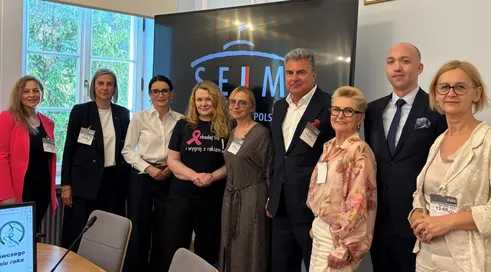
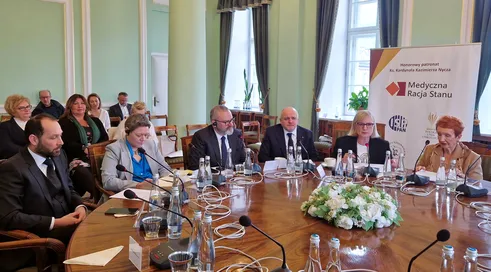
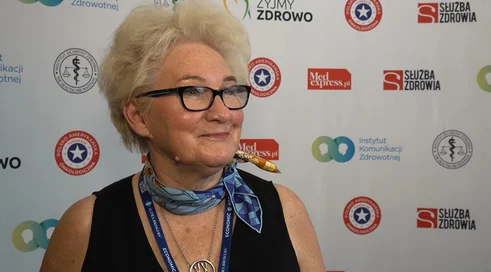
Molecular diagnostics has been one of the most important topics of public debate since the beginning of 2023. In addition to the work on amending the Medical Fund Act, the topic of molecular diagnostics in the treatment of cancer patients has been raised repeatedly in the Polish Parliament, twice at meetings of the Parliamentary Subcommittee on Oncology, at the meeting of the Senate Health Committee on the occasion of the discussion of the implementation of the Medical Fund Act and the National Oncology Strategy, and finally at the meeting of the Parliamentary Group for Public Health on the implementation of the Medical Fund. We asked MPs about molecular diagnostics: Alicja Chybicka and Marcelina Zawisza, and MP Mark Hook.
[SONDA] MPs on access to molecular diagnostics

Published Feb. 5, 2024 11:16
![[SONDA] MPs on access to molecular diagnostics - Header image](https://cdn.medexpress.pl/media/images/416055261_67542499146.2e16d0ba.fill-950x430.format-webp.webp)
fot. Piotr Wójcik
Watch the poll:
Members agree. - Improving access to genetic diagnosis is essential. There are no more urgent needs. This is worth any money," they say.
Without access to modern publicly funded molecular diagnostics, including so-called liquid biopsy today, we cannot talk about effective treatment in oncology, and modern genetic testing should be an integral part of the diagnostic and therapeutic process of cancer in adult patients as well. All the more so because next-generation sequencing (NGS) is a revolution in oncology diagnostics, making it possible to analyze up to several hundred genes simultaneously, which is particularly important for molecularly diverse cancers - such cancers of the lung, breast, ovary, pancreas, prostate or colon.
The 21st century is being referred to as the genomic era and the era of personalized medicine. Until recently, when thinking about molecular diagnostics, we thought more about the possibility of inheriting a predisposition to cancer than about one of the key elements of modern diagnostics, effectively used in cancer treatment. Today, molecular testing of cancer is the cornerstone of its effective treatment. And this is also how they are approached around the world. Taking into account the individual characteristics of the tumor when choosing therapy increases the chance of inhibiting the disease or curing it completely. Precise determination of mutations, deletions and, consequently, definition of disease subtypes is gaining importance, because in recent years a great number of targeted therapies have been registered, with effects on a specific change in the human genome.
Over the course of the year, a number of dedicated molecular diagnostics hearings were held in the Sejm and the Senate, where patient organizations, clinicians and experts pointed out the need to introduce molecular testing for cancer patients in the form of next-generation sequencing into the health care system - presenting concrete solutions in this regard.
One of the ideas discussed last year was to finance molecular testing under the Medical Fund for all patients - both adults and children. Parliamentarians from different political options - both in the Sejm and the Senate - submitted relevant amendments in this regard. Member of Parliament Rajmund Miller submitted an amendment introducing CGP funding for adult patients, Member of Parliament Dariusz Klimczak directed an amendment to create a diagnostics subfund. In the Senate, Senator Beata Małecka - Libera submitted an amendment to remove the age limit for genomic testing. Unfortunately, the amendments adopted by the Senate at the time were rejected by the previous term of the Sejm. At the time, representatives of the President's Chancellery and the Ministry of Health pointed out the limitations due to the lack of an appropriate benefit in the so-called basket of guaranteed services. In response, the Polish Oncology Society prepared the required so-called Charter of Health Care Services for comprehensive genomic profiling performed by high-throughput next-generation sequencing (NGS) in the molecular diagnosis of patients with malignant tumors. This was in response to calls from patient organizations fighting for better access to molecular testing. On the formal side, it seems that everything has already been prepared, and the service itself has been positively recommended by the president of AOTMIT. Now the decision must be made by the Minister of Health. Both oncologists and oncology patient communities hope that for the new leadership of the Ministry of Health, this will be a priority topic in 2024, and funding for modern molecular diagnostics in oncology for adult patients will finally become a reality.
Regardless of the political option represented, parliamentarians also agree. Outlays for molecular diagnostics should increase and modern molecular diagnostics should be an essential tool for both identifying molecular changes in the cancer itself for personalized treatment as well as predisposition to cancer.
Topics
diagnostyka molekularna