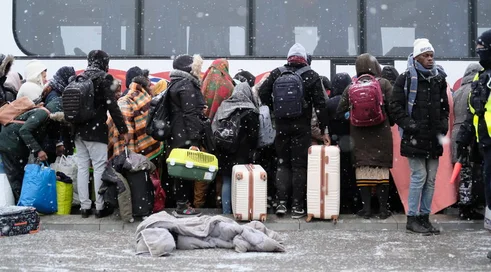
Prevention in the form of vaccinations and the need to monitor epidemiological threats were the main topics of the Wednesday meeting of the Parliamentary Team for Vaccination and Health Promotion, during which the challenges related to the wave of refugees arriving in Poland were discussed.
How to convince Ukrainians to vaccinate? It won't be easy

Published March 31, 2022 09:26

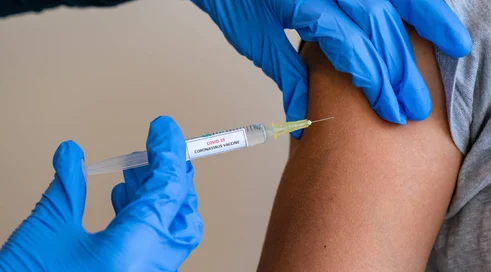
Fot. Getty Images/iStockphoto
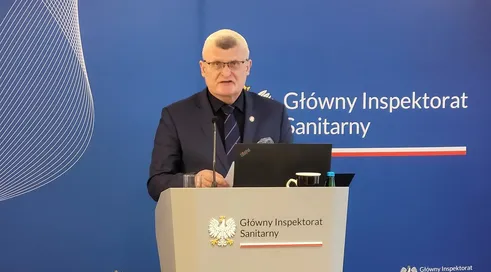
Deputy (KO) Barbara Nowacka, chairman of the team, asked the representatives of the Ministry of Health and GIS what actions had already been taken and what actions still need to appear in order for the epidemiological situation in the country to remain stable. The following spoke in the discussion: Dr. Paweł Grzesiowski, an expert of the medical self-government for the COVID-19 pandemic, but also a member of a similar team that is being created, whose task will be to monitor the challenges and problems related to the war in Ukraine and the refugee crisis.
Dr. Grzesiowski emphasized that the main challenge in the "here and now" is the broad promotion of vaccination against COVID-19 among refugees. - We receive information that approx. 30 percent. tested refugees test positive. These are people who will not be isolated, because the regulations do not require it anymore, so the virus will spread in their environment. This will have a negative impact on the epidemiological situation in the country, he assessed. The expert emphasized that the promotion of vaccinations cannot be based on the activation of points in places of stay, but on the actual persuasion to undergo vaccinations. - Some of the citizens of Ukraine were vaccinated with preparations that are not recognized by us and in practice these people should be vaccinated from the beginning, and they often do not want it. There are also problems with other vaccinations - he said. Because although the differences between the compulsory vaccination schedules for children and adolescents in our countries do not differ significantly (the biggest difference is the lack of pneumococcal and rotavirus vaccinations in the Ukrainian calendar), the main challenge is the low level of vaccination of Ukrainian citizens.
As he explained, the Polish and Ukrainian vaccination schedules are not very different. The difference is the pneumococcal vaccination, but the problem is the low vaccination coverage of Ukrainian citizens, i.e. the implementation of the calendar. Izabela Kucharska, deputy Chief Sanitary Inspector, informed deputies that the information available to the sanitary inspection resulted in huge discrepancies between the official data on the level of immunization against major infectious diseases in Ukraine. WHO reports show vaccination coverage is close to 80%. Official data that we were able to obtain before the war from the Ukrainian Ministry of Health shows that vaccinating children against infectious diseases reaches approx. 50%, and the data from the regions we reached indicated that this level actually amounts to approx. 30%. The risk of bringing infectious diseases from this country to Poland is serious, she admitted. The strong anti-vaccination attitude among Ukrainians is a huge problem that our vaccination system will face at the moment. Example? Izabela Kucharska told MPs that only two out of twenty newborns born by refugees so far could be vaccinated in the hospital, and only against tuberculosis, because only such babies had consented to them. The others refused to vaccinate at all.
The vaccination obligation applies to children staying in Poland for more than 3 months - until then, vaccinations are considered recommended. However, there are doubts as to how this obligation will be enforced.