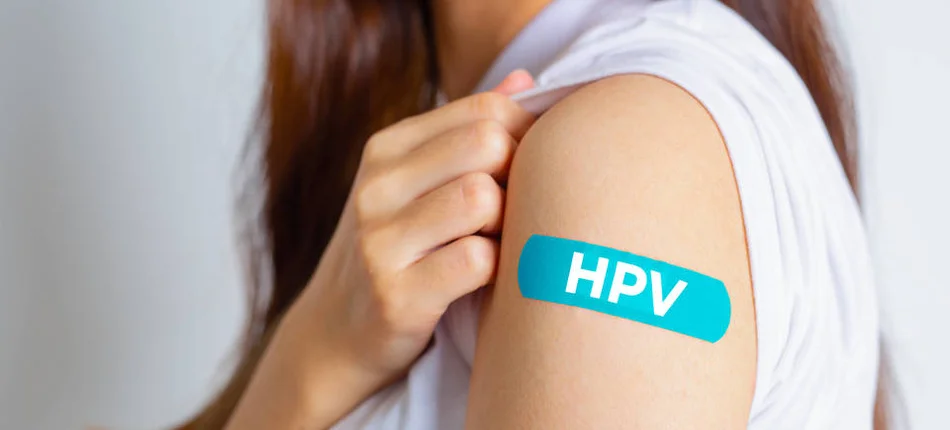
Three years ago, on June 1, 2023, the HPV vaccination program began. Poland joined more than 120 countries around the world, including virtually all European countries, that have vaccination programs aimed at children and adolescents. Previously, many local governments ran their programs - some for many years, and parents also paid for the vaccinations out of their own pockets.
All you need to know about... HPV vaccination

Published June 8, 2026 17:43
Fot. Getty Images/iStockphoto
What do the numbers say?
Accurate data on vaccination rates are not available - information is missing from local government programs and also from vaccinations carried out before the program was launched on the commercial pathway. The data collected as of June 2023 by the eHealth Center relates to vaccinations received under the program, as well as prescriptions - issued and filled - for vaccines (for older teenagers, who are eligible for the free bivalent vaccine until they turn 18). The vaccination rate in the 2006-2017 cohorts is currently around 17 percent. This is not even a third of the goal set by the National Cancer Strategy (60 percent) and far from the WHO recommendation.
The best vaccinated is the 2011 vintage (this year marks the end of the program's vaccination opportunity). This is the "younger" of the two vintages covered by the program in 2023, and, experts say, the extra year - compared to the 2010 vintage - makes a difference. The vaccination rate nationwide is already close to 35 percent, and among girls it's about 42 percent. The 2010 vintage, which ended participation in the program - did not reach 30 percent (of course, all the time young people can be vaccinated under the reimbursable vaccine available at pharmacies).
In absolute numbers - more than 860,000 people out of a population of nearly 5.2 million were vaccinated.
Is it a success?
The level of vaccination even the greatest optimists cannot consider a success, although Dr. Pawel Grzesiowski, Chief Sanitary Inspector, points out how much has been achieved - especially in terms of points. In the best-performing Pomeranian province, nearly half of the girls in the 2011 yearbook are vaccinated. This is "almost" the goal set in the NSO. The information on the level of vaccination of the 2011 yearbook also looks very good - taking the Pomeranian data as a reference point, of course - in Silesia, Mazovia and Greater Poland. But there is also a spoonful of ointment - all regions show a large difference of several points between the vaccination of girls and boys.
The differences between provinces, between the top of the ranking and its lower registers, are much greater. The worst performing province is Podkarpackie, with a vaccination rate of less than 11 percent, and less than 23 percent for the comparable 2011 vintage, with less than 29 percent among girls and just over 17 percent among boys.
Therefore, the Chief Sanitary Inspector declares that at the moment the main task for the implementers of the HPV vaccination program will be to equalize the differences: between provinces and between genders. One can expect a shift of emphasis in the information campaign to the need and sense of vaccinating boys, because HPV is still (erroneously) perceived as a female problem.
Three years of the program... or maybe two?
Three years have passed, but the Chief Sanitary Inspector emphasizes that in fact - not even two. Because the program remained in hibernation from June 2023 to September 2024. There were strong supporters of vaccination, while there was a lack of an information campaign, parental education and good organizational solutions. A second life was given to the program by the decisions of the Ministries of Health and National Education, which took effect at the beginning of the 2024/2025 school year: a more intensive educational campaign, the involvement of schools in the program, and the lowering of the age limit to 9 years. In the first three months, the new rules resulted in a marked jump in the number of vaccinated children - but such an effect could not be repeated a year later. The number of vaccinated is steadily increasing, but this growth is linear - and, experts admit, insufficient. Consideration is still underway as to what decisions and actions could change the situation.
Vaccinations mandatory after all?
The lion's share of experts, pediatricians, oncologists, vaccinologists, epidemiologists, advocate changing the status of HPV vaccination from recommended to mandatory. The Ministry of Health is preparing such a solution - mandatory vaccination would cover the 2018 vintage and come into effect on January 1, 2027. It would, but it is unclear whether it will enter. On the occasion of conferences and debates summarizing the program's three-year anniversary, representatives of the ministry shied away from hard declarations - Deputy Health Minister Katarzyna Kęcka said that analyses are still underway at the ministry. However, many specialists do not hide their fears that due to financial problems the introduction of mandatory vaccinations will be suspended or at least postponed. Especially since 2027 is an election campaign and while HPV vaccination should in no way be controversial, it still evokes emotions, negative ones, in parts of society.
This, by the way, is one of the paradoxes: HPV vaccination protects against more than a dozen cancers in both men and women, including head and neck cancers, and is still associated more with sexual activity and not cancer prevention.
What about the age limit?
Complementary to the change in the status of vaccination should be an increase in the age limit. The opportunity to be vaccinated under the program should not "disappear" after the age of 15, but adults should have it - so the age limit should be raised to a minimum of 19, and many specialists, pointing to decisions made in other countries, even talk about 21-26 years.
The idea is not new, the first time it was publicly discussed was back when Minister Izabela Leszczyna was still in office - just weeks before her dismissal. The idea is to give young adults a real opportunity to make decisions about their health and life - parental consent is required until their 18th birthday, which is sometimes a problem. Doctors who administer vaccinations under the program admit that older teens in particular admit that they would like to be vaccinated, but the parents - or one of the parents - has doubts. In theory, there is a legal route in such cases, but in practice it is not used.
Raising the upper age limit, however, also means higher costs for the program - and that's why, like the change in the status of vaccinations to mandatory, it is currently at the stage of ministerial analysis (with even less chance, experts admit, of a quick positive decision).
Educate. Who and how?
In order for young people entering adulthood to make decisions that are good for their health, health education is necessary - this is to be implemented as a mandatory subject from September 2026. However, the optimal time for HPV vaccination is just at the age of 9-15, which is when vaccination is most cost-effective (two-dose vaccination schedule). Regardless of health education conducted as a school subject, it is necessary to raise knowledge and awareness among parents. This is also done in schools, although doctors, nurses and midwives at the PCP also have a huge role to play, experts stress. It is in the POZ clinic that parents should hear the arguments for vaccinating their child and also a constant reminder of this possibility. The need to educate will also not cease when vaccinations become mandatory, because, as experts reiterate, an obligation is not a compulsion and does not take away parents' ability to make a different decision.
The consensus among experts is that simply changing the status of vaccination would also have an educational value - opinion polls on vaccination as such have previously shown that Poles are inclined to consider mandatory vaccination "more important" than recommended vaccination. The very fact that HPV vaccinations - despite their non-mandatory status - are publicly funded not for everyone, as it turns out, is a clear signal, confirming their importance for individual protection and public health.
Education in the area of HPV vaccination is necessary, because also the scale of misinformation about this particular vaccination is enormous. Only the MMR vaccine and the COVID-19 vaccination can be compared in terms of the accumulation of fake news - concerning adverse events as well as the remote health effects of taking the vaccine (with no doubt that in each of these three cases this is a planned action). Which, it should not be forgotten, in Polish conditions is accompanied by a strong "moral" component, because the vaccine - according to opponents of vaccination of children and adolescents - protects against sexually transmitted virus, so "it is not for children."
The status of the HPV vaccination program was the topic of discussion during the Priorities and Challenges in Polish and European Drug Policy conference (May 27, Warsaw) and the expert debate "3 years of HPV vaccination in Poland - experience, conclusions, recommendations" organized at the Sejm.
Current data on the vaccination of the child and adolescent population can be found on the Human Papilloma Virus (HPV) Vaccination Report website - ezdrowie.gov.pl