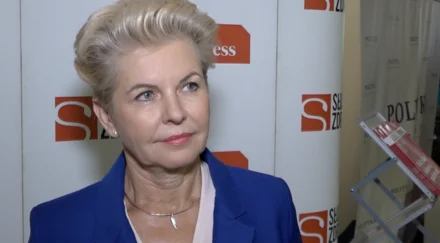
An interview with Prof. Jaroslaw Slawek, head of the Neurology and Stroke Unit at St. Adalbert Hospital in Gdansk.
Prof. Jaroslaw Slawek: It was a very important year for neurology

Published Jan. 3, 2024 11:20
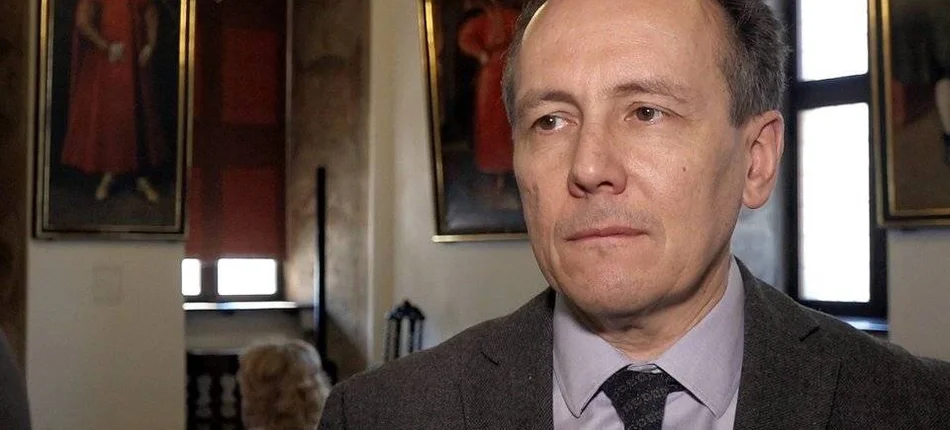
Fot. Tomasz Kobosz
What important things happened in neurology in 2023?
It was a very important year for neurology. The National Council for Neurology, established by the minister, was active. We took a number of measures. One of them had a concrete effect. Neurology has become a priority specialty, which we hope will ensure a greater supply of cadres. As for what has happened for patients, they are, of course, most interested in system changes and the availability of medicines. In various areas, this availability has improved greatly. The migraine treatment program, which has been awaited for many years, has been established, in which we have, for the time being, the possibility of treating chronic migraine, which is the most severe form. The program has grown a lot over this year, and many patients have gained access to advanced forms of treatment. In multiple sclerosis, we have had registrations of modern drugs, including for the treatment of the secondary progressive form, for which we have had no therapy so far. We've also received modern drugs for treating the projection-remission form. Because of their efficacy and safety, they are changing the paradigm for us to approach treatment more aggressively, with more potent drugs from the beginning.
We also had in the drug programs for spasticity an amendment to the treatment program. Until now, it was only post-stroke spasticity and children up to the age of seventeen. Now, since November, there is a program that also allows us to treat patients with spasticity after craniocerebral injury, spinal injury, in multiple sclerosis, adult patients with cerebral palsy and patients with congenital spastic paraplegia.
Unfortunately, we have not been able to finalize a coordinated care program in Parkinson's disease. This program was created on behalf of the Ministry of Health. It cost us a lot of time and energy, but unfortunately it fell somewhere to the bottom of a drawer at the Ministry of Health and unfortunately has not been implemented. For many years now we have been discussing sanctioning and normalizing the entire process of qualifying and treating patients with deep brain stimulation for Parkinson's disease. I regret to say that another year, probably for the eighth year in a row, our efforts have come to nothing. The program is ready, prepared by us to the smallest detail. It just needs to be translated into the language of regulations. We hope that in the next year this will happen. In stroke, we had a pilot for mechanical thrombectomy. It was supposed to have ended by now, but there is a demand to extend it further. We have also been able to reimburse new molecules for rare forms of epilepsy. We also have progress in rare diseases. The SMA treatment program is developing, and we are somewhat of a phenomenon compared to other European countries, because already I think 75 percent of SMA patients in Poland are treated. We have neonatal screening, we have three drugs available for the treatment of this genetic genetic disorder.
Another year means another challenge. We hope that brain diseases will continue to be within the scope of priority interests of the Ministry of Health and become, as we have been calling for for a long time, in addition to cardiology or oncology, a priority area in the health policy of our country.